Who Is Paul Mackenzie? Shakahola Cult Case Explained
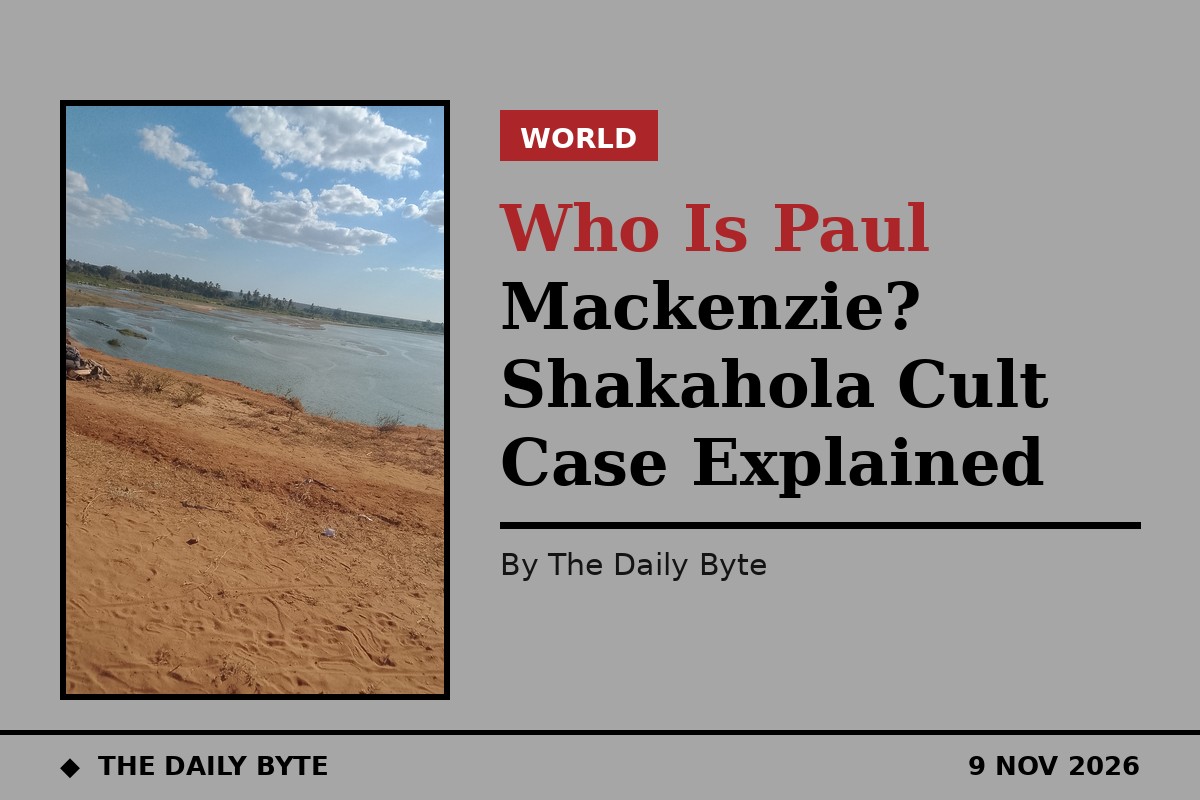
Paul Nthenge Mackenzie is a self-proclaimed Kenyan pastor who was sentenced to 200 years in prison on Friday 6 November 2026 for the murder of 191 people, 190 of them children, at Shakahola Forest in Kilifi County, Kenya. The High Court in Mombasa found that Mackenzie, the leader of the Good News International Church, ordered his followers to starve themselves and their children to death in the belief that they would meet Jesus before the end of the world.
The sentence was handed down by Justice Diana Kavedza at the High Court in Mombasa. It is made up of two 100-year terms running one after the other: 100 years for 183 murders by starvation, and a further 100 years for eight murders by direct homicide. Mackenzie was convicted on 19 October 2026, along with 28 co-accused, on all 191 counts of murder. Prosecutors had asked for the death penalty. The court declined to impose it, and Mackenzie’s lawyers have said they plan to appeal.
Who is Paul Mackenzie?
Mackenzie, who is 50, founded the Good News International Ministries in the coastal town of Malindi in 2003. He preached that the world would end in August 2023, and he denounced formal education, modern medicine and government identification programmes as satanic. Over time, his teaching hardened into a demand that followers abandon ordinary life and prepare to die.
The authorities had known about him for years before the deaths at Shakahola came to light. Police searched his premises in 2017, and officials closed his church in Malindi in 2019. After the closure, Mackenzie moved his followers out of the town and into Shakahola Forest, to an 800-acre property known as Chakama Ranch, in the remote interior of Kilifi County. There, cut off from the town and from outside scrutiny, the community lived under his control.
What happened at Shakahola Forest?
At Shakahola, followers were ordered to fast to death, beginning with the children and then moving through young people, women and men. The court found that the fasting was not a voluntary religious act but an organised system enforced by guards and accomplices through violence, confinement and intimidation. Followers who resisted were beaten, restrained or prevented from leaving. Children, the court accepted, could not consent to a fast designed to end in death.
The deaths covered by the murder charges took place between January 2021 and September 2023. The 191 victims were 190 children and one adult. Of those, 183 died by enforced starvation, 182 children and one adult, while eight children were killed by direct violence. Post-mortem examinations established starvation in dozens of cases and found other victims had died from asphyxia, neck compression or head injuries.
The killings came to light in April 2023, when police raided the forest after reports that followers were being coerced to fast to death. Investigators began uncovering shallow graves, and the number of bodies recovered from the wider Shakahola site eventually passed 400. The Kenya National Commission on Human Rights has put the total recovered at 448. Many of the remains have never been identified, leaving families waiting years for news of missing relatives. One bereaved man, Stephen Mwiti, lost his wife and six children after they entered Shakahola. His question, reported after the sentencing, has become the moral centre of the case: even if adults claimed to choose the fast, what choice did the children have?
How the case reached court
Murder charges were filed in 2024, covering 191 of the deaths. The trial opened at the High Court in Mombasa in August 2025, after the case was transferred from the Malindi High Court because of its scale and complexity. The judgment was delivered on Monday 19 October 2026, in a hearing lasting more than eight hours, with Justice Kavedza finding all 29 accused guilty under Kenya’s Penal Code. Sentencing followed on 6 November.
The court named Mackenzie the principal figure bearing criminal responsibility, as leader of the church and of the Shakahola settlement. The judgment assigned him primary responsibility for a system that began with children and then moved through the rest of the community. His 28 co-accused were convicted with him, and their sentences ranged from 10 to 160 years. Assistant pastor Smart Mwakalama received 160 years.
The sentence in full
The sentence is structured as two consecutive terms. The first, 100 years, covers the 183 counts of murder by starvation. The second, also 100 years, covers the eight counts of murder by direct homicide, in which children were strangled, suffocated or beaten. Because the two terms run one after the other rather than at the same time, the total is 200 years in prison. Mackenzie’s lawyers have told reporters the sentence will be appealed, arguing that it amounts in practice to life imprisonment.
Kenya retains the death penalty in law, and prosecutors argued that the scale and circumstances of the killings justified the harshest punishment. The judge declined to impose it. Kenya has not carried out an execution since 1987, and Mackenzie was sent to prison rather than to the gallows.
What happens next?
The conviction does not end the case. Mackenzie still faces separate proceedings, including a case over 52 deaths at another site and terrorism-related charges, in which he has pleaded not guilty. The appeal against the convictions and sentences is expected to follow, and the identification of the hundreds of unclaimed remains recovered from the forest continues.
For Kenya, the case has also become a test of the state. President William Ruto acknowledged in 2023 that the government had failed to prevent the deaths. Mackenzie was known to the authorities years before the graves were found, families had searched for missing relatives, and local administrators, police and intelligence agencies had opportunities to intervene. Kenya responded with reviews of the laws governing religious organisations, but those proposals have not yet produced a settled national framework. The question now is whether the country treats Shakahola as an exceptional horror safely locked in the past, or as proof that institutions must act before obedience, isolation and official neglect combine again.
Frequently asked questions
How many people died at Shakahola? More than 400 bodies were recovered from the Shakahola Forest site. The murder prosecution covered 191 of those deaths: 190 children and one adult. Investigations into the other deaths continue, and further charges could follow.
Why was Paul Mackenzie sentenced to 200 years? The court imposed two consecutive 100-year terms: one for 183 murders by starvation and one for eight murders by direct homicide. The terms run one after the other, making 200 years in total.
Did Mackenzie deny the charges? Yes. He denied forcing anyone to starve, but the court rejected that defence, finding that the fasting was enforced through violence, confinement and intimidation.
Was he sentenced to death? No. Prosecutors sought the death penalty, but Justice Diana Kavedza declined to impose it. Kenya has retained capital punishment in law but has not carried out an execution since 1987.
Is the case over? No. Mackenzie’s lawyers plan to appeal the convictions and sentences, and he still faces separate proceedings over 52 deaths at another site and terrorism-related charges, in which he has pleaded not guilty.
Sources: Pulse Kenya, Paul Mackenzie sentenced to 200 years in Shakahola cult case; BBC via Zambia Monitor, Kenyan cult leader jailed 200 years over Shakahola deaths; Reuters via Profilo Politics, Kenya cult leader sentenced to 200 years; The Eastleigh Voice, Shakahola massacre trial opens in Mombasa.