Why Are Belgium Flights Cancelled on Monday?
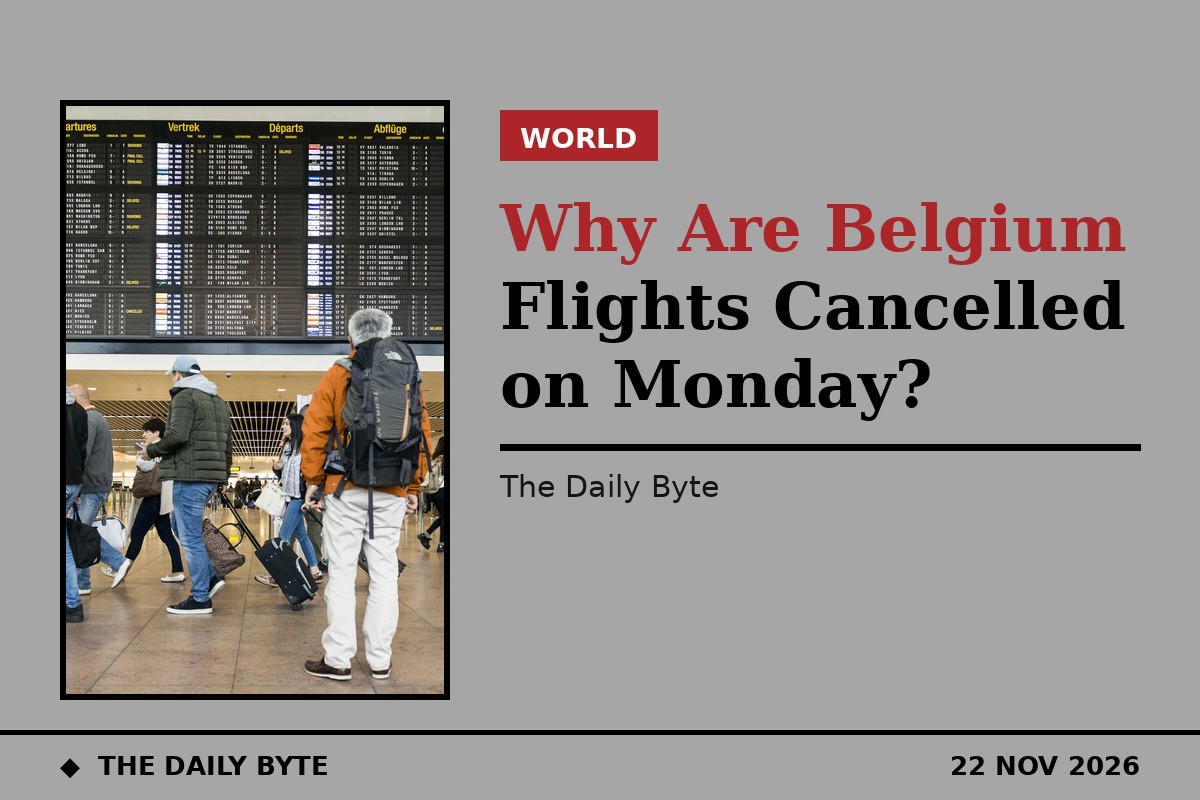
All flights to and from Belgium will be cancelled on Monday 23 November 2026, between 7am and 9pm local time, after air traffic controllers joined a nationwide general strike. Air navigation provider Skeyes announced on Saturday that it could not maintain normal air traffic control operations during the 14-hour window, and Brussels Airport has confirmed that the majority of its flights will have to be cancelled. Around 59,500 passengers were booked on 429 flights at Brussels Airport alone on Monday. So why are Belgium flights cancelled, which airports are affected, and what can passengers do?
The direct cause is a staffing shortfall, not a technical failure. A number of air traffic controllers will take part in the national strike organised by Belgium’s main trade unions, and Skeyes says the controllers available during the industrial action will be insufficient to guarantee the safe management of regular air traffic. Rather than run a reduced and unsafe service, Skeyes is suspending normal air traffic control at Belgian airports and in the airspace it manages. Only essential services will remain, including emergency flights and movements considered critical for aviation safety.
Why are Belgium flights cancelled on Monday?
Monday’s aviation shutdown is part of a broader national mobilisation against the federal government’s economic and social reforms. The strike is organised by Belgium’s three main trade union confederations — the ACV-CSC, the ABVV-FGTB and the ACLVB — in protest against austerity measures and spending cuts proposed by the government of Prime Minister Bart De Wever, including pension changes and measures the unions say will cut purchasing power. A large demonstration is scheduled in Brussels on Monday, with protesters gathering from 10am at Brussels-North station for speeches before marching through the capital towards Brussels-Midi station at around 11am.
Air traffic controllers are public-service employees, and when a section of them joins a national strike, the effect is immediate and total. Skeyes, the autonomous public service provider that runs air traffic control in Belgium, announced on Saturday afternoon that some of its controllers would take part. The decision came less than two days before the strike, which is why airlines and airports have described the communication as extremely late. Brussels Airlines said it “deeply regrets this extremely late communication of this decision”, adding that until hours before the announcement it had expected almost no disruption at Brussels Airport.
This is not a one-off. The Board of Airline Representatives in Belgium, which represents about 25 carriers, said Monday’s walkout would be the 11th strike affecting Belgian airspace in 11 months. The repeated disruption is one reason the aviation industry has reacted so sharply to the latest shutdown.
Which airports and flights are affected?
The suspension covers all Belgian airports where Skeyes provides air traffic control, and the airspace it manages up to flight level 245. That includes Brussels Airport in Zaventem, Brussels South Charleroi Airport, and the regional airports at Liège, Antwerp and Ostend. No commercial passenger flights will be able to take off or land at any of them between 7am and 9pm local time (0600–2000 GMT).
Brussels Airport is the hardest hit. The airport had scheduled 429 flights between 6am and 10pm on Monday, involving approximately 59,500 passengers: 213 departing flights carrying an estimated 28,000 passengers and 216 arriving flights with approximately 31,500 passengers. In its official operational notice, Brussels Airport confirmed that the majority of arriving and departing flights would have to be cancelled. The airport said airlines would contact passengers directly to inform them of their options, and passengers have been advised to contact their airlines before travelling to the airport.
Brussels South Charleroi Airport, the low-cost hub south of the capital, has warned that aircraft will be unable to take off or land between 7am and 9pm because air traffic control services will be unavailable, and it has advised passengers not to set off without confirmation from their airline. Charleroi said that although it had arranged internal staffing to remain operational during the national day of action, no commercial flights could operate without air traffic control. Brussels Airlines, TUI fly Belgium, Ryanair and a number of foreign carriers are among those affected, along with Lufthansa Group partners including Swiss, Austrian and Eurowings.
The disruption could extend beyond the announced window. Airlines will need to adjust aircraft rotations, crew schedules and connecting flights once services resume after 9pm, so some flights on Monday evening and Tuesday morning may also be delayed or cancelled as the knock-on effects work through the system. Around one million Dutch passengers use Brussels Airport each year, so the shutdown reaches well beyond Belgium itself, and Brussels is also the administrative heart of the European Union and NATO, meaning diplomatic travel and international business conferences are affected too.
| Fact | Detail |
|---|---|
| Date of shutdown | Monday 23 November 2026 |
| Hours | 7am to 9pm local time (0600–2000 GMT) |
| Reason | Air traffic controllers joining a national strike |
| Air traffic provider | Skeyes |
| Airports affected | Brussels, Charleroi, Liège, Antwerp, Ostend |
| Brussels Airport flights | 429 scheduled (213 departures, 216 arrivals) |
| Passengers affected at Brussels | About 59,500 |
| Still operating | Emergency and safety-critical flights only |
| Unions involved | ACV-CSC, ABVV-FGTB, ACLVB |
| Strike in sequence | 11th strike affecting Belgian airspace in 11 months |
What is Skeyes and why does it matter?
Skeyes is Belgium’s air navigation service provider. It employs the air traffic controllers who guide aircraft through Belgian airspace and at the country’s airports, and it is responsible for the safe separation of aircraft in the air and on the ground. When too few controllers are available, the only safe option is to stop regular traffic, because controllers cannot be replaced at short notice and there is no backup workforce that can step in.
This is why a strike by a relatively small group of workers can ground an entire country’s aviation system. The controllers’ decision to join the national strike was announced on Saturday, and Skeyes immediately assessed that the number available on Monday would be insufficient. The 14-hour suspension is the result: not a protest aimed at aviation itself, but the safety consequence of controllers joining a general strike over government policy.
What should passengers do?
Airlines are contacting affected passengers directly, and Brussels Airlines has published a passenger advisory confirming that affected travellers will receive instructions by email. Passengers should check their flight status in the carrier’s app or booking rather than relying on the flight information boards at the airport, because cancellations only appear there once the airline has entered them. Travellers should not go to the airport without confirmation from their airline, and Charleroi Airport has warned passengers not to set off without it.
Under Regulation (EC) No 261/2004, the European Union’s air passenger rights law, a passenger on a cancelled flight is entitled to a refund or re-routing to their final destination, and to care including meals and, if necessary, accommodation while they wait. The exact entitlements depend on the circumstances of each cancellation and on what the airline offers, so passengers should keep receipts and keep a record of what the airline tells them. The regulation is the legal backbone of passenger rights across the EU, and it applies to flights departing from an EU airport, which includes every flight leaving Belgium on Monday.
Travellers with connecting flights through Brussels or Charleroi should also check the onward leg, even if it departs from another country, because a missed connection can strand passengers mid-journey. Anyone due to fly on Monday evening after 9pm should still check before travelling, because the recovery of aircraft and crew positions after a full-day shutdown is rarely instant.
What else is affected by the national strike?
The flight shutdown is only one part of Monday’s national day of action. The strike is a general mobilisation, and public transport and other services are expected to be disrupted across Belgium as well. The demonstration in Brussels, gathering at Brussels-North from 10am and marching to Brussels-Midi from around 11am, will close roads in the capital and add to the disruption for anyone trying to reach the airport by road or rail.
The unions’ dispute is with the De Wever government’s programme of spending cuts, which the government says is necessary to bring Belgium’s finances under control. The unions say the cuts will hit pensions and purchasing power. That political argument is unlikely to be settled on Monday, and the aviation shutdown shows how a national strike in a small, densely connected country can have effects far beyond its borders. For the tens of thousands of passengers caught in it, the practical question is simpler: check with the airline, do not travel to the airport unconfirmed, and know the rights that EU law gives you when a flight is cancelled.
Frequently asked questions
Why are Belgium flights cancelled on Monday 23 November 2026? Air traffic controllers are joining a national strike against the federal government’s austerity measures. Skeyes, the air traffic control provider, says too few controllers will be available to run a safe service, so normal air traffic control is suspended from 7am to 9pm.
Which airports are affected? All Belgian airports controlled by Skeyes: Brussels Airport, Brussels South Charleroi, Liège, Antwerp and Ostend. No commercial flights can take off or land between 7am and 9pm local time.
How many passengers are affected? Brussels Airport alone had 429 flights scheduled on Monday, carrying about 59,500 passengers. Charleroi and the regional airports add more, and knock-on delays may affect Monday evening and Tuesday flights.
Can I get a refund if my flight is cancelled? Under EU Regulation 261/2004, passengers on a cancelled flight are entitled to a refund or re-routing, plus care such as meals and accommodation where necessary. Check with your airline, which is contacting affected passengers directly.
Should I still go to the airport? No. Brussels Airport and Charleroi Airport have both advised passengers not to travel to the airport without confirmation from their airline, and to check flight status in the airline’s app or booking.
Sources: Europe Says / RTBF, “National strike to halt commercial flights in Belgium on Monday”, 22 November 2026; Europe Says, “Belgium Faces Near-Total Flight Shutdown on Monday as Air Traffic Controllers Join National Strike”, 22 November 2026; Tragento, “Strike in Belgium on 23 November: flights cancelled in Brussels”, 22 November 2026. Published 22 November 2026.


