Why Do We Get Headaches?
Almost everyone gets headaches, and almost all of them are harmless. A headache is one of the most common reasons people reach for painkillers, take a day off work, or lie down in a dark room, yet the pain itself is often a mystery: nothing has visibly gone wrong, there is no wound to point to, and the ache can vanish as quickly as it arrived. Understanding why headaches happen starts with knowing what is actually hurting, because the answer is not quite what most people expect.
The brain itself cannot feel pain. It has no pain receptors of its own, which is why surgeons can operate on a conscious patient's brain without the patient feeling the cutting. The pain of a headache comes from the structures around the brain instead: the meninges, the membranes that cover the brain, the walls of the blood vessels inside the head, the muscles of the scalp and neck, and the nerves that serve the face and head. When those structures are stretched, inflamed, tightened or irritated, they send pain signals, and the brain reads them as a headache. That is why a headache can feel as if it is inside your head while nothing in the brain itself is being hurt.
Primary headaches and secondary headaches
Doctors split headaches into two broad groups. Primary headaches are ones where the headache itself is the problem, with no other illness behind it. Secondary headaches are ones where the headache is a symptom of something else going on, such as an infection, a head injury, or the side effects of a medicine. Most headaches people get in everyday life are primary headaches, and there are three main kinds: tension headaches, migraines and cluster headaches.
The distinction matters because it decides what helps. A primary headache is treated by dealing with the headache itself: rest, fluids, painkillers, and removing the trigger. A secondary headache is treated by dealing with the cause behind it, and the headache usually clears up once that is sorted. A headache that is new, very different from your usual pattern, or comes with other symptoms deserves a closer look precisely because it might be secondary.
Tension headaches: the commonest kind
Tension headaches are the most common type of headache, and they are what most people mean by an ordinary headache. They feel like a dull ache with constant pressure around the front, top and sides of the head, as if a tight band has been stretched around it. The pain is usually on both sides rather than one, it tends to build up as the day goes on, and it does not usually stop you carrying on with everyday activities, although it can be uncomfortable and tiring.
The exact cause of a tension headache is not fully understood, but it is linked to a familiar list of everyday factors: stress, poor posture, skipping meals, dehydration, not getting enough sleep, and drinking too much alcohol. The muscles of the scalp, neck and shoulders tighten under stress and tiredness, and that tension is thought to play a part, although the headache is not simply a muscle problem. A tension headache can last from half an hour to several days, and it is not usually made worse by physical activity, which is one way it differs from a migraine. Ordinary painkillers such as paracetamol and ibuprofen usually help, and the headache often eases with rest, water and food.
Some people get tension headaches often enough for them to become chronic, meaning they are present on many days of the month. Chronic tension headache affects women more often than men, and it can be started by neck injuries or tiredness and made worse by taking painkillers too often. That last point catches many people out, and it is important enough to have its own section below.
Migraines: more than a bad headache
Migraines are less common than tension headaches, but they are far more disabling. A typical migraine is a moderate to severe throbbing headache, usually on one side of the head, that lasts at least a few hours and can last for days. It often comes with nausea and vomiting, and with a strong dislike of bright light and loud noise. Many people with migraine need to lie down in a dark, quiet room until it passes, and some find they have to stay in bed for days at a time.
About one in five women and one in fifteen men get migraines, and they usually start in the late teenage years or early adulthood. Some people get a warning before the pain starts, called an aura, which can involve seeing flashing lights or spots, or other visual or neurological symptoms. There is also a type of migraine in which the aura appears without the headache following it, sometimes called a silent migraine.
Migraines have triggers, and the list is long: stress and fatigue, hormonal changes around periods, the menopause and pregnancy, and certain foods including chocolate, cheese, citrus fruit and processed foods. Bright lights, strong smells and loud noise can set one off too. The exact mechanism is still being worked out, but it involves the blood vessels and nerves in the head, and the trigeminal nerve, the large nerve that carries sensation from the face, is thought to play a central part. Most people can treat their migraines with over-the-counter medication, but severe migraines may need stronger migraine-specific medication that is only available on prescription from a doctor.
Cluster headaches: rare and severe
Cluster headaches are a third type of primary headache, and they are the most painful of the three. They cause an intense, sharp pain around one eye, often with a watering or red eye, a blocked or runny nose, or a drooping eyelid on the same side. The attacks come in bouts, or clusters, over several weeks, often daily, and then stop for a period of at least a month before returning.
Cluster headaches are rare, and they are more common in men than in women, typically starting in adulthood. Unlike migraines, they come on very quickly, with no warning. The cause is still unclear: some research suggests a genetic component, sensory triggers and smoking, while other research points to patterns of brain activity. Because they are so severe and so distinctive, cluster headaches are usually easy for a doctor to recognise, and they need specific treatment rather than ordinary painkillers.
The everyday triggers
Most headaches are set off by something in the day, and the triggers are remarkably ordinary. Stress and tension top the list, followed by dehydration, or simply not drinking enough fluids through the day. Poor or disrupted sleep is another common cause, as is skipping meals, which lets blood sugar fall; the brain is one of the first organs affected when glucose levels drop, which is why a headache can appear quite soon after a missed meal.
Alcohol is a well-known trigger, especially red wine and the morning after a heavy drinking session. Too much caffeine can cause headaches, and so can stopping caffeine suddenly if you normally drink a lot of it. Poor posture and eye strain, including long periods looking at a screen, can bring one on, as can smoking. Hormonal changes around periods or the menopause play a part for many women, and so do the contraceptive pill and pregnancy. A cold, flu or other minor infection can cause a headache too, as can sinus problems and dental problems. High blood pressure is occasionally linked to headaches, although it is rarely the cause of an ordinary headache on its own.
When painkillers cause the headache
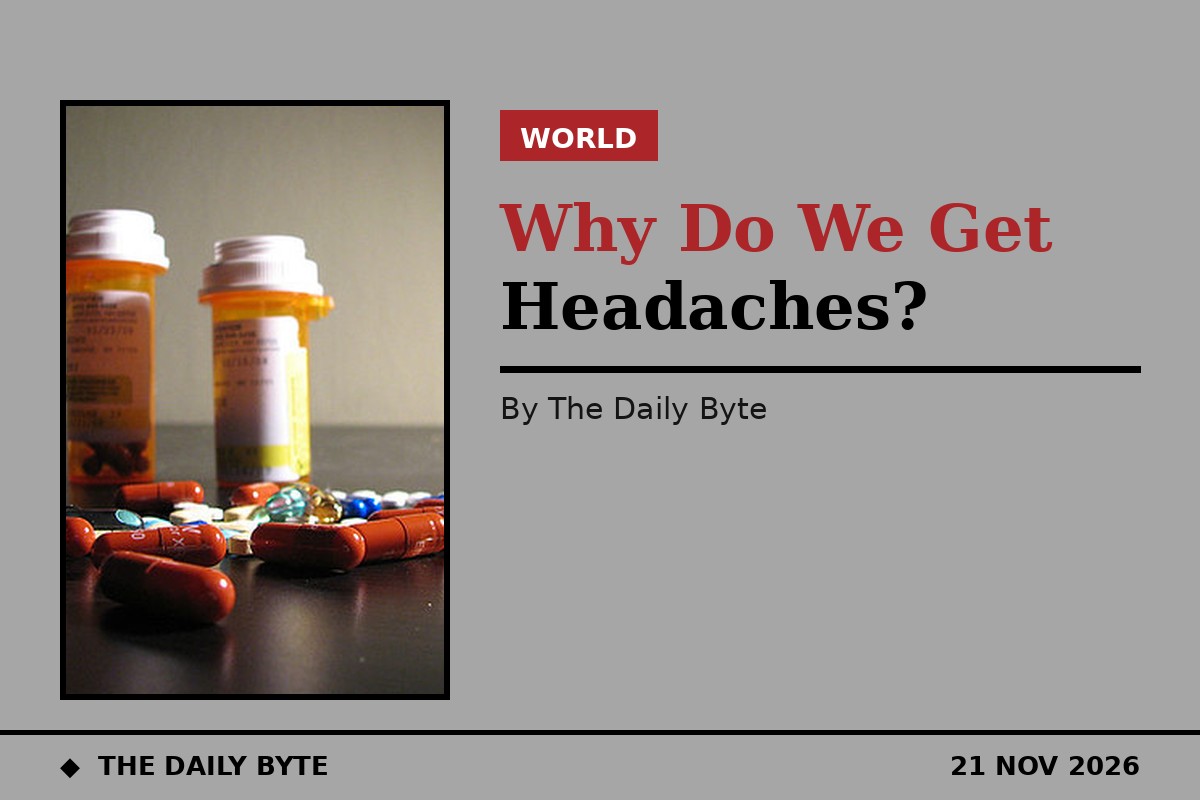
One of the most surprising causes of headaches is the very medicine people take to treat them. Taking painkillers very often can itself trigger more headaches, a condition called a medication-overuse headache. It is the most common cause of secondary headache, and it is a trap: the headache comes back, so you take another painkiller, which keeps the cycle going.
A medication-overuse headache is usually a dull, daily headache that is there most of the time, and it will usually get better within a few weeks once you stop taking the painkillers that are causing it, although it can feel worse for a short time first. The lesson is not to avoid painkillers altogether, but to use them sparingly: they are meant for occasional use, and if you find you need them most days, that is worth discussing with a doctor or pharmacist rather than simply taking more.
What actually helps
For an ordinary tension headache, the basics work well: rest, a drink of water, something to eat, and an ordinary painkiller such as paracetamol or ibuprofen if you need one. Lying down in a quiet room helps, and so does stepping away from a screen and stretching your neck and shoulders. Regular habits matter more than any single remedy: steady sleep, regular meals, enough fluids, and breaks from long periods at a desk all reduce how often headaches arrive.
Keeping a simple diary can help if headaches keep coming back. Noting when a headache starts, what you ate and drank, how you slept, and where you were in your menstrual cycle can reveal a pattern that is invisible day to day. That record is also useful if you do see a doctor, because it turns a vague complaint into something specific. For migraines, the same diary approach can identify personal triggers, and avoiding them can cut the number of attacks, although triggers are not always avoidable and stress in particular is hard to switch off.
When to seek help
Most headaches need no medical attention, but some do. It is worth seeing a doctor promptly if a headache is sudden and severe, unlike any headache you have had before, or if the pattern changes: a headache that is far more frequent than usual, one that lasts much longer than your normal headaches, or one that comes with other symptoms such as weakness, confusion or changes in vision. A headache after a head injury should be checked, as should a headache that comes with a fever and a stiff neck, or one that does not respond to ordinary painkillers at all.
Ordinary headaches are also worth raising with a doctor if they start well before the usual age, if they arrive alongside other symptoms such as tiredness, weight change or pale skin, or if you find you are taking painkillers most days. A doctor can check for the causes that need treating, including medication overuse, and can say whether anything further is needed. For most people, though, a headache is simply the pain-sensitive structures around the brain doing their job: sounding an alarm about stress, dehydration, tiredness or a skipped meal, and quietening down again once the cause is dealt with.
Frequently asked questions
Does a headache mean I have a brain tumour? Almost certainly not. Most headaches are not caused by serious or sinister conditions, and a brain tumour is a very rare cause of headache. What matters is the pattern: a headache that is new, very different from your usual headaches, or comes with other symptoms such as weakness, confusion or changes in vision is worth getting checked, while an ordinary headache that comes and goes is not a sign of something serious.
Why do my headaches get worse as the day goes on? Tension headaches typically build through the day, which fits with their triggers: stress accumulates, posture worsens, meals get skipped, and dehydration creeps up. A headache that is mild in the morning and worse by the evening is a classic tension-headache pattern, and it usually eases with rest, food and water.
Can dehydration really cause a headache? Yes. Not drinking enough fluids is one of the commonest headache triggers, and headaches caused by dehydration can follow sweating on a hot day or after lots of physical activity, when the body loses essential fluids. Drinking water regularly through the day is one of the simplest ways to reduce how often headaches arrive.
Why do I get a headache after drinking alcohol? Alcohol causes dehydration, disturbs sleep, and can directly affect the blood vessels in the head. Red wine is a commonly reported trigger, and the morning-after headache is usually a mix of dehydration and poor sleep rather than a single cause.
Should I stop taking painkillers if I get headaches often? Do not stop prescribed medication without advice, but if you are taking over-the-counter painkillers most days and still getting headaches, talk to a doctor or pharmacist. Frequent painkiller use can itself cause headaches, and stopping the cycle usually makes things better within a few weeks.


