Why Do We Need Vitamin D in Winter?
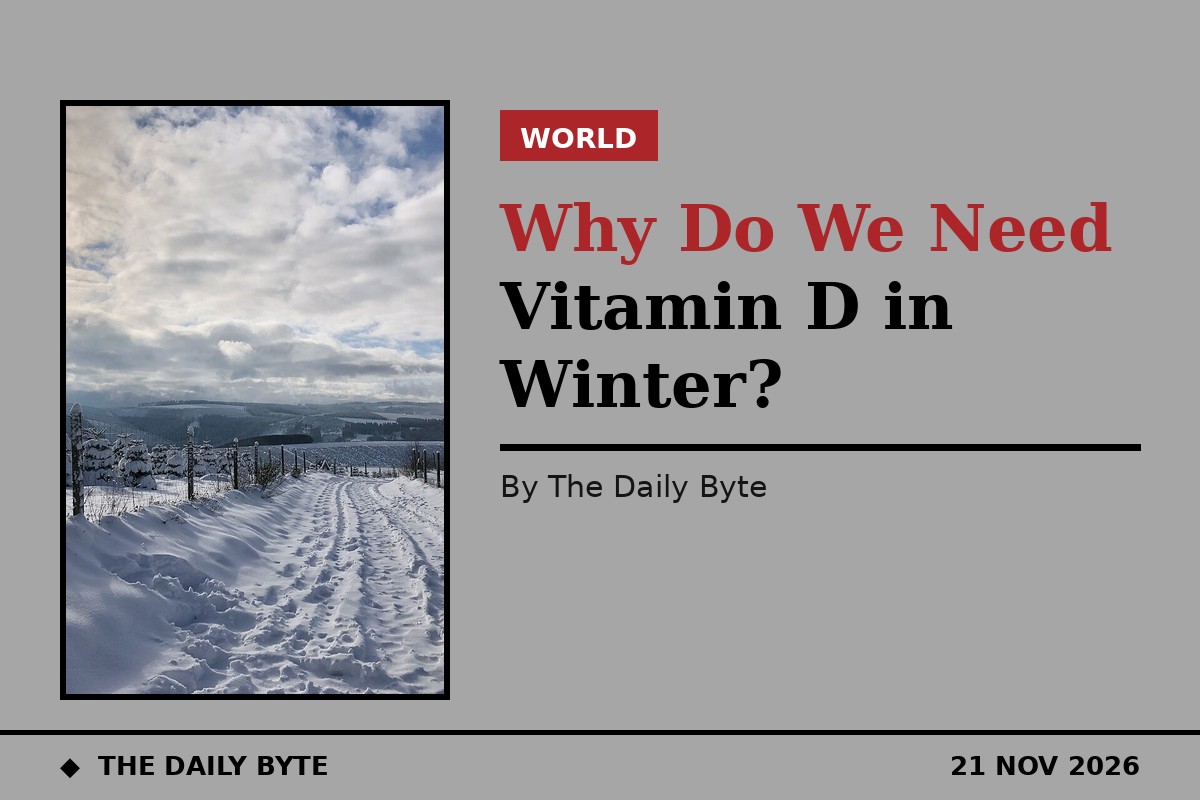
We need vitamin D in winter because, between October and early March in the UK, the sun is too low in the sky for our skin to make it. Vitamin D helps regulate the amount of calcium and phosphate in the body, and those nutrients are needed to keep bones, teeth and muscles healthy. From late March to the end of September most people can make all the vitamin D they need from sunlight on their skin, but in the darker months that supply stops, and food alone is rarely enough to fill the gap. That is why the government advises everyone to consider taking a daily vitamin D supplement during the autumn and winter.
This is not a small seasonal detail. A lack of vitamin D can lead to bone deformities such as rickets in children, and to bone pain caused by a condition called osteomalacia in adults. The vitamin works quietly in the background, helping the body absorb calcium from food and keeping the skeleton supplied with the minerals it needs. When levels run low for a long time, bones can soften and weaken, and muscles can ache and feel weaker too. Most people will not notice a mild shortfall day to day, which is exactly why the winter advice is framed as a routine precaution rather than a treatment for something already wrong.
What does vitamin D actually do?
Vitamin D is unusual among vitamins because the body can manufacture it. When ultraviolet B rays from sunlight hit bare skin, a chemical reaction in the skin produces vitamin D, which the liver and kidneys then convert into its active form. In that active form it controls how much calcium and phosphate the gut absorbs and how much the bones hold on to. Without enough of it, the body cannot use the calcium in food properly, however good the diet is.
The vitamin also plays a part in keeping muscles working normally. That is one reason a shortage can show up as tiredness, muscle weakness or bone pain rather than as anything dramatic. In children, whose bones are still growing, a severe shortage can bend and deform the legs and ribs, the condition known as rickets. In adults the equivalent problem is osteomalacia, where the bones soften and become painful. Both are preventable, and both are the reason public health advice treats vitamin D as a winter essential rather than an optional extra.
Why does winter cut off the supply?
The problem is geometry. The body can only make vitamin D when the sun is high enough in the sky for its ultraviolet B rays to reach the ground in useful strength. In the UK, between October and early March, the sun stays too low. The rays travel through more of the atmosphere, and the ultraviolet B that triggers vitamin D production is mostly filtered out before it reaches the skin. The government’s own statement on winter supplementation puts it plainly: in the UK between October and early March, we cannot make vitamin D from sunlight because the sun is too low in the sky.
From about late March or early April to the end of September, the position reverses, and most people should be able to make all the vitamin D they need from sunlight on their skin. That is why the supplement advice is seasonal. It is not that the body’s need for vitamin D changes with the calendar; it is that the free supply from the sun switches off for roughly half the year, and diet has to carry the load instead.
Cloud, short days and time spent indoors all make the winter shortfall worse, but the decisive factor is the angle of the sun, not the weather on any given day. Even a bright, cold, cloudless day in January does not deliver the ultraviolet B needed. Sunscreen, clothing and glass also block the rays, so sitting by a sunny window does not count. The skin has to be directly exposed to strong sunlight outdoors, and in a British winter that sunlight simply is not strong enough.
How much vitamin D do you need?
Children from the age of one year and adults need 10 micrograms of vitamin D a day. That includes pregnant and breastfeeding women, and people at risk of vitamin D deficiency. Babies up to the age of one year need 8.5 to 10 micrograms a day. A microgram is a very small amount, one thousandth of a milligram, and vitamin D is sometimes measured in International Units instead: one microgram equals 40 International Units, so 10 micrograms is the same as 400 International Units.
| Who | Daily vitamin D needed | Supplement advice |
|---|---|---|
| Adults and children aged 1 and over | 10 micrograms (400 IU) | Consider a daily supplement in autumn and winter |
| Babies under 1 year | 8.5 to 10 micrograms | Daily supplement all year, unless having more than 500ml of infant formula a day |
| Children aged 1 to 4 years | 10 micrograms | Daily supplement all year round |
| Pregnant and breastfeeding women | 10 micrograms | Daily supplement in autumn and winter; all year if at higher risk |
Some people should consider a daily supplement containing 10 micrograms of vitamin D throughout the whole year, not just in winter. The Department of Health and Social Care recommends year-round supplementation for adults and children over four who are not often outdoors, for example if they are frail or housebound, for people living in an institution such as a care home, and for people who usually wear clothes that cover up most of their skin when outdoors. People with dark skin, for example those of African, African-Caribbean or South Asian background, may also not make enough vitamin D from sunlight, and should consider a supplement all year round. All children aged one to four, and all babies unless they are having more than 500ml of infant formula a day, should take a daily supplement throughout the year.
Can food alone cover the winter gap?
Vitamin D is found in only a small number of foods, which is the heart of the winter problem. The NHS lists oily fish such as salmon, sardines, trout, herring and mackerel, red meat, egg yolks, fortified foods such as some fat spreads and breakfast cereals, and liver. Liver should be avoided in pregnancy. In the UK, cows’ milk is generally not a good source of vitamin D because it is not fortified, as it is in some other countries.
Eating these foods helps, and a balanced diet is part of the answer, but the official advice is clear that it is difficult for people to get enough vitamin D from food alone. That is the reason the advice is to consider a supplement rather than simply to eat more fish. A daily supplement containing 10 micrograms of vitamin D during the autumn and winter is the straightforward way to cover the amount the sun would otherwise have provided. Supplements and vitamin drops for under-fives can be bought at most pharmacies and supermarkets, and women and children who qualify for the Healthy Start scheme can get free supplements containing vitamin D.
Can you take too much vitamin D?
Yes, and this is where the advice has a firm upper limit. Taking too many vitamin D supplements over a long period can cause too much calcium to build up in the body, a condition called hypercalcaemia. That can weaken the bones and damage the kidneys and the heart, which is the opposite of what the vitamin is meant to do. If you choose to take vitamin D supplements, 10 micrograms a day will be enough for most people.
Adults, including pregnant and breastfeeding women and older people, and children aged 11 to 17, should not take more than 100 micrograms, or 4,000 International Units, of vitamin D a day, as it could be harmful. Children aged one to ten years should not have more than 50 micrograms a day, and infants under 12 months should not have more than 25 micrograms a day. Some people have medical conditions that mean they may not be able to take as much safely, so anyone in doubt should consult a doctor, and anyone whose doctor has recommended a different amount should follow that advice.
There is one reassuring limit that does not apply: you cannot overdose on vitamin D through exposure to sunlight. The skin regulates its own production, and the body stops making more once it has enough. The sunburn and skin-cancer risk of long sun exposure is a separate matter, and the NHS advice is still to cover up or protect the skin if you are out in the sun for long periods.
What vitamin D does not do
There have been reports suggesting vitamin D might reduce the risk of coronavirus, but the NHS is direct about this: there is currently not enough evidence to support taking vitamin D solely to prevent or treat COVID-19. The winter supplement advice stands on its own ground, which is bone and muscle health, and it should not be dressed up as protection against infection. The same caution applies to the many other benefits sometimes claimed for vitamin D online. The established, evidence-based reason to take it in winter is to keep bones, teeth and muscles healthy when the sun cannot do the job.
That narrow, practical purpose is also what makes the advice easy to follow. It is one small daily tablet or drop, at a dose of 10 micrograms, from October to early March, bought over the counter. For most people that is the whole routine, and it replaces a supply the body used to get for free from the summer sun.
Frequently asked questions
Do I need a vitamin D supplement in summer?
From about late March or early April to the end of September, most people can make all the vitamin D they need through sunlight on their skin and from a balanced diet, and you may choose not to take a supplement during these months. People at higher risk of deficiency, including those who are rarely outdoors or who cover most of their skin, should consider taking one all year round.
Can children take vitamin D supplements?
Yes. Children aged one to four should be given a daily supplement containing 10 micrograms of vitamin D throughout the year, and babies from birth to one year should have a daily supplement containing 8.5 to 10 micrograms throughout the year, unless they are formula-fed and having more than 500ml of infant formula a day. Vitamin drops for under-fives are available at most pharmacies and supermarkets.
Where can I get a vitamin D supplement?
You can buy vitamin D supplements or vitamin drops containing vitamin D at most pharmacies and supermarkets. Women and children who qualify for the Healthy Start scheme can get free supplements containing vitamin D.