WMO: 2026 Among Four Warmest Years on Record
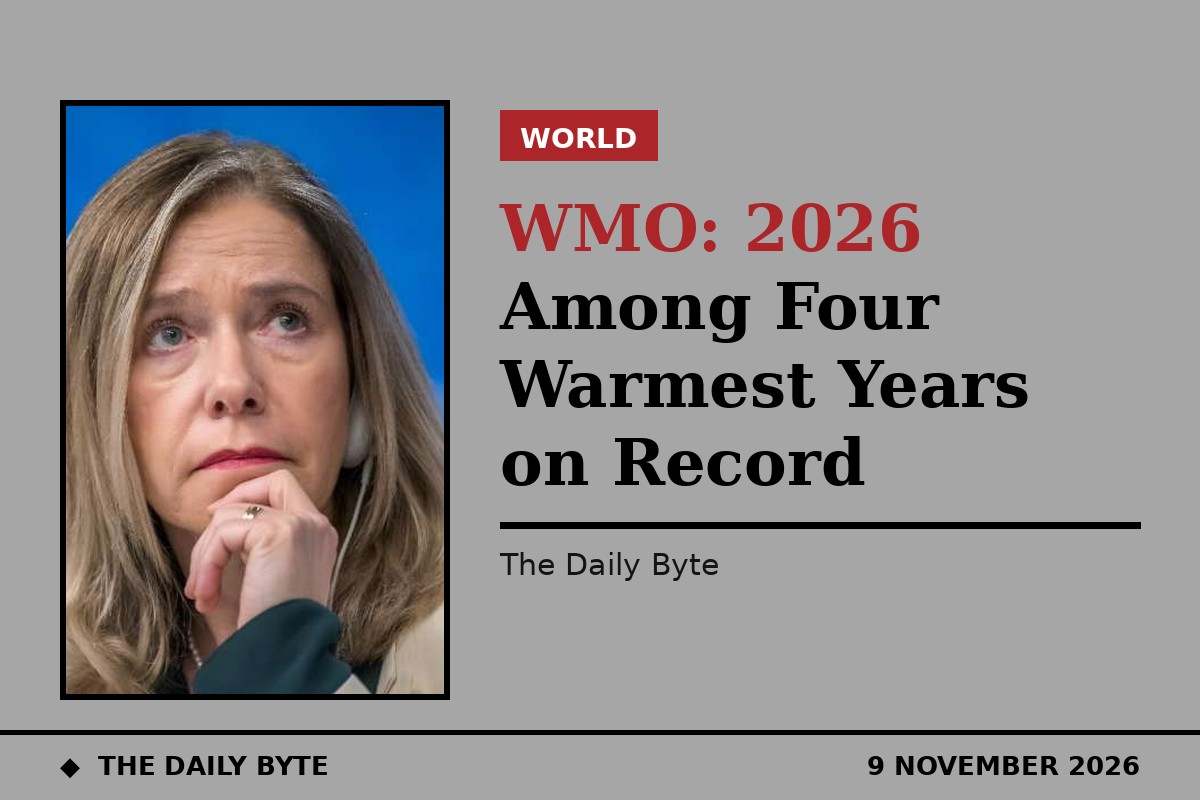
The world is on course for one of its four warmest years on record, the World Meteorological Organization said on Monday 9 November 2026, as it released its State of the Climate Update on the opening day of the COP31 climate summit in Antalya, Türkiye.
The update shows that the past 12 years, from 2015 to 2026, are set to be the warmest 12-year period since modern records began. The past four years, including 2026, are the four warmest years on record.
1.47°C above pre-industrial levels
The global average surface temperature from January to September 2026 was about 1.47°C above the 1850–1900 pre-industrial average, with an uncertainty range of 0.13°C. That figure is comparable to the full-year averages for 2025 (1.43°C) and 2023 (1.46°C), and below the 2024 record of 1.55°C.
Presenting the update at COP31, WMO Secretary-General Celeste Saulo said: "The past 12 years have been the warmest on record. The past four years – including 2026 – are the top four." She warned that temperatures were likely to rise further for 2026 as a whole once the strengthening El Niño is fully factored in.
El Niño set to intensify into 2027
El Niño has intensified since August and is expected to reach record strength by December, according to the WMO. The natural climate pattern releases heat from the ocean and is expected to increase the risk of extreme heat, drought and heavy rainfall well into 2027.
The WMO noted that El Niño typically has its greatest impact on global temperatures in the year after it develops, which is why 2024 was the warmest year on record. On that basis, the organisation warned that 2027 could break records again.
Oceans and sea levels at record levels
The update also found that the global mean sea level has reached its highest point in the satellite record, which began in 1993. Preliminary data through July point to a tenth consecutive year of record ocean heat content, with the ocean absorbing about 90% of the excess heat trapped by greenhouse gases.
The WMO described the run of extremes as giving "new meaning to the phrase 'off the charts'", with the report covering observations from January 2025 to September 2026. The data in the update run only to September 2026, so they do not yet reflect the most recent impacts of El Niño.
What happens next at COP31
The update was released to inform negotiations at COP31, where governments are discussing faster emissions cuts, adaptation funding and support for countries facing the worst climate impacts. The final State of the Global Climate 2026 report, drawing on contributions from national weather services and United Nations partners, is due to be published in March 2027.
UN climate chief Simon Stiell told the COP31 press conference that the climate crisis was now a health crisis of global proportions, as the WMO's findings underlined how far the planet has moved beyond the climate of the pre-industrial era.


