Wolbachia mosquitoes cut dengue 69% in Brazil
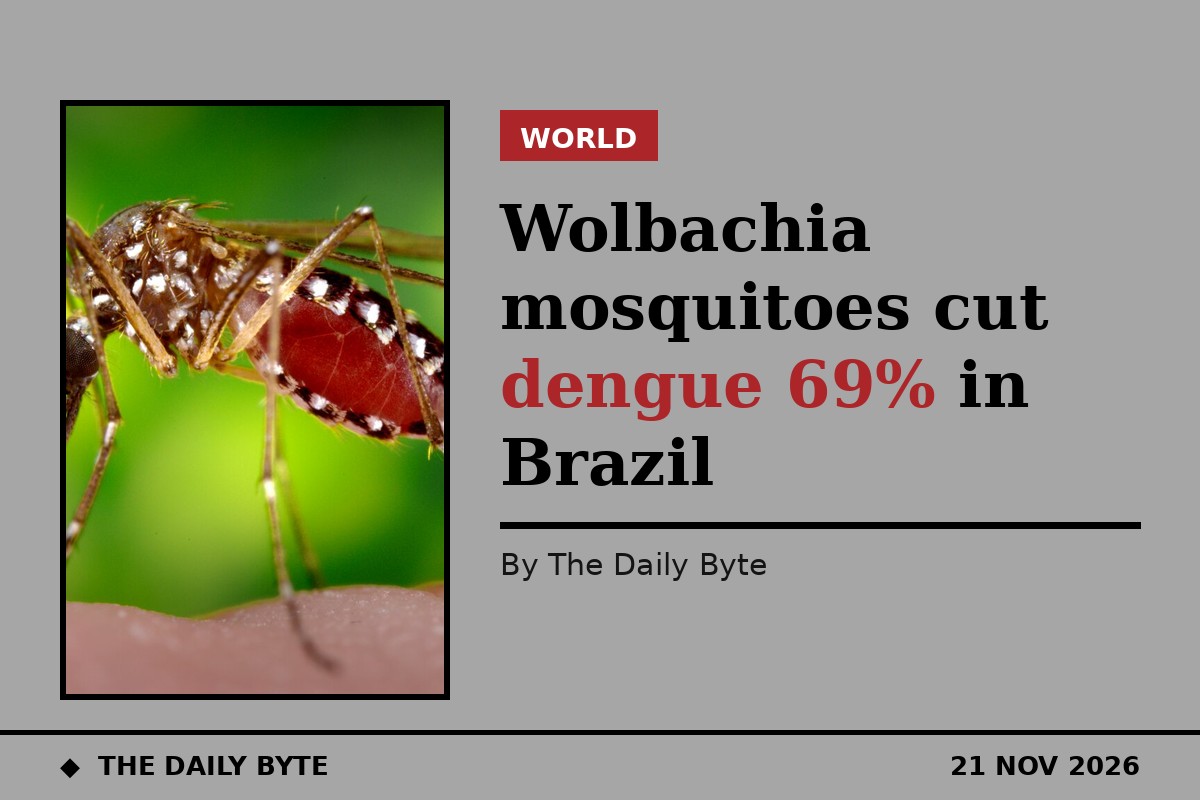
Children living in Brazilian neighbourhoods filled with a specially bred kind of mosquito were far less likely to catch dengue, researchers reported on Saturday, in the strongest evidence yet that the insects can blunt one of the world’s most common tropical diseases.
The study followed more than 5,700 children in Belo Horizonte, one of the world’s dengue hot spots, and found about a 69% reduction in dengue and chikungunya infections among schoolchildren in areas where the mosquitoes had been released, compared with similar neighbourhoods without them.
The effect held even during Brazil’s severe dengue outbreak in 2024, said Dr Sri Edupuganti of Emory University, who was part of the international research team. The findings were presented at a meeting of the American Society of Tropical Medicine and Hygiene.
How the Wolbachia mosquito works
Scientists breed the mosquitoes to carry a bacterium called Wolbachia. It is harmless to people and common in many insects, but it does not occur naturally in Aedes aegypti, the mosquito that spreads dengue. Once inside the insect, the bacterium sharply reduces its ability to pass on dengue, chikungunya and Zika viruses.
Female mosquitoes pass Wolbachia to their offspring, so releasing enough of the specially bred insects, males and females, into an area allows the bacterium to become established gradually in the local mosquito population. The non-profit World Mosquito Program has pioneered the approach, and field trials in Indonesia and elsewhere had already shown it could lower the number of diagnosed dengue cases.
The new study went further than earlier trials. Because people with mild symptoms may never be diagnosed, the researchers tested children’s blood for signs of dengue, chikungunya or Zika infection, rather than relying on clinic diagnoses alone.
Over four years, children in neighbourhoods that all received the same pesticide spraying and other mosquito-control measures were compared, with half of the areas randomly assigned to receive Wolbachia mosquito releases as well. There were too few Zika cases to calculate whether the special mosquitoes had any effect on that virus.
“Really exciting” — and timely for Florida
“This is really exciting,” said Dr David Hamer, a global health expert at Boston University who was not involved in the Brazilian study. He predicted that pairing wider use of Wolbachia mosquitoes with existing steps to fight mosquito-borne disease could “knock dengue down to much lower levels” in many places.
The results land as Florida grapples with an unusually large dengue outbreak, which appears to be the biggest in any American state since at least the 1940s. As of Friday, Florida health officials had counted more than 650 locally acquired cases, about three-quarters of them in Hillsborough County, home to Tampa.
In the continental United States, dengue is usually found in people who travelled abroad. The Florida outbreak, and the Brazilian evidence, together make the case for a tool that does not depend on spraying alone: a mosquito that cannot easily spread the virus it carries.