World Bank Backs $230m Housing Plan for El Salvador
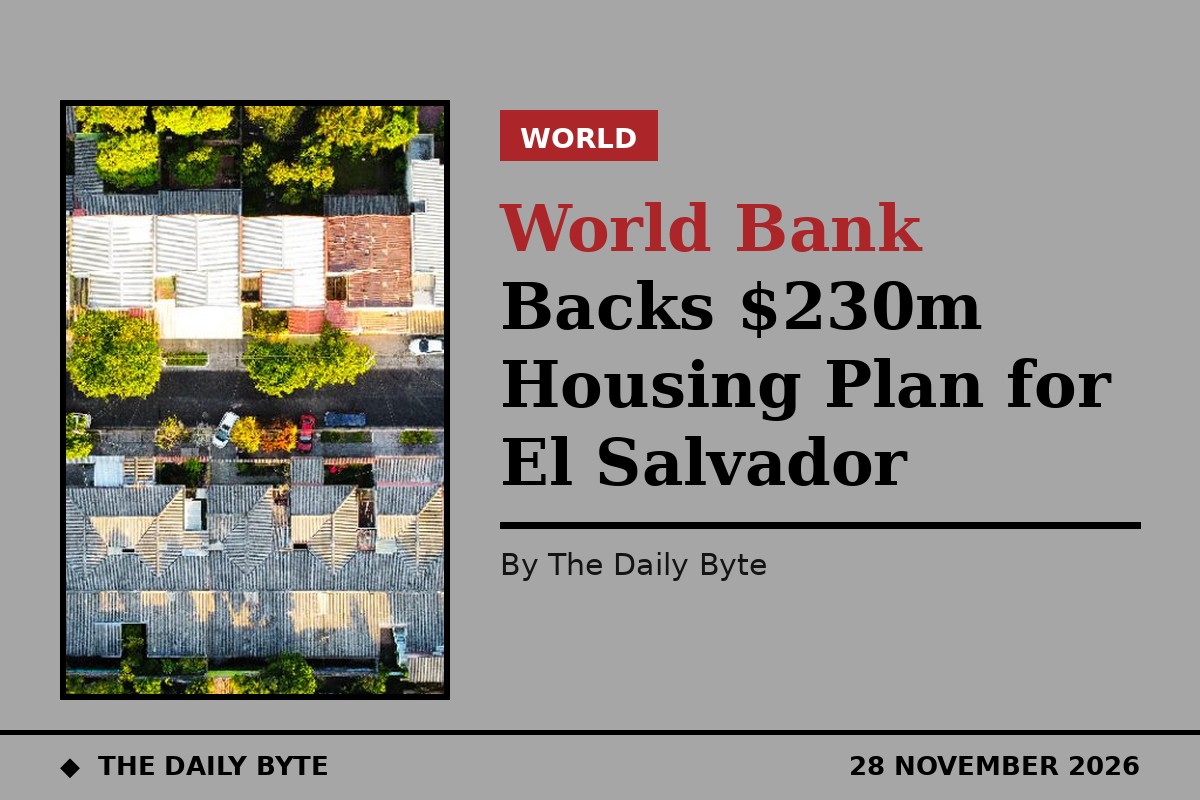
The World Bank has approved a new programme to expand access to affordable housing in El Salvador that can better withstand extreme weather and other natural disasters. The first phase, known as HogarES, comes with US$230 million in financing and is expected to benefit about 39,000 households between 2027 and 2031.
The World Bank's Board of Executive Directors approved the programme on 25 November. It is structured as the Housing Opportunity Made Equal (HOME) Multiphase Programmatic Approach, a two-phase initiative that will run over ten years. HogarES is the opening phase of that longer effort, and its household, investment and employment figures are expectations for that phase.
Who the programme aims to reach
HogarES will focus on low- and middle-income families, workers in the informal economy, people buying a home for the first time and households headed by women. Those are the groups that most often find housing finance out of reach — informal workers, for example, may have earnings that are harder to document, which can shut them out of a mortgage even when they can afford the payments.
The need is large. About 68 per cent of households in El Salvador face some form of housing deficit, according to the World Bank. The figure describes a broader problem than the number of families looking for a home, since the quality and safety of existing housing also matter. For families already living in a home that offers limited protection from extreme weather or natural disasters, the need for more resilient housing can be as pressing as the need for lower costs.
What the money will do
The programme is designed to strengthen housing finance and expand the supply of homes, so that broader access to financing goes hand in hand with more affordable housing options. It will also work on land management and on the rules and institutions that shape the sector, and it aims to create the conditions for greater private-sector participation in housing.
Alongside the public financing, HogarES seeks to mobilise US$335 million in private capital between 2027 and 2031. That target refers to investment the programme hopes to attract, separate from the US$230 million in financing for the initial phase. Bringing in private capital is part of the effort to expand the number of housing projects that can go ahead and reach more households over time.
Jobs as well as homes
HogarES is expected to support about 11,700 job-equivalents annually, including more than 5,000 for women and around 1,550 for young people. The annual job-equivalent measure describes the amount of employment the programme is expected to support each year, and the figures for women and youth are part of that broader projection.
The International Finance Corporation, or IFC, will advise on how to structure projects and incorporate sustainable construction, helping prepare a pipeline of projects that could attract private investors. That work brings the details of how a project will be financed and built into the same process, which matters when a development has to be affordable for residents and viable for investors at the same time.
What the government and the Bank said
Finance Minister Jerson Posada said the partnership with the World Bank would help El Salvador expand financing options for social housing and strengthen the sector, creating "new opportunities for jobs and growth across the country."
Diletta Doretti, the World Bank Group's representative in El Salvador, said adequate housing gives families greater security and more opportunities to plan for the future. She described the programme as a way to widen access to homes that are affordable and resilient and to use private capital to reach more households.
For the people HogarES is intended to serve, those goals come together in a practical question: whether they can find a home they can pay for and depend on over time. The first phase will put the programme's approach to the test by bringing together the institutions that shape housing policy, the investors who can finance projects and the households it is meant to serve.


