Wrapped Monero Token Crashes 99% in $13.5m Hack
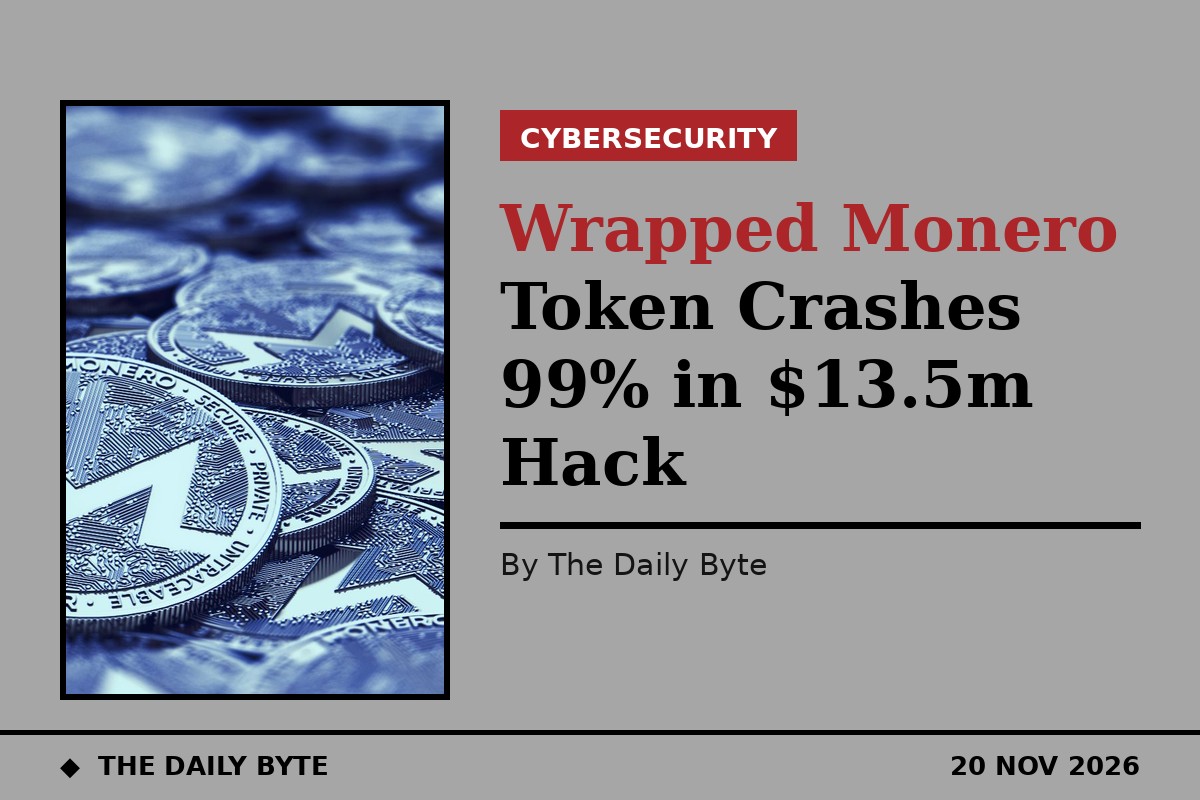
A wrapped version of Monero lost more than 99% of its value on Friday 20 November after an attacker drained its deployer wallet and dumped the tokens on the Hyperliquid exchange, in a hack worth about $13.5 million.
XMR1, a token issued by cross-chain swap service Wagyu that represents Monero on Hyperliquid, fell from about $500 to around $1 in roughly half an hour, according to onchain data firm Bitquery. The Block reported that the token touched as low as $0.65 during the collapse.
The account that deployed the token sent 5.2 million XMR1 to a newly created account early on Friday, Bitquery found. That account then sold about 364,000 of the tokens to 388 buyers for $13.5 million, before converting the proceeds into ether. At Bitquery's last check, about 7,350 ETH sat in three wallets linked to the attacker.
The attacker's account had received its first funds from Tornado Cash, a crypto mixer, minutes before it was set up, Bitquery said.
Founder blames a breach at a web host
Wagyu's pseudonymous founder, who goes by the name PerpetualCow, blamed the hack on a breach at 1984.hosting, an Icelandic web hosting provider. He wrote on X that the XMR1 deployer key had been stored on an old server there that he had deleted, but that the host apparently kept its logs and files.
"Lesson to learn here is that these hosting providers keep your data/logs even after you delete your server with them," he wrote in a post-mortem on X on 20 November. "Turns out that the entire hosting provider got hacked with everyone's data + internal server files today. The XMR1 deployer key was held on an OLD server on there that I DELETED, but somehow the logs/files were still kept."
1984 ehf, the company behind the service, said it had suffered an extensive and serious cyberattack on its IT infrastructure, Icelandic outlet DV reported on Friday, citing a joint statement with CERT-IS, Iceland's national cybersecurity incident response team. Early findings point to a well-organised and technically sophisticated attack, and the company said it could not rule out that more systems were affected than it had confirmed. It temporarily shut down all of its services.
That statement did not mention Wagyu or say whether customer data was taken. The Block noted that the host's confirmation of an attack does not automatically confirm the founder's claim that the deployer key was taken from its retained files. Bitquery likewise said onchain data alone cannot show whether the key was stolen, only which account sent the tokens.
Refunds promised, relaunch planned
PerpetualCow said he would personally refund everyone who lost money and that Wagyu would relaunch later, writing "Give me some time please" — but he gave no timeline for either. Wagyu's website displayed a notice saying the service was temporarily unavailable at the time of publication.
He also said market makers took most of the losses and that ordinary users who used the service to swap tokens lost nothing. That claim has not been independently verified, and Bitquery said it cannot verify how much Monero backs the remaining XMR1 tokens, since the Monero side of the bridge is not visible onchain.
Native Monero itself was not affected by the incident. Monero is a privacy coin that hides senders, receivers and amounts, and because it runs on its own blockchain it cannot trade natively on Hyperliquid. Wagyu bridges that gap, letting users deposit Monero and receive XMR1, which they can later redeem for the real thing. The hack struck the wrapped token and its deployer wallet, not the Monero network.
A warning about keys and deleted servers
The incident carries a blunt lesson for crypto projects: a private key is only as safe as every place it has ever been stored. If a deployer key once sat on a rented server, deleting that server does not guarantee the key is gone — backups, logs and disk images can keep it alive long after the account is closed.
The same deployer account still controls nearly all of ZEC1, a Zcash token issued through Wagyu, Decrypt reported, which means the attacker — or anyone else holding the key — retains access to another asset. Wagyu also disclosed a separate data leak in October, saying at the time that funds were unaffected.
For traders, the episode is a reminder that wrapped and bridged tokens carry risks beyond the underlying coin: the bridge, the deployer wallet and the infrastructure around them can all fail independently. XMR1's price collapse happened in minutes, and the buyers who paid $13.5 million for tokens now worth about $1 are waiting on a refund promise from a pseudonymous founder with no published timetable.