Yemen Airstrike Death Toll Rises to 44 Near Sanaa
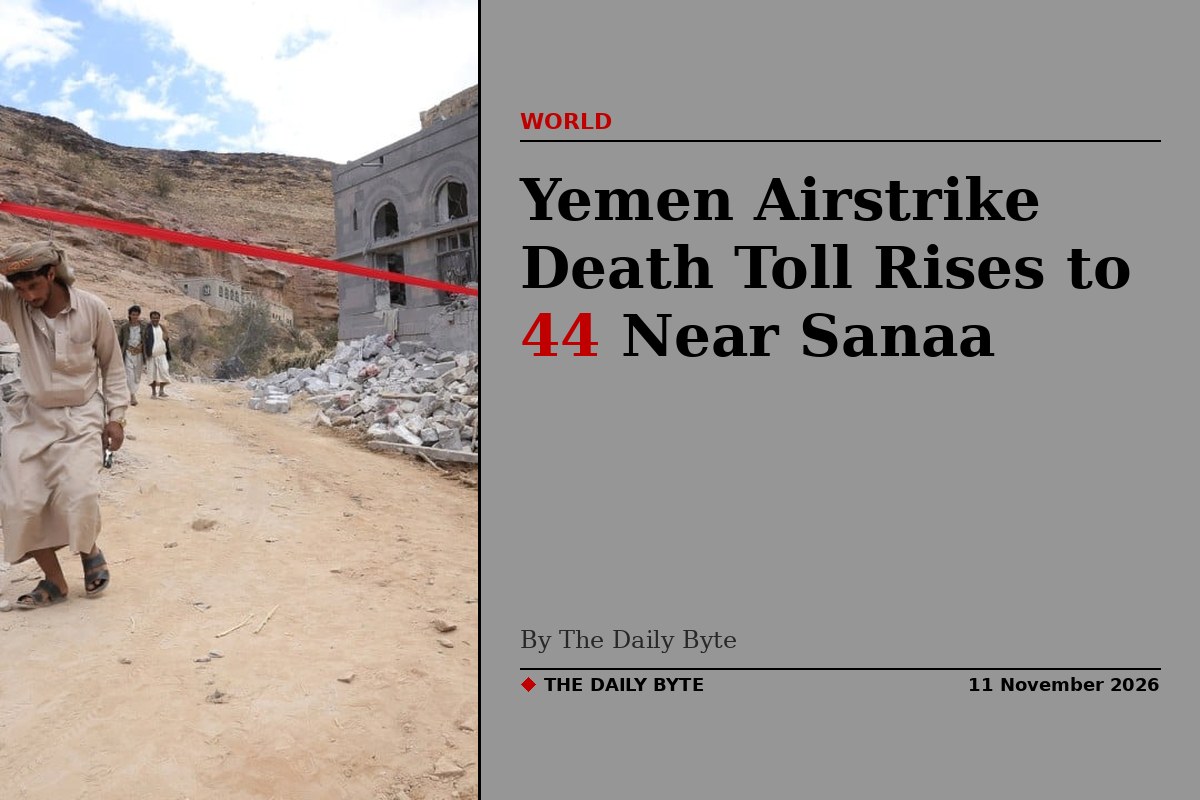
The death toll from airstrikes on a village east of Yemen's capital, Sanaa, has risen to 44, most of them women and children, according to health authorities run by the Houthi movement.
Anees al-Asbahi, spokesman for the Houthi-run Health Ministry, said the strikes hit Al-Shariya village in the Bani Hushaysh district on Saturday, 7 November, killing 21 children and 10 women and wounding 40 other people, including eight children and nine women. Rescue teams were still searching for people missing under the rubble of damaged buildings when the updated toll was reported on Monday.
The Houthis blame Saudi Arabia for the attack. Riyadh has not publicly confirmed responsibility for the strikes, and the casualty figures have not been independently verified. Reuters reported that Saudi Arabia's Centre for International Communication said it was investigating the reports.
Homes destroyed in Al-Shariya
According to Houthi media, the strikes hit residential buildings in the farming village, completely destroying six homes. A Houthi-run human rights commission said warplanes returned to bomb the site with three further strikes, targeting ambulance crews and rescue workers, and called for an independent international investigation. Those claims have not been independently confirmed.
The attack came less than 24 hours after a strike on a market in the Al-Waziyah district of Taiz governorate, in southern Yemen, which Houthi authorities said killed at least 30 people and wounded more than 21 others. The two incidents together have made the past week one of the bloodiest periods since fighting between the Houthis and the Saudi-led coalition flared again.
Fighting spreads to Saudi cities
The violence has spread well beyond Yemen's borders. The Saudi-led coalition said on Tuesday, 10 November, that its air defences had intercepted two missiles fired towards Riyadh and a drone aimed at the country's south. Saudi civil defence had earlier issued a warning for the capital before announcing that the threat had passed, and residents reported hearing explosions over the city.
Hours later, the Houthi-run Saba news agency reported Saudi airstrikes on the Houthi-controlled capital, Sanaa, hitting the al-Mufazir gas station in the northern Jadar district and a building belonging to the state oil company in the south of the city. Civil defence teams fought fires in gas trailers at the station. The coalition did not immediately confirm those strikes, and the Houthis did not immediately claim the missile and drone launches.
Saudi Arabia has said it struck three Houthi facilities linked to ballistic missile production, as the coalition steps up its campaign against the group's ability to launch long-range attacks. The Houthis have increased strikes on Saudi airports, ports and oil facilities since advancing towards the Bab el-Mandeb strait, the strategic shipping chokepoint at the southern entrance to the Red Sea, in September.
A war returning to full scale
Yemen's long-running conflict, which pits the Houthis against the internationally recognised government backed by Saudi Arabia and its allies, had seen relative calm after a truce in 2022. That calm has now broken down, with the renewed fighting drawing in civilian neighbourhoods on both sides of the border.
The Al-Shariya toll underlines the human cost. The dead were overwhelmingly civilians, according to the Houthi health ministry, and the victims included whole families killed in their homes. With rescue work continuing and Saudi Arabia yet to respond publicly to the specific allegations, the incident is likely to add to pressure for an independent account of what happened in the village, and to deepen fears that the Saudi-Houthi war is returning to the scale of its worst years.


