Yemen's Taizz road attack leaves besieged city facing deeper shortages, Human Rights Watch warns
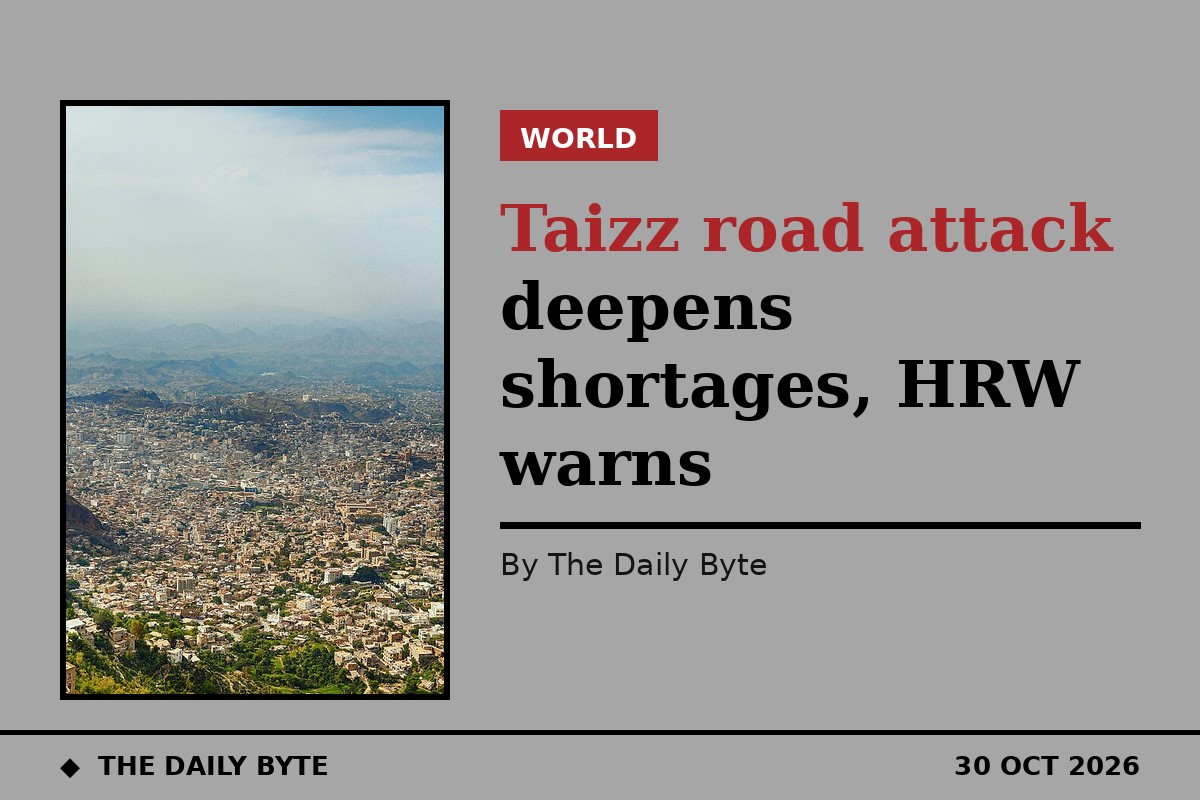
Human Rights Watch has warned that an attack on the main road into Yemen's besieged city of Taizz has put civilian lives at risk. The organisation said Houthi forces used explosives on 18 October 2026 to damage the Hayjat al-Abd road, the main entry point for food, medicine and fuel.
Taizz city, Yemen's third largest city, has been besieged by Houthi forces since 2015, and control of the surrounding governorate has been divided ever since. Residents already struggle with severe shortages of food, water, medicine and fuel, and Human Rights Watch said the attack on their remaining supply route further endangers them.
What the investigation found
The organisation said it spoke to eight informed sources in October and analysed satellite imagery and verified photographs and video. Damage to a culvert on the road's switchbacks was consistent, it said, with a subsurface detonation of explosives. It wrote to the Houthis on 21 October; there was no response.
This was not the first attack on the route. About two weeks earlier, on the night of 30 September to 1 October, apparent Houthi forces infiltrated the road about 85 kilometres south-east of Taizz city, placed explosives in a culvert near a local market and withdrew, according to sources cited by Human Rights Watch. Since then, all roads into and out of Taizz have largely been blocked.
Why the road matters
Human Rights Watch said the deliberate destruction of segments of the road, if intended to disable infrastructure indispensable to civilian survival, would violate the laws of war and could amount to a war crime. The warning comes against a wider deterioration: on 9 October, UN Special Envoy Hans Grundberg told the Security Council that Yemen was returning to full-scale war. For the people of Taizz, the question is practical — whether supplies can still reach a city under siege for more than a decade.
Sources: Human Rights Watch; SAM for Rights and Liberties.