Yemen Tells Iran to Stop Arming Houthis
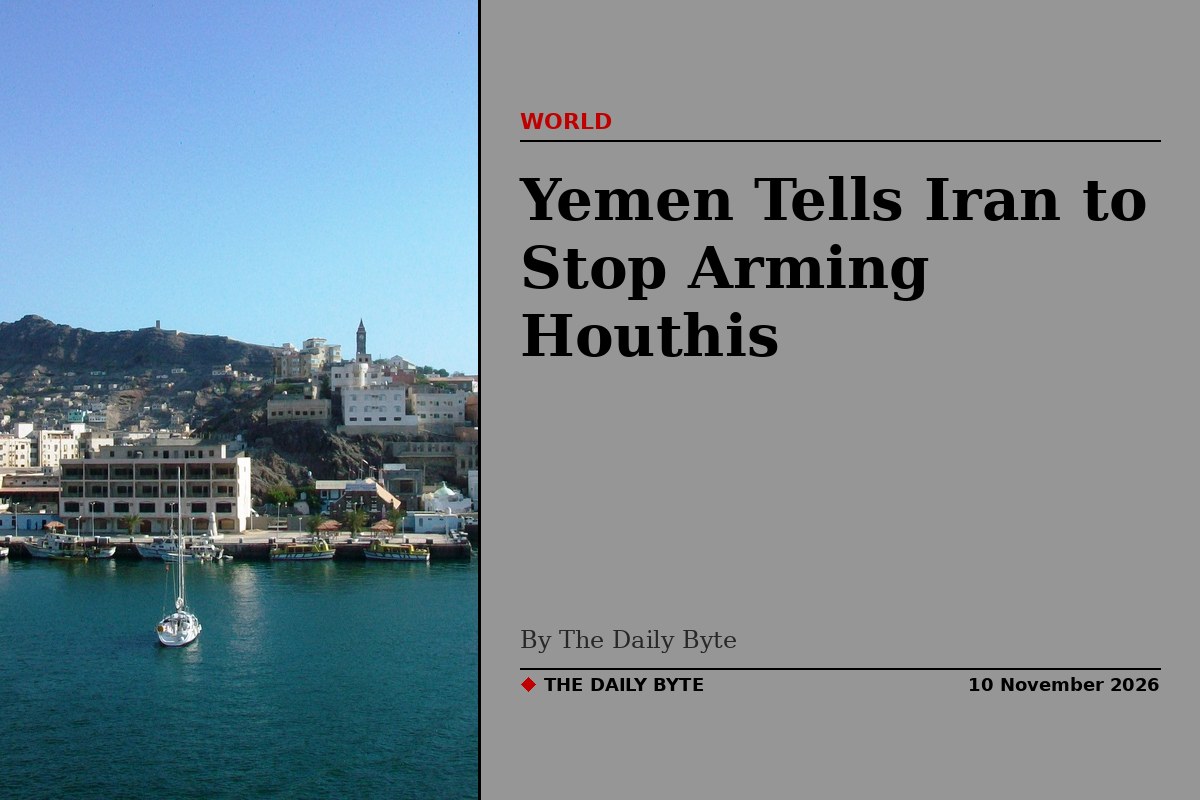
Yemen's internationally recognised government has demanded that Iran immediately stop arming the Houthi movement, withdraw its military experts from the country and end what it called interference in Yemen's internal affairs.
The demand was issued on Monday, 9 November, in a statement posted on X by Yemen's Ministry of Foreign Affairs and Expatriate Affairs, based in the southern port city of Aden.
The ministry strongly condemned a recent statement by Iran's Foreign Ministry, which had accused Saudi Arabia of violating Yemen's sovereignty and criticised air strikes on civilian targets in the country.
The 21 experts at the centre of the row
The Yemeni government pointed to an announcement by its Interior Ministry that 21 foreign military experts are working with the Houthis, including 14 members of Iran's Islamic Revolutionary Guard Corps (IRGC) and seven from Lebanon's Hezbollah.
Interior Minister Major General Ibrahim Haidan said the experts had moved beyond supplying weapons, training and technical help to directly supervising military planning, command and control and the development of advanced military capabilities. According to the ministry, eight of the experts are based in Hodeidah, four in Sanaa, four in Saada, two in Hajjah, two in Amran and one in the coastal city of Khokha.
The ministry has not released the identities of the 21 people or evidence that would allow their roles and locations to be independently verified. Hezbollah has dismissed the accusations as false.
The foreign ministry said Tehran's involvement had expanded from financial backing, arms supplies and training into direct operational planning and strategic management of Houthi military actions, and accused Iran of enabling the Houthis to continue abducting and killing civilians, shelling cities and besieging and starving populations.
Iran accused of prolonging the war
Aden accused Tehran of deliberately prolonging the armed conflict while offering the Houthis political and diplomatic cover, and urged Iran to respect the arms embargo imposed by United Nations Security Council Resolution 2216.
The exchange follows an Iranian Foreign Ministry statement condemning air strikes that hit the Al-Hadara public market in the Al-Wazi'iyah district of Taiz province on 6 November, as well as raids affecting Al-Shariyah village in the Bani Hashish district east of Sanaa.
The Houthis, who seized the capital Sanaa in 2014, took control of the western Red Sea coast and the Bab al-Mandeb strait in September. Yemen's government launched Operation Dawn of Yemen on 5 October to reverse those gains, and fighting has continued across five provinces, with Saudi-led coalition air strikes supporting government forces and Houthi attacks continuing against Saudi Arabia.
For now, the diplomatic row underlines how the war in Yemen has become entangled with the wider regional confrontation between Iran and its rivals, with each side accusing the other of fuelling a conflict that has already lasted more than a decade.


