Yen at 160 as small US role casts doubt on intervention
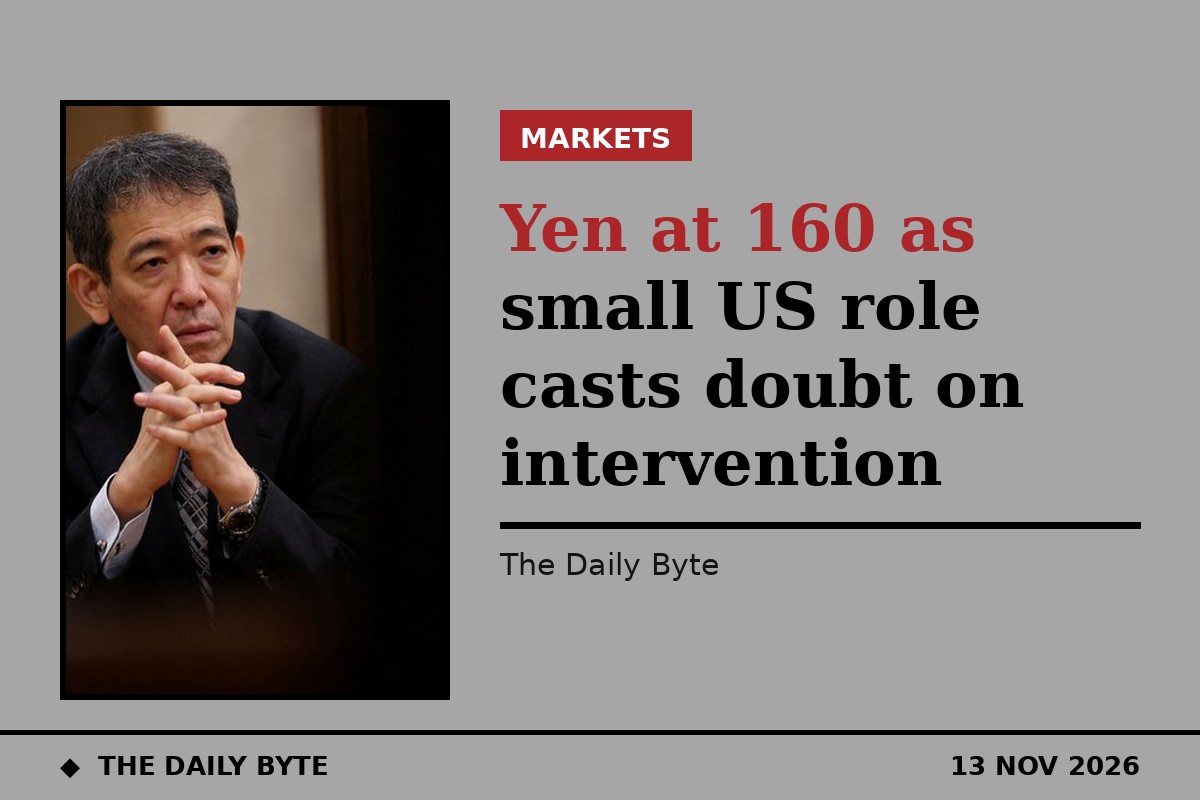
The yen could retest its 40-year lows against the dollar after a Federal Reserve Bank of New York report showed Washington contributed only about $497 million to the joint currency intervention with Japan in July. The yen weakened past 160 per dollar overnight for the first time since early September, prompting a fresh warning from Tokyo.
Japan spent 15.4 trillion yen ($96.5 billion) to support its currency after it sank to a four-decade low of 163.99 per dollar in late July. The operation was presented as joint action, and US Treasury Secretary Scott Bessent had hinted at the time that the American contribution could reach $10 billion. The New York Fed report on Thursday showed the actual US total was far smaller, about $497 million of euro sales to buy yen.
Deterrent effect weakened, analysts say
Analysts say the modest American contribution weakens the deterrent effect of any future joint action. Tohru Sasaki, chief strategist at Fukuoka Financial Group and a former Bank of Japan official, said people had worried coordinated intervention could be very powerful, but the figures show it is not. Traders may now be more willing to test higher levels if they conclude Tokyo acting alone would have only limited impact.
Japanese Finance Minister Satsuki Katayama said on Friday that the moves were one-sided and too fast, and that the government stood ready to act again. Japan has spent 27.1 trillion yen defending the currency this year. The gap behind the slide remains wide: the Bank of Japan's rate is 1.25%, against the Federal Reserve's 3.75% to 4.00%. Both central banks meet in December, with a Fed rise priced for 9 December and a Bank of Japan rise expected on 18 December.
Sources: Reuters and FXStreet.