Young workers in England: only half get permanent jobs
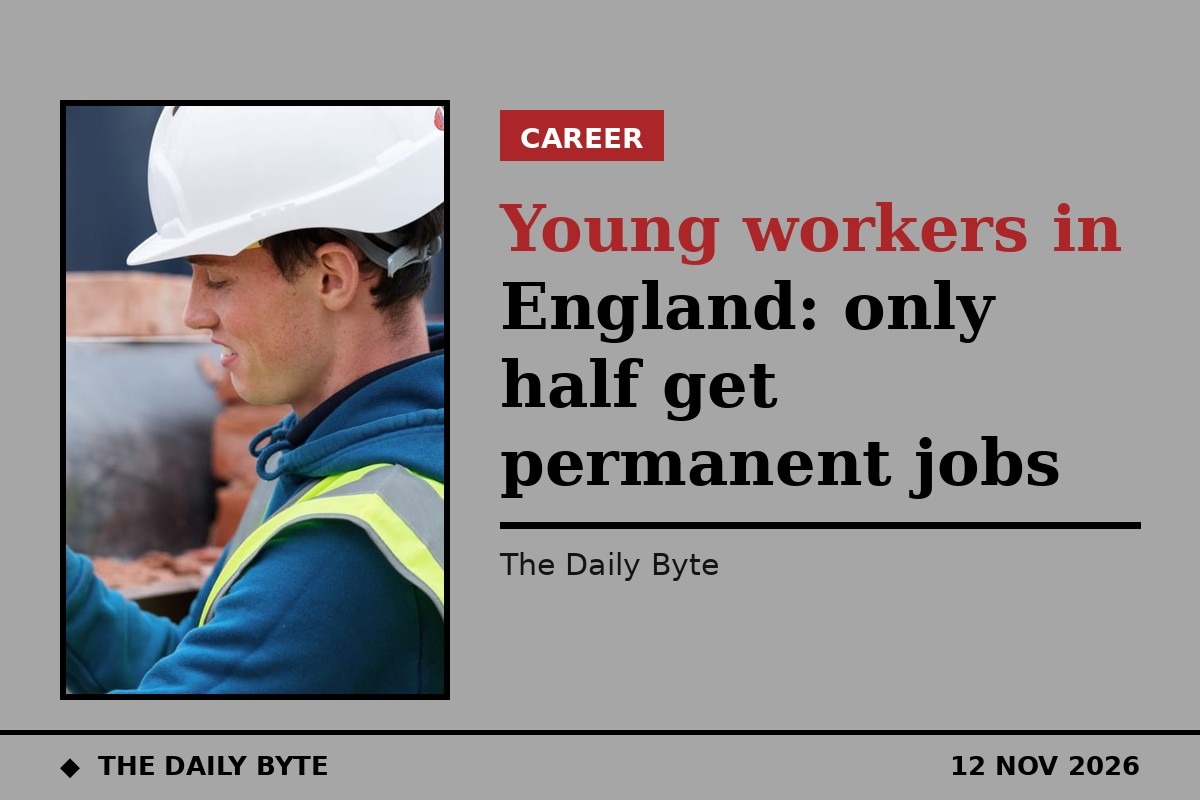
Only half of young workers in England who did not go on to higher education had secured a permanent contract by the time they were 19 or 20, down from 81% in a similar study six years ago. Just 16% had secured an apprenticeship and only 23% had secured stable work by that age, according to new findings from a major King's College London study published on 11 November 2026.
The findings come from "Your Life, Your Future", a survey of post-school transitions in England led by Professor Sharon Gewirtz of King's College London. It followed 4,295 young people born in 2004 or 2005 from ages 15-16 through to 19-20, across three waves of research carried out from May 2021 to January 2025.
Temporary work means worse pay and prospects
The research found that temporary and casual work was associated with worse pay, poorer workplace relationships and poorer job design than either apprenticeships or stable work. The authors say this kind of work is not only insecure but also typically more isolating, offering fewer opportunities for mentoring and meaningful participation in workplace life.
Young people who experienced mental health difficulties, unfair treatment or bullying at ages 15-16 were more likely to experience poorer relationships and have less say at work at ages 19-20, suggesting that vulnerabilities experienced at school continue into early experiences of the labour market.
Professor Gewirtz said the vast majority of young people want to work but are being let down by a system that is riven by inequalities and simply not delivering enough decent opportunities. She warned against welfare reforms that could force young people into poor-quality employment or work experience, and said the focus must instead be on increasing and equalising access to good work.
NEET numbers more than double by age 19-20
The study also found that the proportion of young people not in education, employment or training, known as NEET, more than doubled from 4% at ages 17-18 to 10% at ages 19-20. More than 40% of those who were NEET at ages 17-18 remained so two years later, and NEET status was far more persistent than any other education or employment status between those ages.
Despite common perceptions of disengagement, the study found that around seven in ten NEET respondents were either actively seeking work or education, or were engaged in volunteer or unpaid caregiving work.
The findings land ahead of the upcoming Milburn report, the independent review into NEET status. Olly Newton, executive director of the Edge Foundation, said the results reinforce many of the challenges set out in Milburn's first report, with high levels of sustained NEET status, and point to the need for more apprenticeships, more and earlier vocational pathways, and a greater say for young people in decision-making.
Sharp inequalities in access to apprenticeships
The research found substantial inequalities in access to apprenticeships and secure work. Young people from Asian and Black backgrounds apply for apprenticeships at similar rates to their white peers, but are significantly less likely to secure a place, by approximately 15 and 12 percentage points respectively.
Black young people are more likely to remain in education beyond the compulsory school-leaving age, but those not in education are approximately 24 percentage points less likely to be in stable employment than their white peers at ages 19-20.
The researchers recommend a series of policy priorities for the government, including strengthening vocational pathways, preventive action that recognises the diversity of experience within NEET status, workplace policies that support young people with mental health needs, and shifting the focus from individual employability to structural reforms. Those reforms, they say, should address the shrinking supply and quality of work opportunities, improve transport affordability and connectivity, and ensure recruitment practices are transparent, fair and inclusive of young people from all backgrounds.
Sources: Phys.org, 11 November 2026, reporting the King's College London "Your Life, Your Future" study; King's College London, Young Lives, Young Futures.