Zambia Denies Plan to Scrap Presidential Term Limits
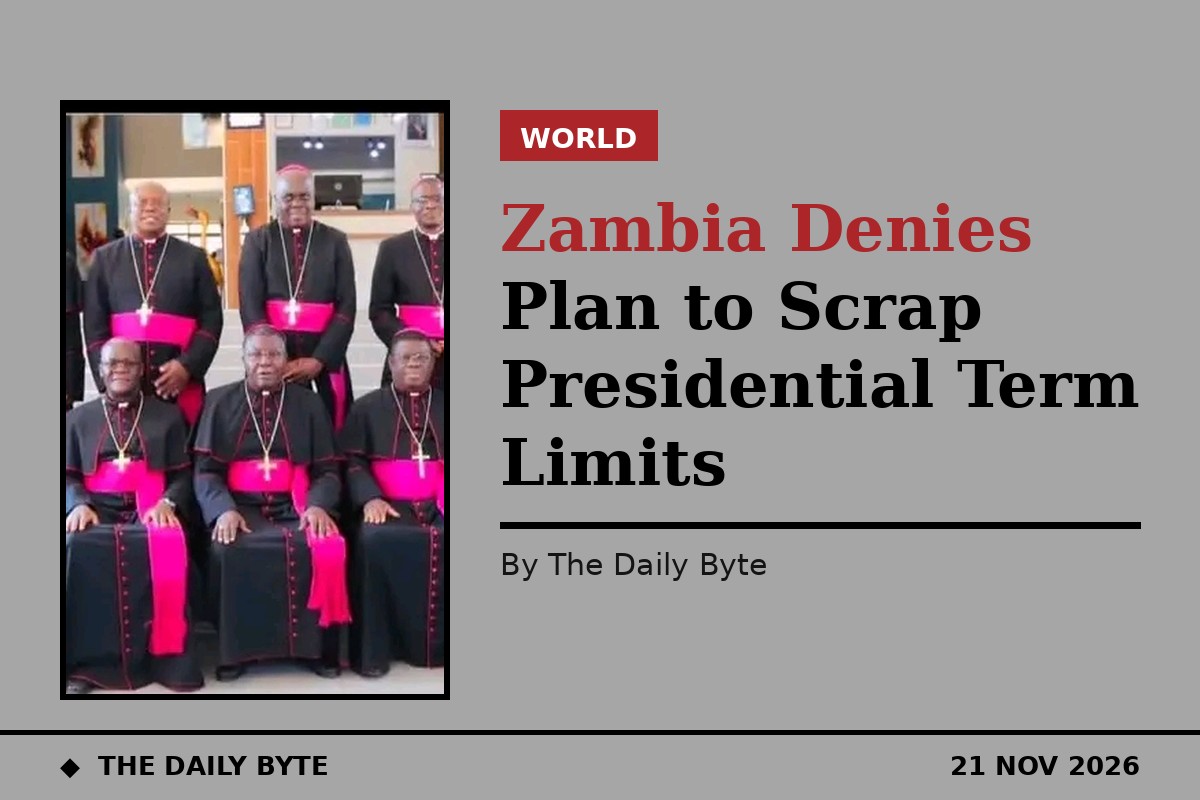
Zambia's government has said it has no plan to scrap presidential term limits, after the country's Catholic bishops warned against reopening a debate they say threatens democracy.
Chief Government Spokesperson Elvis Nkandu issued the denial in a statement on Friday 20 November, saying there was no official proposal to change the constitutional provisions governing how long a president can remain in office. Nkandu, who is also Minister of Information and Media, said the renewed debate had been sparked by views expressed by some members of parliament, youth groups and other stakeholders, rather than by any government initiative.
"It is not a debate initiated by Government, nor is there any Government policy proposal to reopen the question of presidential term limits," the statement said. It added that views advanced by individuals or interest groups should not be mistaken for official government policy.
Bishops invoke the 2001 third-term fight
The government's statement followed a pastoral letter issued the same day by the Zambia Conference of Catholic Bishops, which defended presidential term limits and warned Zambians to safeguard democracy. The bishops said the debate had been reopened after the August 2026 general elections, with some MPs and youth groups calling for the question of term limits to be revisited.
"We have not forgotten where we came from, and we are not going back," the bishops said in the statement, signed at Kapingila House in Lusaka on 20 November.
They recalled 2001, when the constitution was threatened with amendment to allow then President Frederick Chiluba to remain in office for a third term. The bishops said the Zambian people "answered with one voice", and that the Church, together with the Law Association of Zambia, the Council of Churches in Zambia and the Evangelical Fellowship of Zambia, came together in what became known as the Oasis Forum. The Oasis Declaration was read from pulpits across the country on 21 February 2001.
Chiluba, the bishops noted, "to his lasting credit, accepted the will of the people" and declared publicly that he would not seek a third term. "That moment protected our young democracy," they said.
Call on Hichilema to speak clearly
The bishops framed term limits as a safeguard against the concentration of power, not a technicality. "Respecting constitutional term limits is an important expression of this responsibility, demonstrating that political leadership is a service to the nation rather than a personal entitlement," they said, describing leadership as a responsibility entrusted to those called to serve others.
They called on President Hakainde Hichilema to state clearly, publicly and without ambiguity that he will honour the limits in the constitution he swore to uphold. The pastoral letter noted that Hichilema has previously been reported as an advocate of the two-term limit, quoting him in August 2021 as saying: "Third term is not part of our language."
The bishops appealed to Zambians to "remain vigilant, peaceful and united", urged MPs to remember they hold their seats on behalf of the people, and called on political parties to "rise above partisan politics and defend constitutionalism and the rule of law".
Government stresses the constitution
Nkandu said the government recognised the Church's role in promoting constitutionalism and democratic governance, and respected its right to express views on matters of public interest. He said the constitution remains the supreme law of Zambia and must be respected by all citizens and institutions.
He also said citizens were entitled to express their views and petition parliament on matters of national interest, and that the government respected parliament's independence and its mandate to consider matters brought before it.
The government urged the Church, political parties, civil society and other stakeholders to engage in peaceful and constructive dialogue, placing national unity above partisan interests. Its priority, Nkandu said, remains improving livelihoods, creating economic opportunities and advancing the Grow Zambia Agenda, rather than reopening the question of presidential term limits.


