Zimbabwe clears 250,000 landmines since 2013
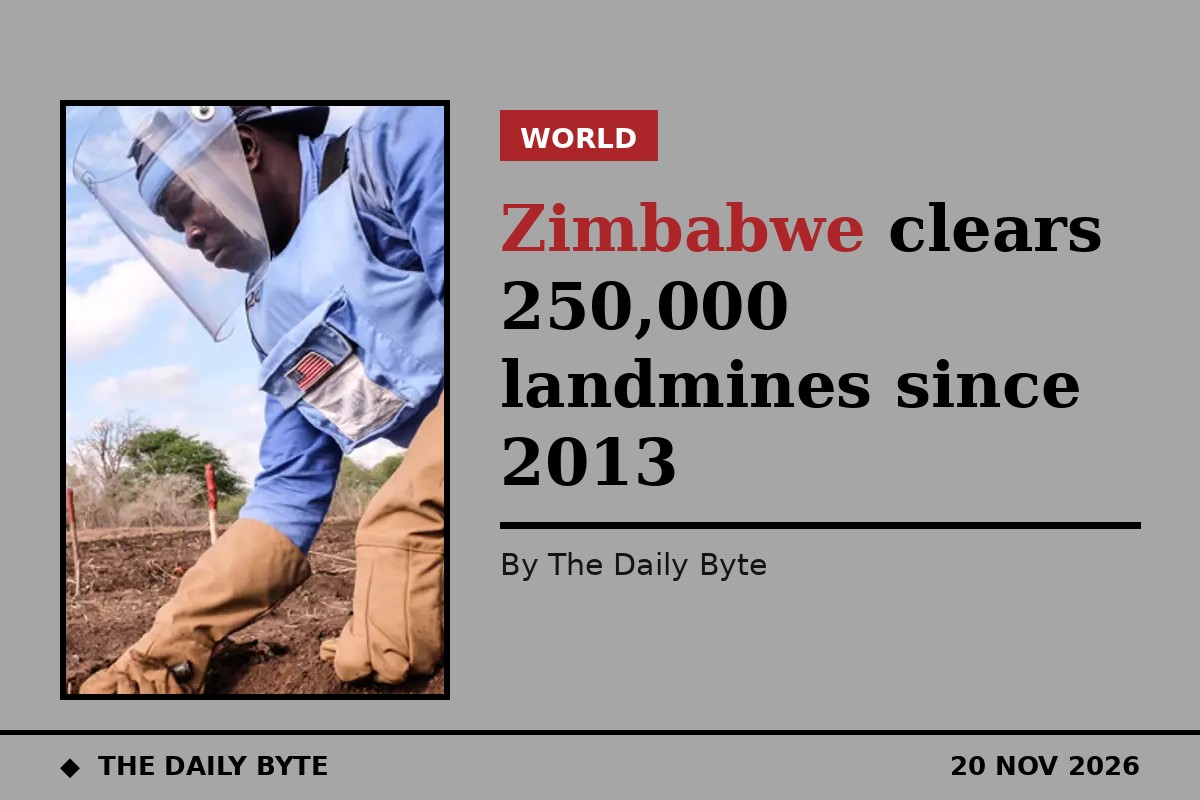
The HALO Trust has destroyed 250,000 landmines in Zimbabwe since 2013, the world’s largest landmine clearance charity announced on Thursday 19 November, in a milestone for one of the most heavily mined countries on earth.
Dense belts of landmines were laid along Zimbabwe’s borders with Mozambique and Zambia during the Liberation War in the 1970s, mainly by the Rhodesian army. They have killed or injured more than 1,500 people and 120,000 cattle since independence in 1980. In some of the densest sections of minefield there are 5,500 mines per linear kilometre, including the highly sensitive South African R2M2 mine, which is hard to detect and still dangerous almost 50 years after it was laid.
For 13 years, HALO’s Zimbabwean teams have cleared the minefields in the north-eastern districts of Rushinga and Mount Darwin, restoring farmland, reconnecting communities and laying the foundations for investment and economic growth. The charity says it has destroyed almost four mines for every person living in the area.
“The destruction of 250,000 landmines is an extraordinary achievement, built on the dedication and courage of Zimbabwean men and women working in some of the country’s most dangerous areas,” said Oliver Gerard-Pearse, HALO Trust Zimbabwe programme manager.
In Rushinga, where losing a single cow to a landmine can cost a family the equivalent of six months’ school fees, clearance has directly benefited more than 14,000 residents, allowing families to reclaim farmland, graze livestock, grow cash crops and safely reach clean water, schools, clinics and markets. One resident, Munesa Takawira, said families used to walk in fear but could now walk as they pleased and send children to fetch firewood without fear of injury.
In Mount Darwin, where HALO became the first operator to hand over an entire district as landmine-free in November 2021, deaths and injuries from explosives have fallen to zero. Incomes rose by 90% for nearly a third of local farmers, and the number of land-owning families in six communities increased by more than 80%.
HALO is the largest demining organisation in Zimbabwe and employs several hundred local men and women in areas where jobs are scarce. It trains female deminers who are often the main breadwinners for their families and support an average of eight relatives through their clearance work. The charity has also trained more than 17,000 adults and 73,000 children in how to stay safe from explosives since 2015, and works with a prosthetics provider to support amputees.
Drones, modern detectors and mini excavators are helping HALO clear faster and more safely, but the charity warned that sweeping global aid cuts threaten Zimbabwe’s aim of achieving mine-free status by 2030. Only 4% of the land identified as contaminated remains to be cleared, but Gerard-Pearse estimated it would take $6.5 million in donations to finish the work by the end of the decade. Many demining programmes in Zimbabwe were significantly affected by the reduction of US funding in early 2025.
“We have seen how safe land can boost investment and development in other countries where HALO works. In neighbouring Mozambique, GDP rose significantly when it was declared mine-free in 2015,” he said. “In Zimbabwe we are now so close to lasting safety for generations to come. We cannot afford to lose momentum at this final stage of a decades-long effort.”
Zimbabwe ranked second globally in anti-personnel landmine destruction after Cambodia, according to the Clearing the Mines 2025 report.
Sources: The HALO Trust; AFP


