Zimbabwe court to hear term-limit law challenge
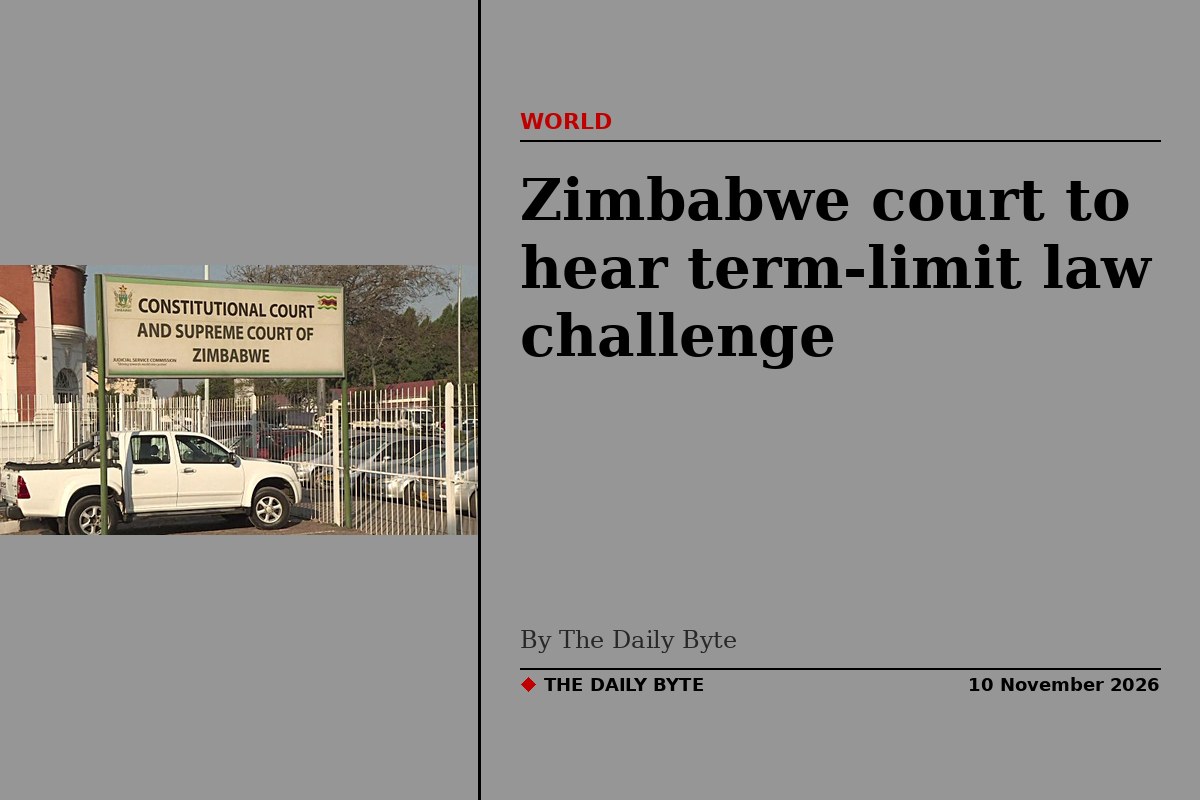
Zimbabwe’s Constitutional Court will hear two legal challenges to the Constitution of Zimbabwe Amendment Act (No. 3) of 2026 on Wednesday, 11 November. The cases question both how the amendment was passed and whether its most far-reaching changes are lawful.
The amendment, known as CAA3, was signed into law by President Emmerson Mnangagwa on 7 July 2026. It extends the current presidential term by two years, to 2030, postpones the next general election from 2028 to 2030, stretches presidential and parliamentary terms from five years to seven, enlarges the Senate from 80 to 90 members, and replaces the direct election of the president with election by Parliament.
The two challenges
The first case, brought by Vhurande Mahlupeko against Parliament and others (CCZ277/26), challenges the validity of the entire Act. Mahlupeko argues that the amendment changed 10 provisions that were not included in the government gazette setting out the 90-day public consultation period, and is asking the court to invalidate the Act as a whole rather than strike down individual clauses.
The second case, brought by former Binga MP Prince Dubeko Sibanda against Parliament and the Minister of Justice, Legal and Parliamentary Affairs (CCZ271/26), challenges the clauses extending presidential and parliamentary terms from five to seven years and applying them to current officeholders. Sibanda argues this breaches section 328(7) of the constitution, which prohibits extending the term of a sitting officeholder.
What the amendment changed
Until the amendments took effect, Zimbabwe’s president was chosen by direct universal suffrage. Under the new framework, members of Parliament elect the president, a shift the challengers say could not lawfully be made without first putting the question to voters in a referendum. The changes have generated a series of court challenges, including one brought by liberation war veterans contesting the removal of the direct presidential vote, which they argue breaches the Declaration of Rights.
President Mnangagwa’s recent appointment of 10 additional senators, made possible by the expanded Senate, is among the matters already being contested as unconstitutional, and more challenges are queued behind the cases now before the court.
More cases to come
A third challenge, filed by the Movement for Democratic Change (MDC), is set to be heard on 25 November. The MDC argues that changing the right to vote directly for the president, protected by section 92 of the constitution, requires a national referendum under section 328(6). It also contends that President Mnangagwa breached his constitutional duty under section 110(2)(f) by failing to call a referendum when a provision in the bill of rights was affected by the amendments.
For ordinary voters, the immediate stakes are about how, and by whom, the next president is chosen, and whether the terms they voted for remain five years or stretch to seven. For political parties and civic groups, the hearings will shape how campaigns for the coming electoral cycle are planned and funded. The court’s rulings will decide whether the most far-reaching amendment to Zimbabwe’s 2013 constitution since its adoption can stand.


