£100 Energy Payment: £350m to Richest Fifth, Analysis
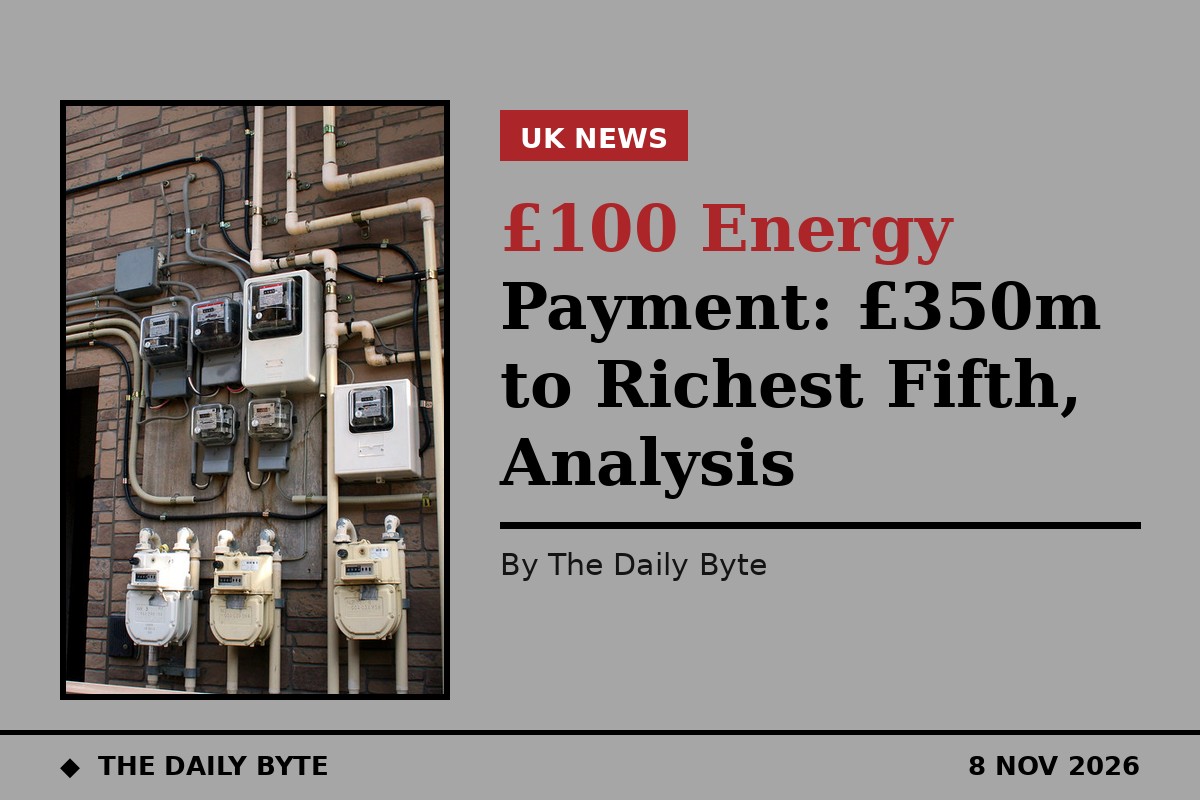
About £350 million of the government's £100 household energy payment will go to households in the richest fifth of the country, while just under 700,000 of the poorest households will receive nothing, according to analysis published on Sunday by The Independent with the Resolution Foundation.
The one-off £100 payment was announced by Chancellor John Healey in the Autumn Budget on 28 October. It will be paid from January 2027 to every main home in council tax bands A to D, reaching more than 20 million households in England at a cost of roughly £2.5 billion.
The analysis found that around 3.5 million households in the top fifth of earners will receive the payment, collecting about £350 million between them, or 14% of the total. At the other end of the income scale, just under 700,000 households in the poorest fifth, home to 1.64 million people, will get nothing. Across the bottom half of incomes, around 1.4 million households will miss out.
Why 1991 house values decide who gets paid
The mismatch comes from the way eligibility is decided. Council tax bands in England are still based on what a home was worth on 1 April 1991, and they have not been revalued since. That means many homes that are now worth a great deal still sit in low bands and qualify for the payment, while some lower-income families living in larger homes fall into higher bands and miss out.
The Independent found that house prices in Hackney have risen by 796% since the mid-1990s, from £68,264 to £611,648, yet many homes in the borough remain in bands A to D. Similar patterns affect parts of Waltham Forest, Brighton and Bristol.
Alex Clegg, an economist at the Resolution Foundation, was critical of the design, and the think tank's chief executive, Ruth Curtice, has said the Chancellor missed the mark with badly targeted support. The Foundation estimates that a better-targeted scheme could have given lower-income households twice as much for the same cost.
What the government says
Government sources say the council tax route was chosen because it is the quickest way to get money to a large number of households this winter. Officials estimate the scheme will reach 88% of low-income households, leaving 12% outside it.
A government spokesperson said tackling the affordability crisis was the priority and that the payment would give families immediate breathing space. The government also pointed to £100 million for local authorities to support wider groups, and to the £150 Warm Home Discount, which reaches around six million low-income households this winter.
The payment arrives as energy bills are forecast to rise sharply. Forecasters warn the Ofgem price cap could climb to roughly £2,100 in January, adding to pressure on household budgets and to calls for more targeted help. For the households the scheme misses, the £100 will not arrive at all, and ministers will face questions about whether speed was worth the cost in fairness.