67 Gaza children killed since ceasefire, UNICEF says
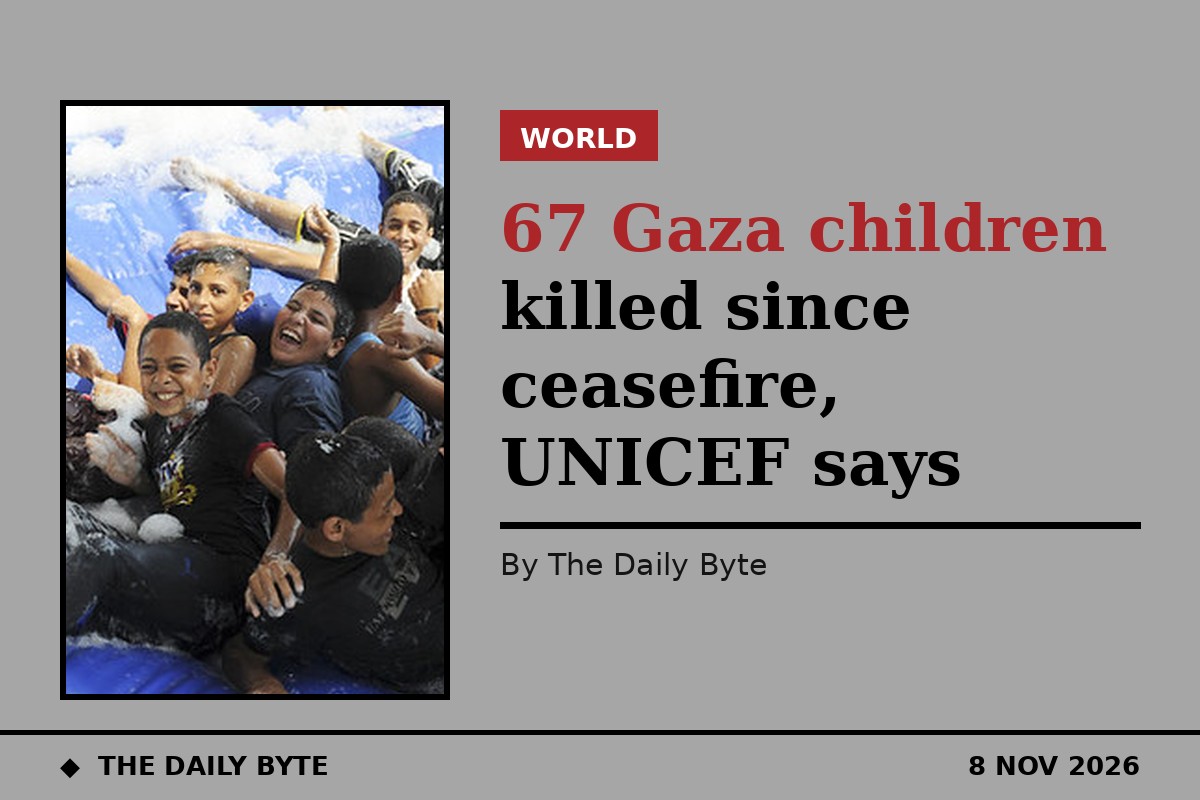
At least 67 Palestinian children have been killed in Gaza since the United States-brokered ceasefire came into effect, the United Nations Children’s Fund (UNICEF) has said.
Speaking at a news conference in Geneva on Friday, UNICEF spokesperson Ricardo Pires said the death toll covered the period since 11 October, the first full day of the pause in hostilities between the Israeli military and Hamas fighters. That is an average of almost two children killed every day since the ceasefire took effect.
“This is during an agreed ceasefire. The pattern is staggering,” Pires told reporters. “As we have repeated many times, these are not statistics: each was a child with a family, a dream, a life – suddenly cut short by continued violence.”
The toll includes a baby girl who was killed in an Israeli air strike on a home in southern Gaza’s Khan Younis on Thursday morning, along with her parents. Seven other children were killed a day earlier, as Israel carried out a wave of attacks across the enclave, in Gaza City and the south.
Doctors Without Borders (MSF) also reported that a nine-year-old girl was receiving treatment for facial wounds after gunfire from quadcopter drones was reported on Wednesday.
UN agencies said the wider death toll since the ceasefire began now stands at 280 Palestinians killed and 672 injured, according to the latest Gaza Ministry of Health data, in addition to 571 bodies recovered from the rubble.
Dr Rik Peeperkorn, a veteran UN aid worker with the World Health Organization, echoed UNICEF’s concerns, adding that “although there’s a ceasefire, people still get killed”.
The continued violence is unfolding alongside a deepening humanitarian crisis. Around 4,000 children are still waiting to be evacuated from Gaza for urgent medical care, including two-year-old Omyma, whose heart is failing because of a congenital condition doctors in Gaza cannot treat.
“Gaza’s doctors tell us of children they know how to save but cannot,” Pires said, listing youngsters with severe burns, shrapnel wounds, spinal injuries, traumatic brain injuries, and children with cancer who have lost months of treatment.
Aid deliveries are improving but remain far short of what is needed. The World Food Programme is now sending about 100 trucks a day into Gaza, almost two-thirds of its daily target, which it described as a step in the right direction. But food prices remain out of reach for most families, with a chicken costing $25 and a kilo of meat $20, and many people still rely on food aid, food parcels and bread from bakeries.
UNICEF estimated last month that 64,000 children have been killed and injured in Israeli attacks since the war began in October 2023. The agency said the latest deaths show that, for children in Gaza, the ceasefire has not yet brought safety.


