Abu Dhabi talks end with prisoner swap deal
Two days of talks between the United States, Russia and Ukraine in Abu Dhabi concluded on Wednesday with agreement on a large-scale prisoner swap, but without a ceasefire or any wider breakthrough in the effort to end the war. The negotiations were the first in the trilateral format since February, and they ended with both sides saying that more talks would follow.
Russia's chief negotiator, Vladimir Medinsky, said after the conclusion of the talks that mutual understanding had been achieved on some issues but not on others. He said the discussion would continue, and he confirmed that Russia and Ukraine had agreed on a large-scale prisoner exchange, with details to be made public soon.
What the talks produced
The prisoner swap was the one concrete outcome announced from the two days of meetings. It is the latest in a long line of such exchanges between Russia and Ukraine, and it was presented as a practical step even though the bigger questions about ending the conflict remained unresolved.
Ukrainian President Volodymyr Zelenskiy said Kyiv hoped to achieve concrete results in the talks on resolving the war this year, but he added that much depended on how the United States approached Moscow. He was speaking after the two days of US-led talks in Abu Dhabi, alongside Irish Prime Minister Micheal Martin.
US Secretary of State Marco Rubio had described the first day of the talks as very productive, without giving details. The second day was the last day on which meetings were scheduled, and the negotiators gave no details after the sessions ended.
A new European security framework
Medinsky said a new potential future European security framework had been a central theme of the two-day talks. He said Russia and the American side had exchanged views on the idea, reaching a common understanding on some points and not on others.
He was cool on the prospect of European countries joining future talks, saying it was unclear what there was for Russia and the European Union to discuss, given what he described as a lack of proposals from the European side. He said no single peace initiative or concrete peace proposal had been received from European countries.
A senior Russian diplomat, Alexey Drobinin, outlined detailed proposals on the security framework idea to a security conference in Moscow on Wednesday. Some European politicians oppose any discussion of Europe's overall security architecture before progress on Ukraine, including a ceasefire, although American officials have made clear they are open to such discussion.
The UAE's role as host
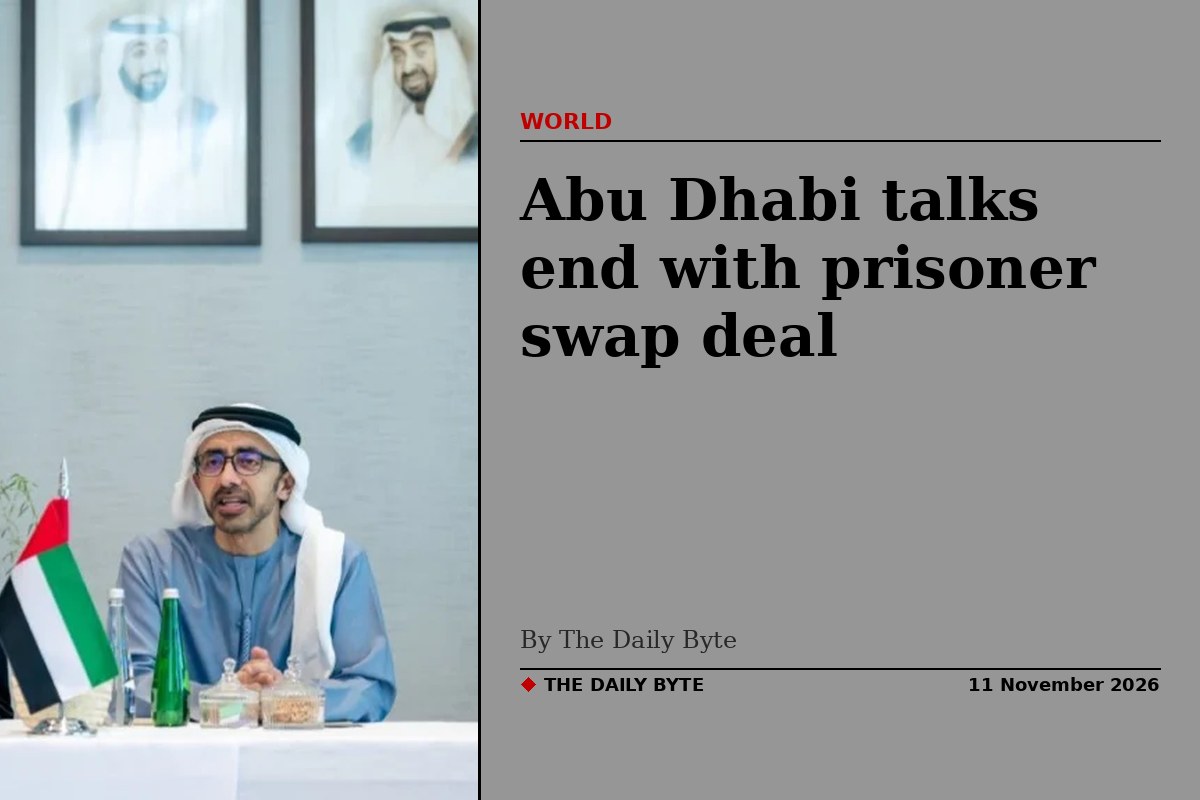
The United Arab Emirates hosted the talks in Abu Dhabi, and Sheikh Abdullah bin Zayed Al Nahyan, the Deputy Prime Minister and Minister of Foreign Affairs, welcomed the participating delegations. He conveyed the greetings of UAE President Sheikh Mohamed bin Zayed Al Nahyan to US President Donald Trump, Russian President Vladimir Putin and Ukrainian President Volodymyr Zelenskyy.
Sheikh Abdullah reaffirmed the UAE's commitment to supporting international efforts aimed at narrowing differences between the parties, and he expressed hope that the latest round of negotiations would lead to practical steps towards ending the conflict, which has continued for nearly five years and caused extensive humanitarian suffering.
He also commended President Trump's efforts to facilitate negotiations, reinforce stability and advance the political process. The UAE said the decision to hold the talks in Abu Dhabi reflected international confidence in the country's diplomatic role, and in its longstanding partnerships with the United States, Russia and Ukraine.
The official statement did not disclose the agenda, duration or expected outcomes of the talks, and it gave no details of what was discussed behind closed doors.
What happens next
The two American presidential envoys, Steve Witkoff and Jared Kushner, took part in the Abu Dhabi talks. They are due to travel to Moscow for talks with President Putin on Thursday, and will then fly from there to meet Zelenskiy in Dublin.
Despite public optimism from President Trump, there has been no sign of major compromises, or that new issues are being discussed, more than four and a half years after Russia's full-scale invasion of Ukraine. The Kremlin said on Wednesday that the Russian delegation in Abu Dhabi had not been in contact with European representatives there, and that no such contacts were planned.
The prisoner swap offers one tangible result from the resumed diplomacy, but the central questions about a ceasefire and a lasting settlement remain open, and the negotiators left Abu Dhabi with further rounds still to be arranged.


