Albanese Urges US to De-escalate Iran War After Midterms
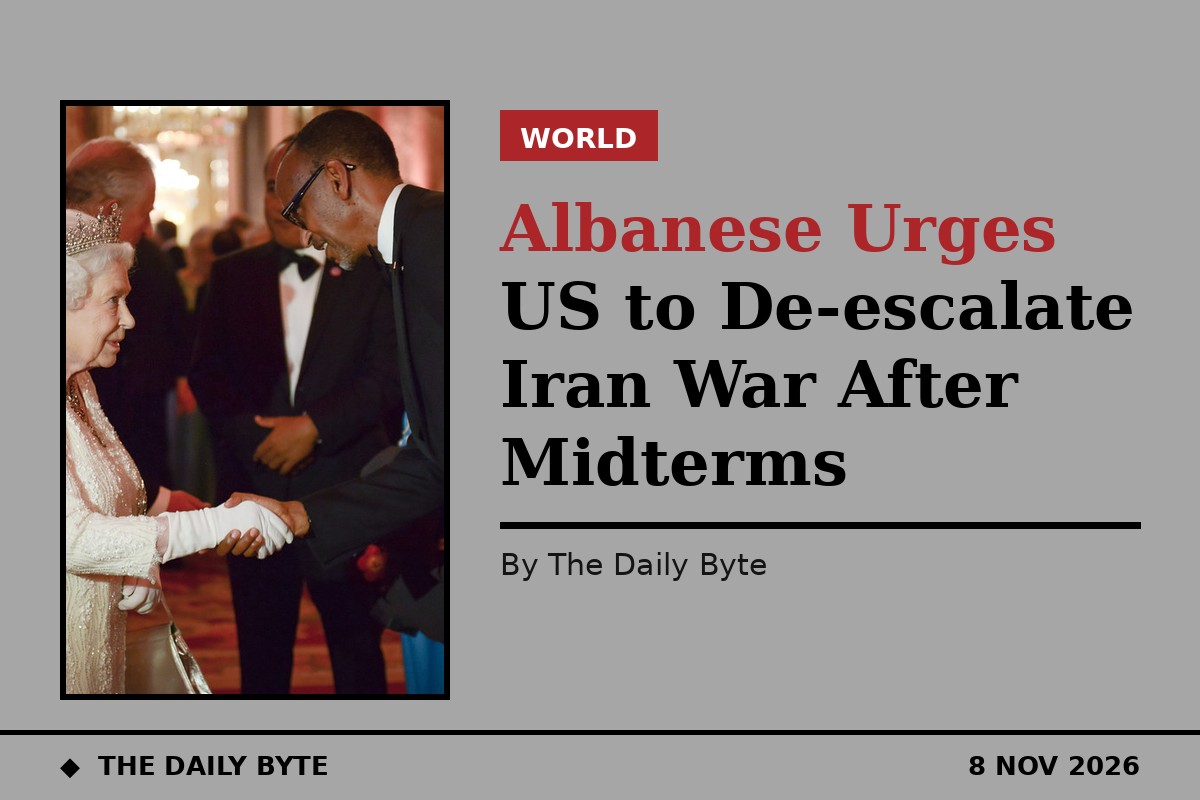
Australian Prime Minister Anthony Albanese has urged the United States to de-escalate the war with Iran, after the Republican Party’s losses in the US midterm elections.
Mr Albanese described the election results as “very significant” and said they were a key topic of discussion among leaders at the Commonwealth Heads of Government Meeting, known as CHOGM, in Antigua and Barbuda, according to the Australian Broadcasting Corporation.
Democrats captured control of the US House of Representatives and won a majority of the country’s governorships in Tuesday’s midterm elections. Mr Albanese linked the outcome to the war in Iran and to US tariffs, saying both were major factors in Republican losses and in voter anger over living costs.
“Whether it be inflation in the global economy or the need to have free trade settings … every nation [at CHOGM] wants to see the war end and for the Strait of Hormuz to reopen,” he said.
Linking the war to Australia’s cost-of-living pressures, Mr Albanese said he would continue to make representations to Washington for “de-escalation”. He argued, however, that he did not need to adopt a more forceful approach with US President Donald Trump.
“I have said it publicly and directly [to Mr Trump] that it’s time for there to be a de-escalation,” Mr Albanese said, adding that Australians could expect him to work diplomatically in the country’s national interests.
The cost-of-living link is central to the politics of the remarks at home. The Reserve Bank of Australia raised its cash rate by 25 basis points on Tuesday, taking it to 4.85 per cent, its highest level in 18 years, as Australian borrowers face another rise in mortgage costs.
The United States and Israel launched a military offensive against Iran on 28 February. A ceasefire was reached in April and a memorandum of understanding was signed in June as part of efforts to conclude a peace deal, but those efforts came to nothing and the conflict has yet to be settled. The closure of the Strait of Hormuz, a vital route for global oil shipments, has disrupted energy supplies and pushed up prices.
Mr Albanese said Commonwealth leaders wanted the fighting to end and shipping routes to flow normally again, and that he would make direct representations to the United States to press for a calmer outcome and to protect global trade.
His overseas schedule is set to become busier after his return from the Caribbean, with planned visits to Turkey for the COP31 climate talks, the Philippines for the East Asia Summit and China for the APEC leaders’ meeting. He is also expected to attend the G20 summit in Miami, where he is due to meet Mr Trump.


