ASEAN Joint Oil Stockpiling Scheme to Launch in 2027
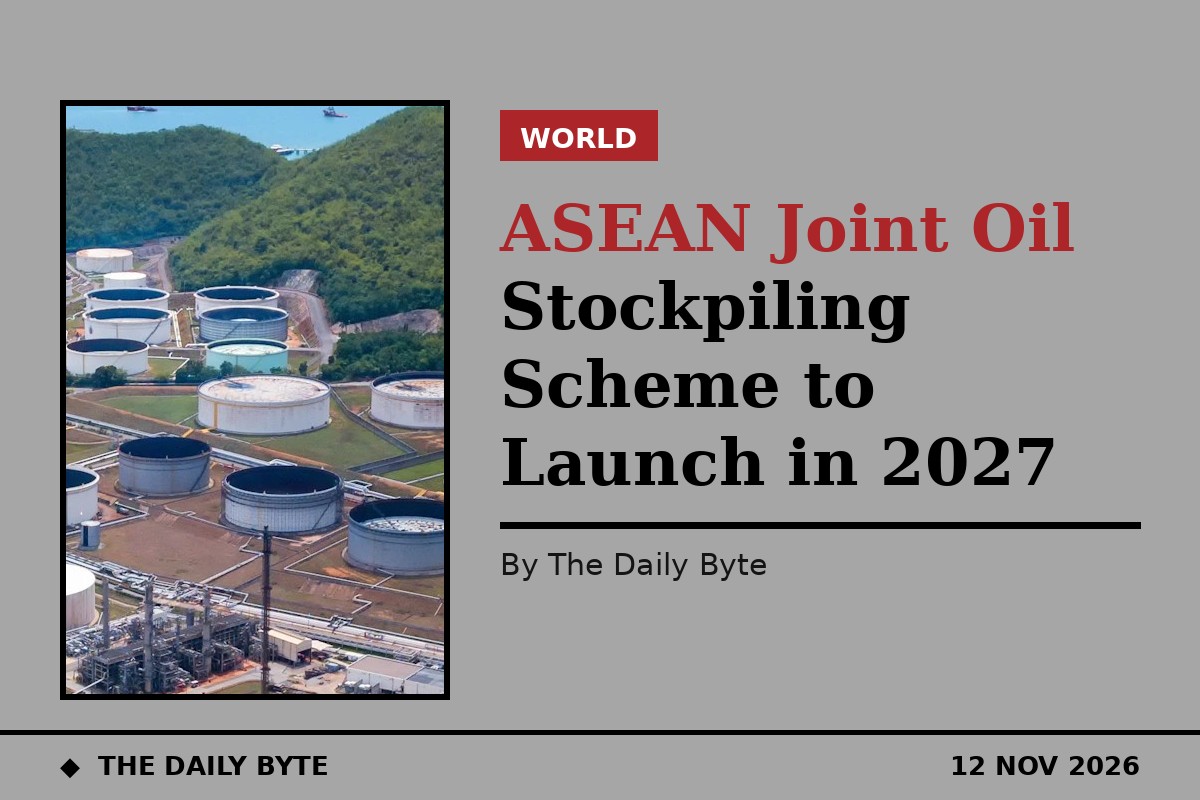
Southeast Asian nations will launch a joint oil product stockpiling scheme as early as 2027, under a plan reported by Japan's Nikkei business daily on Thursday, 12 November. The scheme would allow member states to share fuel supplies during emergencies, with storage sites planned in Indonesia and Thailand.
Under the initial plan, the Philippines would be able to buy diesel and gasoline stored in the two countries when supplies are disrupted. Companies affiliated with the Philippine state oil firm PNOC are expected to sign letters of intent with tank operators in Indonesia and Thailand on Saturday, according to the report carried by Reuters.
The initiative is led by the Economic Research Institute for ASEAN and East Asia (ERIA), an international think tank established in Indonesia by Japan's Ministry of Economy, Trade and Industry. Laos and Timor-Leste are also considering joining, and the scheme could eventually be expanded across ASEAN and to crude oil, the report said.
How the scheme would work
Rather than each country relying only on its own national reserves, participating countries would store petroleum products at designated sites that other members could draw on in a crisis. The Philippines is expected to be among the first beneficiaries of the arrangement, with reported access to diesel and gasoline from the shared reserves during supply emergencies.
The idea has been under study for months. In September 2026, ERIA and the Indonesian Business Council set up a private-sector working group to examine a possible ASEAN joint regional oil stockpiling pilot project. Philippine Trade Secretary Cristina Roque said in September that five countries - Singapore, Indonesia, Malaysia, Thailand and Vietnam - had signalled interest in participating in the proposed arrangement.
The proposal builds on a recommendation by President Ferdinand Marcos Jr. in April for the Asia Zero Emission Community to conduct a regional study on joint oil stockpiling. ERIA held a regional validation workshop in Jakarta in August as part of refining its ASEAN oil stockpiling strategy, and the study was expected to be completed by November.
Energy security after the Iran war
Japan is promoting the scheme to strengthen regional energy security after disruptions caused by the Iran war. Prime Minister Sanae Takaichi is expected to announce cooperation on joint oil stockpiling at an Asia Zero Emission Community summit in Manila on 17 November.
Energy security has become more urgent across the region as the Middle East conflict has threatened fuel supplies and prices. The subject is also on the agenda for the 49th ASEAN Summit, which opens in Manila on 15 November, where leaders will discuss how to strengthen the bloc's collective capacity to deal with emerging regional and global challenges.
What still needs to be decided
The reported 2027 date is a target set out in the Nikkei report, not a confirmed launch date agreed by all ASEAN members. Details such as the volume of reserves, financing arrangements and the rules governing emergency releases have yet to be finalised, and will depend on the findings of the ERIA study and subsequent negotiations among participating governments.
The proposed framework would allow ASEAN members to participate voluntarily, based on their national circumstances and readiness. Roque has said the five interested countries could move ahead with the initiative even if the rest of the bloc does not immediately participate, although the specific arrangements for storing, financing and releasing the oil are still being studied.
The regional stockpiling initiative is being developed alongside existing ASEAN energy-security mechanisms, particularly the ASEAN Petroleum Security Agreement, which already provides a framework for members to help each other during oil supply emergencies.
Sources: Reuters and BusinessMirror.