Asia Nuclear Build-Out Threatens Fossil Fuel Demand
Asia is building most of the world's new nuclear reactors and renewable energy plants, a construction boom that could steadily weaken demand for coal and gas in power generation across the region, according to data from Global Energy Monitor cited by Reuters on 12 November.
Asian nations are home to 73 percent of all new reactors currently being built, accounting for 66 gigawatts (GW) of the global total of 91 GW moving through construction. Asia's share of the currently operating nuclear reactor fleet is just under 30 percent, so the concentration of new construction points to a sharp expansion in the region's nuclear generation once the projects are completed.
Asia is also home to 78 percent of all new renewable energy capacity currently being built, with 1,364 GW of solar and wind capacity set to enter service.
Why nuclear and renewables together matter
Solar and wind increasingly supply large volumes of low-cost electricity whenever weather conditions are favourable, while nuclear reactors provide steady around-the-clock generation regardless of weather or time of day. Together, they reduce the need for coal- and gas-fired plants across more hours of the year than either technology could on its own.
As more reactors enter service alongside record wind and solar additions, fossil fuel plants will face declining operating hours, limiting fuel consumption even if total electricity demand keeps growing.
China leads the build-out
The most consequential developments are unfolding in China. The country is simultaneously constructing 204 GW of coal capacity, 236 GW of utility-scale solar, 213 GW of wind, 247 GW of hydro and 43 GW of nuclear, according to the Global Energy Monitor data.
China's coal fleet is unlikely to disappear. But nuclear's expansion raises the probability that coal increasingly becomes a backup and balancing resource rather than a primary growth engine. For global coal markets, that will likely trigger a sustained reduction in China's coal import needs in the coming decades.
India, Japan and South Korea
India's story is slightly different. India is constructing 6.6 GW of nuclear capacity but also has more than 40 GW of coal projects under development. Its solar pipeline approaches 99 GW and its wind pipeline exceeds 26 GW. Coal will remain central to India's electricity system for years, as demand growth is too large for nuclear alone to offset. Yet nuclear may help alter the trajectory of future fossil fuel growth, as every reactor added to the grid reduces the need for additional coal output.
Japan and South Korea may provide the clearest example of nuclear directly displacing fossil fuels. Japan has more than 6 GW of nuclear capacity under construction and no coal plants under development. Nuclear accounts for roughly 65 percent of its entire power construction pipeline. South Korea also has no coal plants under construction while building 5.6 GW of nuclear capacity, equivalent to over 40 percent of its total power-development portfolio currently being built.
Both countries remain among the world's largest LNG importers, and both rely heavily on gas-fired generation to ensure reliability. Each new reactor therefore may compete directly with imported LNG and creates a long-term challenge for gas exporters. While rising electricity demand across Asia is expected to support LNG consumption through much of the 2030s, expanding nuclear fleets in Japan and South Korea could cap growth and steadily reduce the volume of gas required for power generation in the longer run.
Newcomers look beyond gas
Gas exporters should also watch nuclear construction in emerging markets, several of which have depended on domestic and imported gas. In Turkey, nuclear accounts for more than 80 percent of all generating capacity currently under construction.
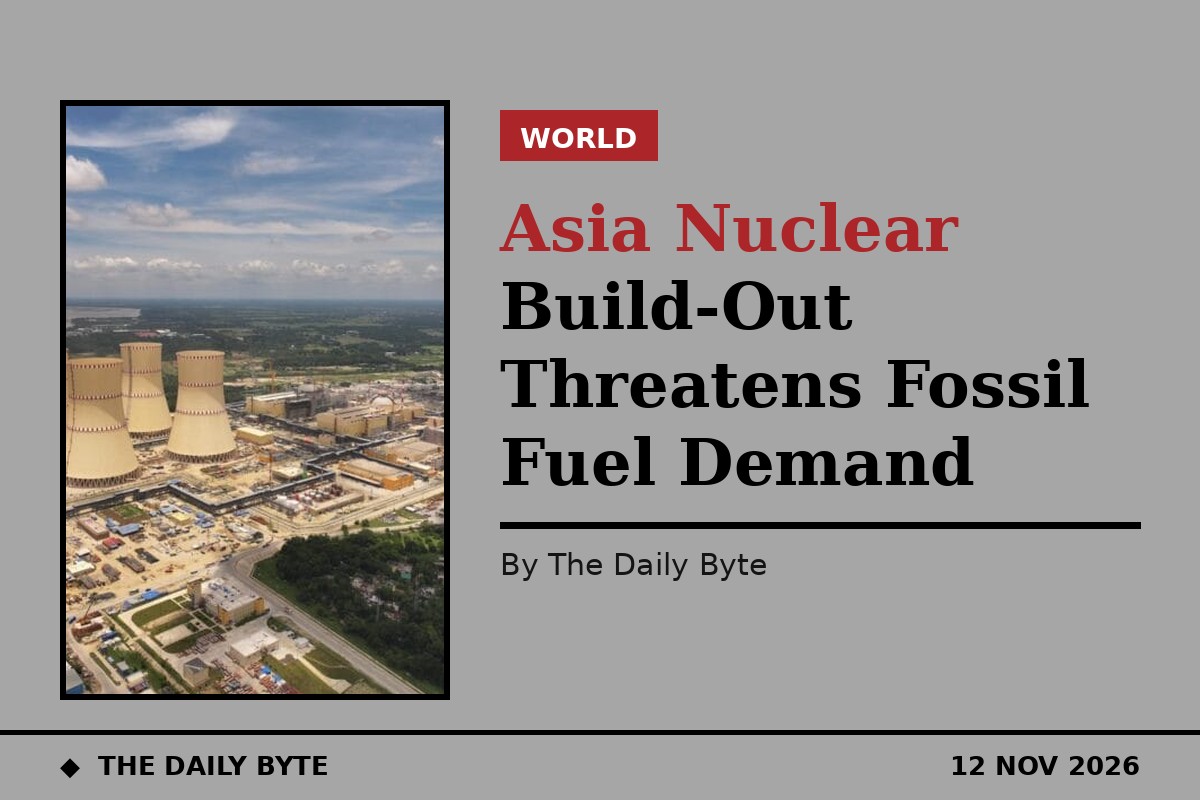
Bangladesh is building its first major nuclear project, with the Rooppur reactor accounting for roughly half of all new power capacity in development in the country. The site is home to two planned 1,200-megawatt reactors, with the first unit expected to enter commercial operation in 2027. Egypt is also building its first nuclear reactor, which is expected to start delivering power to the grid in 2028.
For these countries, the attraction extends beyond emissions reductions. Nuclear offers a way to reduce dependence on imported fuels, improve energy security and stabilise electricity costs. If successful, the projects could lower long-term demand for gas imports and reduce exposure to the price volatility that has characterised global LNG markets since 2021.
The World Nuclear Association says there are about 150 operable nuclear power reactors in Asia and around 55 under construction.
In all, the data shows that Asia's leading economies are building both renewables and nuclear. Because Asia remains the centre of global fossil fuel consumption growth, the region's nuclear build-out may ultimately matter as much to future fuel markets as any renewable energy boom.
Sources: Reuters and World Nuclear Association.