Atacama Desert Blooms in Biggest Display in 30 Years
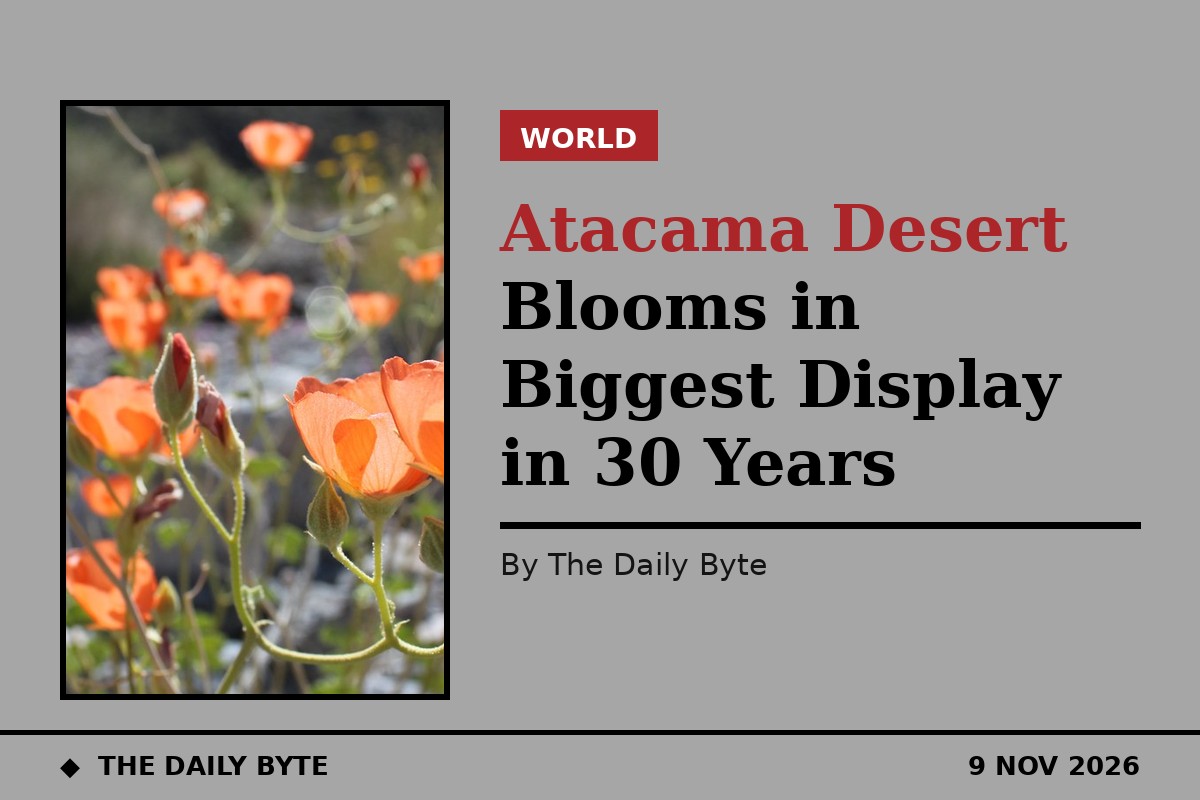
A vast stretch of Chile's Atacama Desert has burst into colour, with pink, yellow, lilac and purple wildflowers carpeting the driest nonpolar desert on Earth in what scientists describe as its largest and most colourful flowering in 30 years, and perhaps ever.
The bloom, known locally as the Desierto Florido, or Desert Bloom, follows a winter of unusually heavy rain brought by the El Nino super cycle. Floodwaters in July and August destroyed or damaged dozens of homes and forced hundreds of people to evacuate, with some areas recording their heaviest rainfall since records began in the 1950s.
The same water then sank deeper into the parched ground than it has in decades, waking millions of seeds, bulbs and tubers that had lain dormant beneath the sand, in some cases for decades. Within weeks, flowers emerged across the desert floor, turning bare rock and sand into a landscape of colour.
Seeds asleep for decades
More than 200 species are now in flower. The first plants to emerge created a pale-yellow haze across the desert, followed by a soft purple hue as other bulbs germinated. Now, almost every hollow and crevice in the desert is streaked with colour.
Scientists studying the phenomenon say there are patches of desert in bloom where flowers have never previously been recorded, suggesting that bulbs there have remained dormant since before the event was first studied in detail in 1997. Chile's national forest service, CONAF, says the bloom covers about 23 percent of the Atacama Region, or roughly 17,000 square kilometres.
The town of Vallenar received up to 183.5 millimetres of rain this winter, according to the EFE news agency, in a part of the desert that in a normal year without El Nino receives only about 2 millimetres.
A fleeting ecosystem
Moises Grimberg, administrator of Llanos de Challe National Park, a 113,000-acre reserve along the arid coastline near Huasco, described the desert's dormant vegetation as a natural seed bank. "This is a natural seed bank, a dormant archive that becomes a living one with the rains," he said. "But it's a race against time, this brief biological window allows these species to complete their life cycle, which lasts roughly two to three months."
The bloom has drawn crowds. The park normally receives about 10,000 visitors a year, but 15,000 tourists have visited in the last few weeks alone, and Chile's national tourism board expects around 300,000 overnight trips to the region during the two months the desert is in bloom.
Among the star attractions are the nectar-filled, crimson flowers of the garra de leon, which grows along just a few miles of this stretch of coastline and nowhere else in the world. The flowering also brings a short-lived ecosystem to life, with insects hatching and attracting lizards, bats and larger mammals such as the guanaco.
Biologists from INIA, Chile's national seed bank, are collecting specimens to analyse in the laboratory before the brief flowering season ends, hoping to preserve the genetic material and the adaptations each plant has developed to survive the extreme, arid conditions. "It's as if the desert is awakening," said researcher Ana Sandoval. "Sometimes people think it's an empty, arid place, devoid of life, but actually our desert is just waiting for the right conditions, and any precipitation, to awaken it."
The bloom occurs every few years in the Atacama, but scientists say the phenomenon is becoming more frequent as changes in the climate bring unseasonal rains. This year's display is projected to last until mid-November, with most flowers fading during the month and only the hardiest, most drought-tolerant species lasting until January. Chile created Desierto Florido National Park in 2023, setting aside about 57,100 hectares near Copiapo to protect the flowering and regulate visits.


