Australian children bear brunt of climate health risks
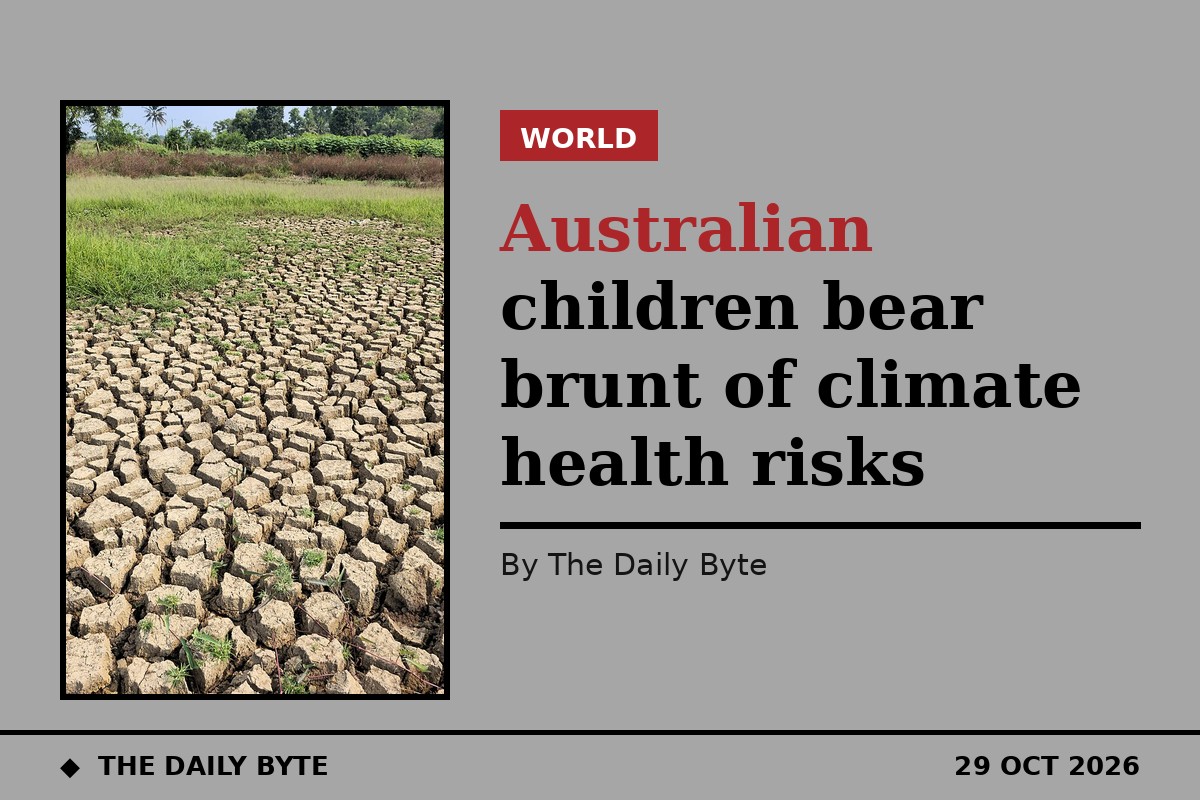
Australian babies are living through far more heatwaves than a generation ago, and half of the country's teenagers say climate change worries or saddens them, according to a health report published on 29 October 2026. The 2026 MJA–Lancet Countdown Oceania report warns children and young people in both countries are already feeling those health effects.
Heat and young minds
Infants in Australia experienced an average of 4.6 heatwave days a year over the past decade — 66% more than the 1986–2005 baseline. A survey of 16,230 Australians aged 14 to 19 found half reported feeling worried or sad about climate change, and around one in seven said those feelings affected their daily lives. Rising exposure is also limiting safe outdoor activity, the report says.
UN scrutiny of coal and gas approvals
Separately, two United Nations special rapporteurs, Elisa Morgera and Astrid Puentes Riaño, sent a formal allegation letter to Australia on 24 August 2026, asking how its coal and gas approvals protect young people's rights. The letter raises concerns about fossil fuel approvals and subsidies, whether Australia's 2035 target is consistent with limiting warming to 1.5°C, and disproportionate impacts on children, particularly First Nations children and children with disabilities. The rapporteurs are independent UN Human Rights Council experts; their letter seeks a government response, not a court ruling.
What health groups want
Citing the Lancet Countdown's 2026 Australian data sheet, nursing and medical groups say 66% of Australians' average 2025 heatwave days were directly attributable to climate change, and about 3,900 deaths in 2023 were attributable to human-caused fine particle air pollution, up 2.4% from 2016. They call for stronger heat-health protection via primary care networks, a tougher trajectory for large emitters, and hospital electrification.
Sources: Macquarie University, Doctors for the Environment Australia, Environmental Justice Australia.