Balochistan approves $895m urea plant at Sui
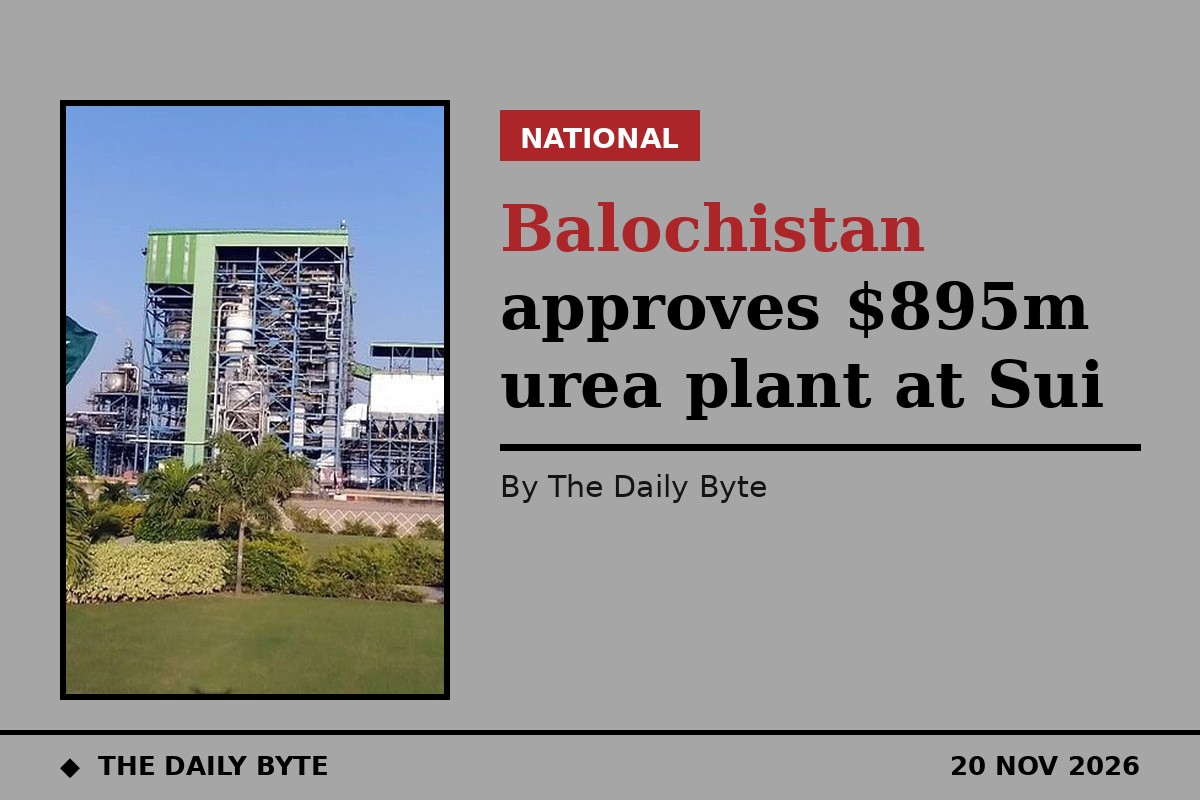
Balochistan has approved an $895 million urea fertiliser complex at Sui in Dera Bugti, in what provincial officials describe as the largest public-private partnership project in the province's history.
The green light was given at the 10th meeting of the provincial Public-Private Partnership Board on November 17, chaired by Chief Minister Mir Sarfraz Bugti. The project, worth about Rs250 billion, will be developed under the partnership framework using indigenous low-BTU natural gas from the area.
What the plant will do
The complex will be built on a dedicated 496-acre industrial site at Sui and is designed to produce 580,800 tonnes of urea a year. It will use 100 million standard cubic feet per day of local natural gas from the Zin block, operated by Oil and Gas Development Company Limited, at a delivered price of $2 per million British thermal units.
The Zin block has estimated recoverable reserves of 912 billion standard cubic feet, and the gas supply is expected to remain at plateau level until 2043. Commercial production is targeted to begin in April 2031.
Faraz Syed, chief executive of the Balochistan Public-Private Partnership Authority, announced the decision, describing it as the largest public-private partnership project in Balochistan's history. The authority said the investment also ranks among Pakistan's largest proposed industrial transactions under the partnership framework.
The money case
Financial assessments released by the authority put the project's net present value at $301 million, with an equity internal rate of return of 25.1 per cent and an estimated payback period of nine years. Those figures are designed to draw large-scale private capital as the venture moves towards mobilisation and construction.
The investment opportunity has been presented to Saudi investors, who are exploring possible participation, according to Topline Research. Discussions remain at an early stage, and no investment agreement or formal partnership has been confirmed. Potential Saudi investors could enter alongside a Pakistani partner, which may include an existing fertiliser manufacturer or an established local business group.
Why it matters for farmers
Urea is the main nitrogen fertiliser used by Pakistani farmers, and its availability shapes crop yields and seasonal farming costs. Expanding domestic production could reduce Pakistan's exposure to international fertiliser prices, import bills and disruptions in global supply chains.
Provincial officials said bringing more than half a million tonnes of fresh urea capacity online would strengthen the domestic fertiliser supply chain, improve agricultural productivity and stimulate industrial activity and job creation across Balochistan.
"The approval reflects the Government of Balochistan's commitment to promoting sustainable economic development, attracting large-scale private investment, and leveraging public-private partnerships for transformative infrastructure and industrial projects," the authority said in its official statement.
Approval is only the first step
The board's approval does not mean construction is about to start. Financing must still be arranged, a private partner selected and construction completed before a single tonne of urea is produced, and the April 2031 target is more than five years away.
The provincial government acknowledged the contributions of its planning and development, finance and energy departments, the Balochistan Energy Company and the Balochistan Board of Investment and Trade in advancing the proposal.
Sui has supplied gas to Pakistan for decades. The field there, one of the country's oldest and largest, began feeding the national network in the 1950s. The new complex would anchor high-value manufacturing at the source of that gas, rather than leaving low-BTU reserves underused, officials said.