Balochistan Shuts Down in Province-Wide Strike
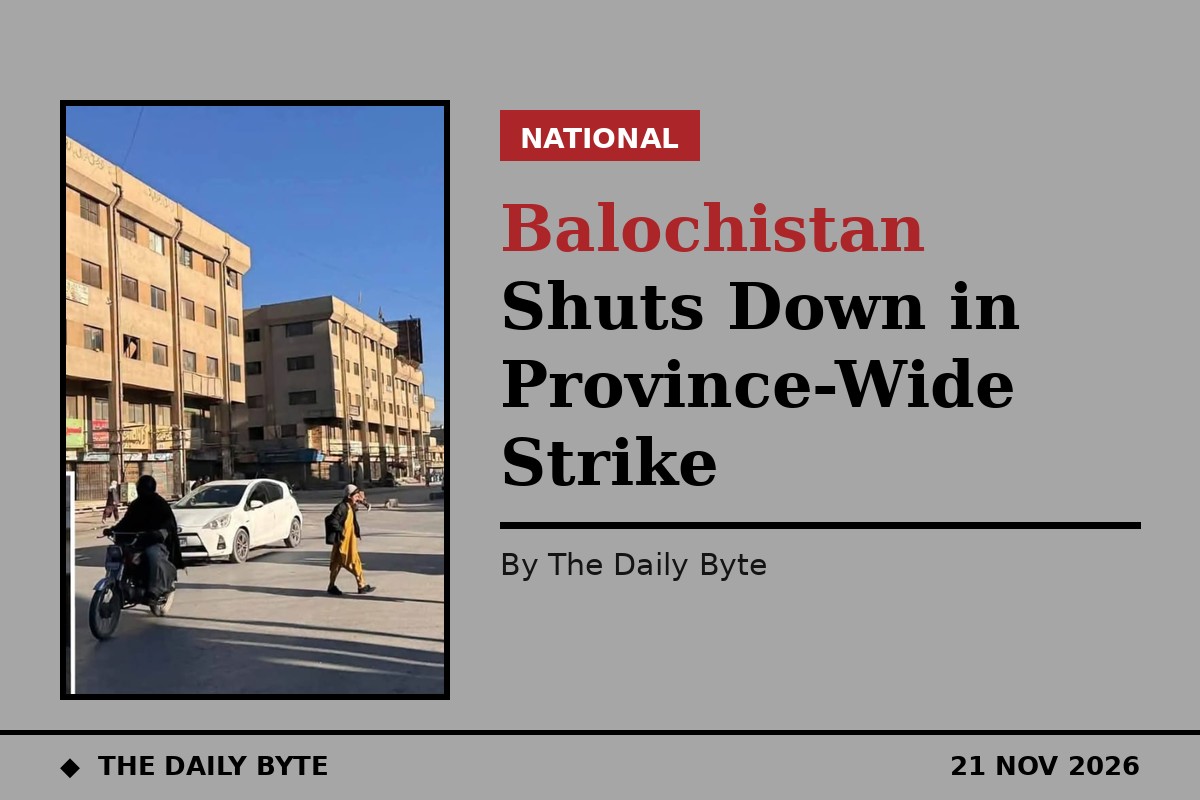
Shops, markets and business centres shut across Balochistan on Thursday 19 November in a province-wide shutter-down strike called by political parties and traders to protest against deteriorating law and order, rising prices, unemployment and prolonged power and gas outages.
The strike was called jointly by the All Parties Alliance and the All Traders Association. In Quetta, major commercial areas including Jinnah Road, Qandhari Bazaar, Suraj Ganj Bazaar, Masjid Road, Liaquat Bazaar, Abdul Sattar Road, Prince Road, Mekangi Road, Mission Road, Alamdar Road and Toghi Road remained closed throughout the day. Business centres and markets were also shut in Chaman, Pishin, Qila Abdullah, Mastung, Kalat, Khuzdar, Loralai, Zhob, Sibi, Naseerabad, Jaffarabad, Nushki, Dalbandin, Chagai, Turbat, Panjgur, Gwadar, Hub, Kohlu, Barkhan and Dera Bugti.
Why the strike was called
The organisers' grievances run across security, the economy and governance. Speakers at the demonstrations described the strike as a referendum against worsening law and order, lawlessness, terrorism, insecurity on national highways, kidnapping for ransom, target killings, enforced disappearances, land grabbing and what they called the plundering of national resources.
Economic complaints included restrictions on trade and movement with Afghanistan and Iran, unannounced and prolonged load-shedding of electricity and gas, heavy utility bills, alarming inflation and unemployment. Protesters also objected to what they called undemocratic measures against political leaders and workers, arrests, and the placing of political workers on Schedule Four.
Rallies in Quetta
Leaders of the alliance and traders' organisations led rallies from different parts of Quetta that converged at Manan Chowk, where a demonstration was held. Those who addressed it included JUI-F Quetta chief Maulana Abdul Rahman Rafiq, Balochistan National Party's Musa Baloch, National Party's Ali Ahmed Langove, Pashtunkhwa Milli Awami Party's Ahmed Jan, and traders' association president Abdul Rahim Kakar.
The speakers said the government had failed to provide basic facilities, including electricity and gas, and that residents had repeatedly raised gas shortages and power cuts during the cold weather without result. Police took strict security measures during the strike, patrolling parts of the city and deploying additional contingents in major markets and commercial areas.
What comes next
The strike was backed by a broad coalition: the Awami National Party, Balochistan National Party, Jamiat Ulema-e-Islam, National Democratic Movement, JUI-Nazryati, Jamaat-e-Islami, Pakistan Tehreek-e-Insaf, Hazara Democratic Party, National Party and Pashtunkhwa National Awami Party, alongside traders' organisations. The organisers thanked the public and called the strike a success.
The campaign does not end with the strike. The alliance has set a provincial-level meeting for 26 November, with a further conference planned for early December to put Balochistan's concerns before the national leadership. The decision to strike was taken at an all-parties conference at the Quetta Press Club chaired by ANP provincial president Asghar Khan Achakzai, where the parties described the province's situation as “alarming and unacceptable”.