Bangladesh sets wage board as garment protests grow
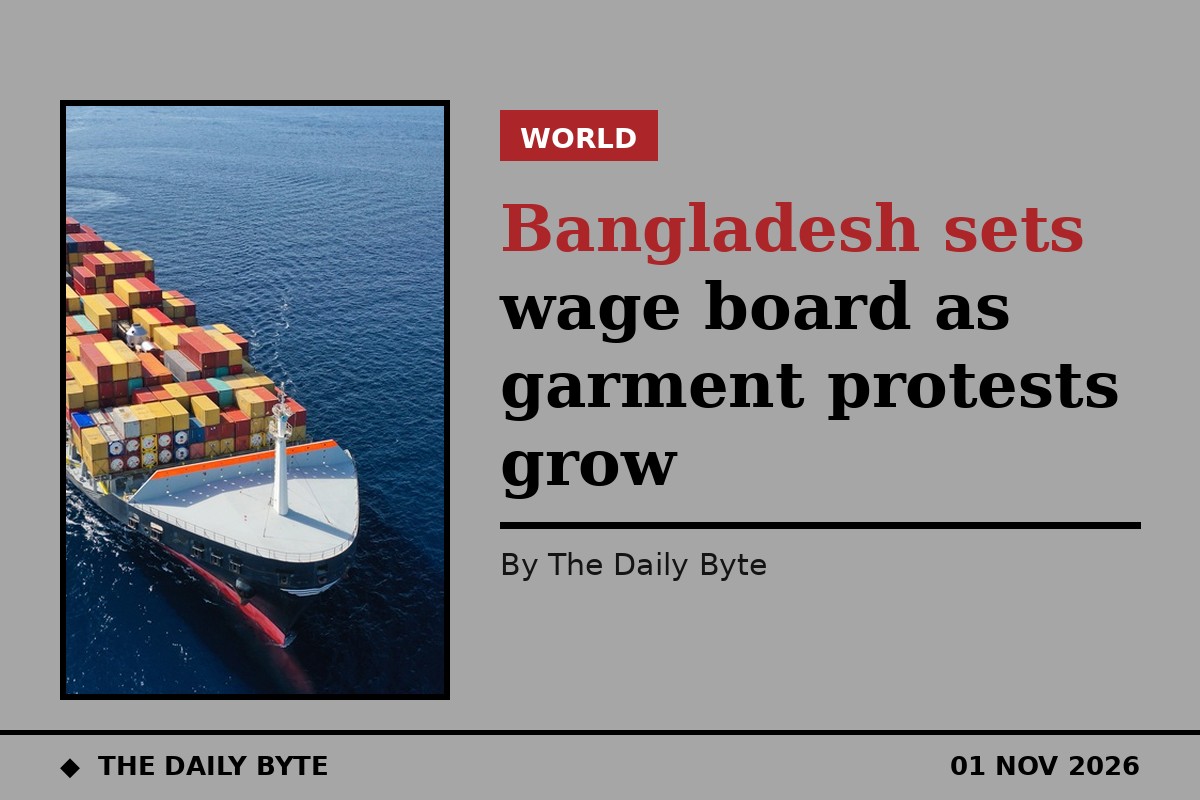
Bangladesh has announced a six-member wage board to review pay for garment workers, after days of protests demanding a sharp rise in the minimum wage. Labour and Employment Minister Ariful Haque Chowdhury said the board was formed following talks with workers' representatives and industry leaders, and urged employees to return to work.
Workers are seeking a minimum monthly wage of 30,000 taka (about $245), more than double the current 12,500 taka. They say rising food, housing, transport and healthcare costs have badly eroded what their pay can buy. Garments are central to Bangladesh's export economy, so a prolonged stoppage carries consequences well beyond the factory gate, for orders, transport and household incomes alike.
Protests continued despite the announcement
Despite the wage board announcement on Sunday 1 November, demonstrations continued across major industrial areas. Police used tear gas and water cannon to disperse workers who blocked a busy intersection in Dhaka, and hundreds of workers blocked a major highway in Gazipur, on the capital's outskirts, disrupting transport in a key industrial belt. Authorities deployed Border Guard Bangladesh personnel to maintain order, and owners shut 25 to 30 factories. The latest unrest followed protests in Ashulia, another major garment hub near Dhaka, where dozens of factories suspended operations on Saturday after workers demanded higher pay.
What happens next
No new wage figure has been set yet. The board's job is to review pay, not to grant the 30,000-taka demand immediately. The test now is whether the board process calms the dispute or whether workers, unconvinced by a review without a timetable, keep up street action. For buyers and competing producers, including in Pakistan, the outcome will affect costs, delivery times and the wider South Asian garment market in the weeks ahead.