Bank of England Signals Second Rate Rise by Christmas
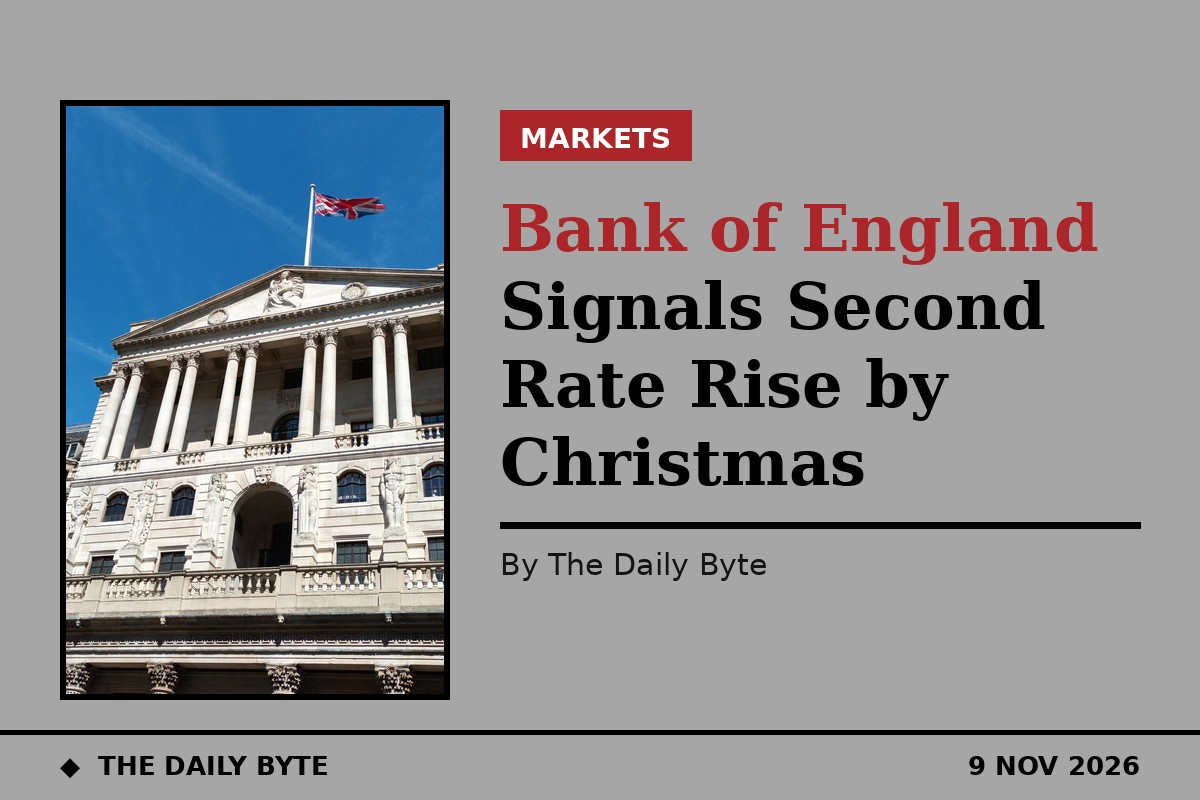
The Bank of England has signalled that a second interest rate rise could come before Christmas, warning that inflation may climb above 6% if the conflict in the Middle East intensifies and energy prices keep rising.
The Bank lifted its benchmark rate from 3.75% to 4% last week, the first increase in three years. Governor Andrew Bailey warned that, without clear evidence of an end to the war with Iran, further rises could follow. His remarks indicate that, unless meaningful progress is made towards ending the war, rates could rise again to 4.25% when the Monetary Policy Committee meets eight days before Christmas.
The rate-setting committee voted 8-1 in favour of the quarter-point increase. One member, Catherine Mann, supported a larger rise of half a percentage point to 4.25%, arguing for a stronger response to persistent inflation. A second report on the decision, carried by Zot, confirmed the 8-1 vote, the 4% rate and the Bank's forecast that inflation will reach around 5% by the second quarter of 2027.
What it means for mortgage holders
The increase will immediately affect around one million borrowers with variable-rate mortgages. The average tracker mortgage will cost an extra £30.72 a month, while standard variable-rate customers face an average increase of £14.28. For some families, that rise will effectively cancel out the £100 energy-bill support announced in the Budget.
More than seven million fixed-rate mortgage holders will not feel the impact straight away. However, 2.3 million of those borrowers have deals expiring by the end of 2027 and may face significantly higher repayments when they refinance. A further rise in December would add to the strain on households at a time when consumers would normally be preparing to spend more on Christmas.
Inflation outlook
The Bank was pushed into action after the war disrupted energy supplies from the Middle East, driving up oil and gas prices. Inflation has consequently risen to 3.5%, its highest level in 11 months and well above the Bank's 2% target. The Bank expects inflation to reach 4.9% by next spring. Under an adverse scenario in which the conflict intensifies and oil reaches $130 a barrel, inflation could hit 6.2% by the summer.
Mr Bailey said the increase should not be seen as the first in an inevitable long sequence of hikes. But he added that, unless the conflict in the Middle East is resolved, neither does it seem likely to be the last increase. He said the whole situation was so volatile that little weight should be put on two days that had not yet been backed by firm evidence of a peace process leading to something concrete.
Until now, policymakers had held off raising rates in response to the conflict while assessing whether the energy shock would trigger second-round effects, including higher prices for other goods and demands from workers for increased wages. The Bank said the rise in oil and gas prices since the summer meant inflationary pressures would be stronger and more persistent than previously expected, making a rate increase necessary.
Andrew Goodwin, chief UK economist at Oxford Economics, said December's meeting now looked like a coin flip, with the path of oil and natural gas prices set to be the decisive factor. Chancellor John Healey said the Iran conflict was reaching deep into the pockets of families and businesses at home.
The Bank also warned that the outlook for living standards was deteriorating as inflation eroded workers' incomes. It expects post-tax labour income, a measure of living standards, to fall by 0.1% in real terms this year, with the decline widening to 0.6% next year. The Bank said it would have more information in the coming weeks, and the consequences would be considered at the December meeting.