Middle East Oil Price War Points to Post-War Glut
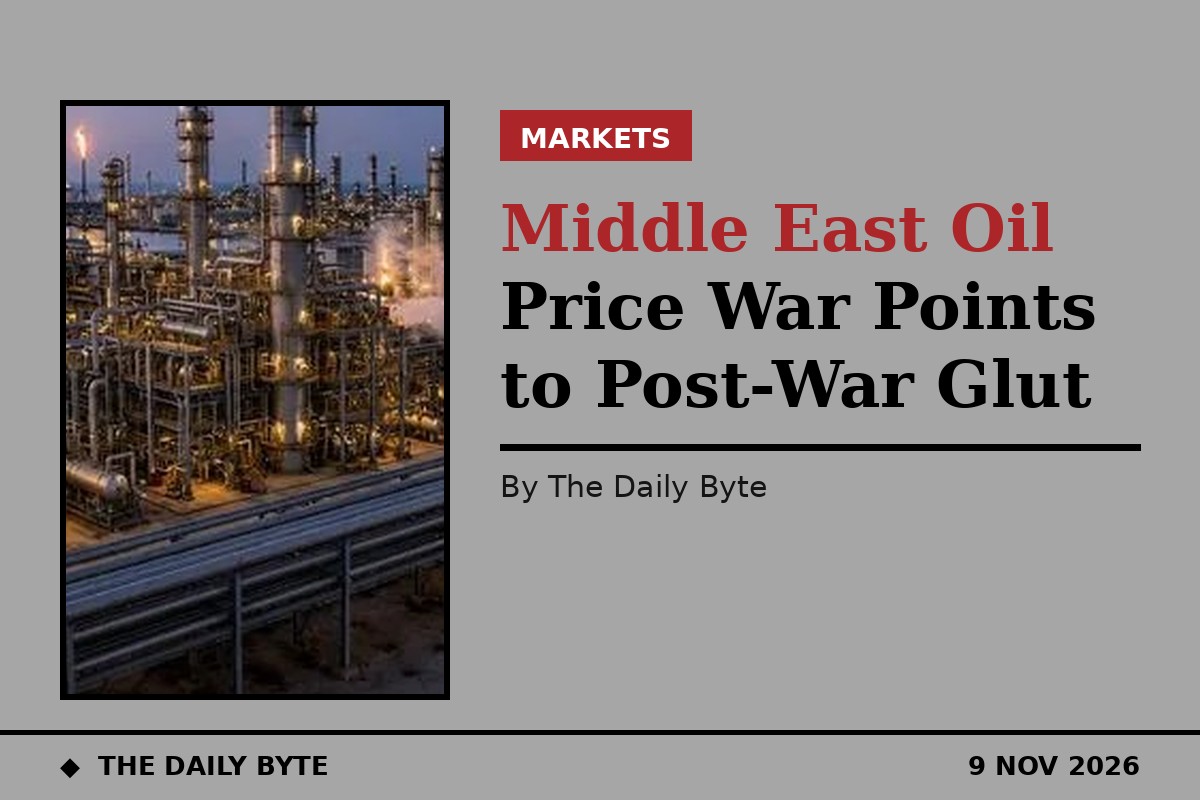
Middle East oil producers are slashing prices to attract buyers as a sharp recovery in flows through the Strait of Hormuz tips the global crude market towards oversupply — a preview of the crowded, hyper-competitive oil market that the Iran war may leave in its wake, Reuters analysis reported on Monday.
Global benchmark Brent crude tumbled more than 17 percent last week to around $97 a barrel, its steepest weekly decline since the 2020 pandemic. The slump followed the electoral rout of US President Donald Trump's Republican Party in the US midterm elections, which raised expectations that Washington could swiftly de-escalate the war that has upended energy markets since 28 February.
Saudi Arabia cuts prices to defend market share
Saudi Arabia cut the December price of its flagship Arab Light crude for Asian customers by $2 a barrel from November, pushing the discount against the Oman/Dubai average to $6.50 a barrel, the lowest since the pandemic in May 2020. Brent was quoted around $97.67 a barrel on Monday morning, The Hindu BusinessLine reported.
The price cuts come as supply returns. Oil exports through the Strait of Hormuz have recovered sharply since September, as Gulf producers can now navigate the narrow waterway using tanker convoys protected by the US Navy. Crude exports through the strait averaged 10.3 million barrels per day in October, up from virtually zero in the first month of the war, excluding Iranian shipments. Total regional crude exports reached 16.6 million barrels per day in October, just shy of the pre-war average of 17 million barrels per day, according to Kpler data. Global crude production reached 85 million barrels per day in October.
A glut whatever happens next
Regardless of whether Washington and Tehran secure a durable peace deal in the coming weeks, the market faces the prospect of a crude oil glut — a surprising outcome at the end of a year that has featured one of the biggest energy supply shocks in modern history. The Iran war created an extraordinary energy shortage, yet the end of the conflict could create a market with more crude than producers know what to do with.
The risks have not gone away. Iranian attacks on vessels transiting Hormuz continue on a near-daily basis, despite US escorts, forcing many producers to resort to expensive ship-to-ship transfers in the Gulf of Oman. A return to prolonged fighting in Iran could curb supply, though the White House will almost certainly want to avoid that outcome while diplomacy continues.
For consumers, cheaper crude eases inflation pressure. For producers, the price war is a fight for market share in a market that is about to have too much oil.