Batam residents protest as taps run dry near data centres
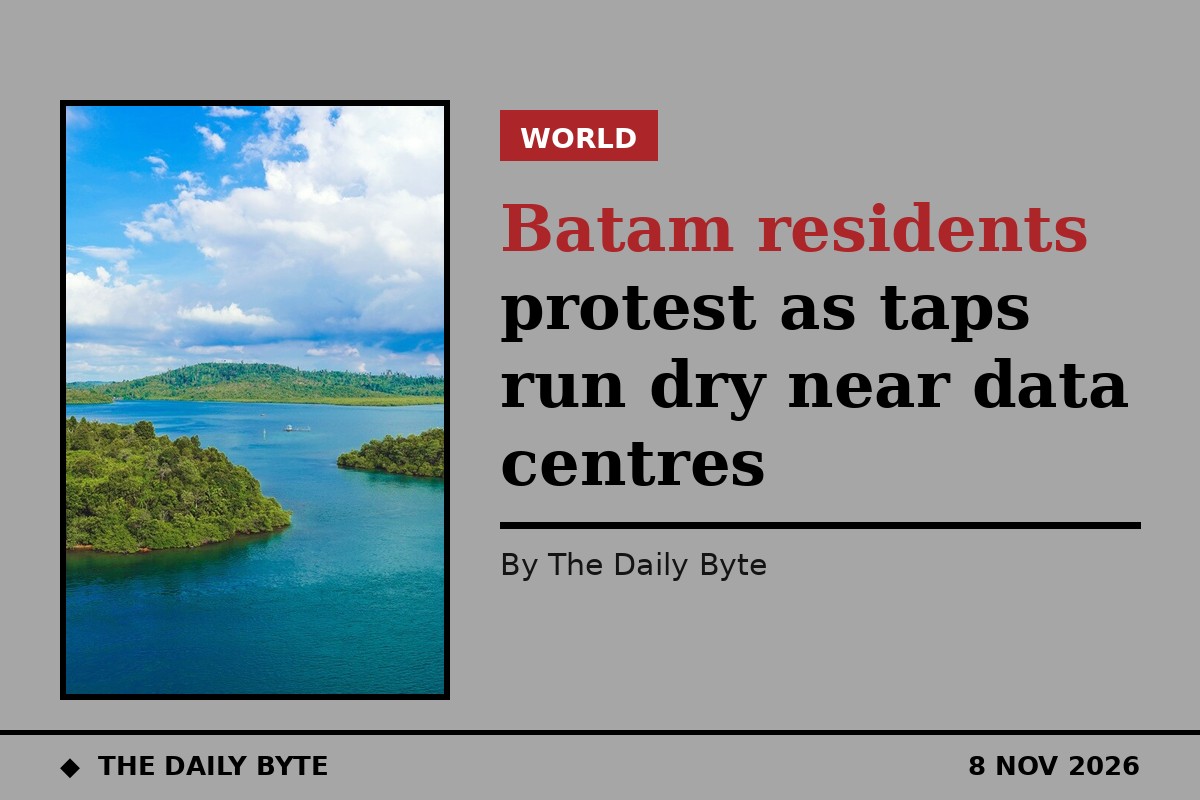
Residents of Batam, an Indonesian island south of Singapore, have protested outside a growing data centre hub after months without running water at home, blaming the new facilities for a shortage officials attribute to drought.
Around 300 residents of Bakau Serip village marched to the entrance of Nongsa Digital Park on 5 October carrying empty bottles and jerry cans, saying household taps had been dry for three months. One protester, Dewi Susanti, told reporters: "Not a single drop has come through our taps for the last three months... Our water supply had been reliable until the data centres came."
The island's water utility, Air Batam Hilir, says the area has suffered a long drought caused by low rainfall, worsened by a strong El Nino cycle, and that an electrical fault further disrupted supply. Its spokesman said the nearby Nongsa Reservoir had run very low. BP Batam, the agency overseeing trade and industry on the island, denies that water meant for homes is being channelled to the data centres.
Batam's mayor, Amsakar Achmad, said in October that the disruption was "not caused by data centres or AI or investors entering that sector", blaming weather and climate factors instead. An industry source told AFP that Nongsa Digital Park draws its water from a different reservoir, Duriangkang.
Even so, the pressure on Batam's water is real. The island's 1.3 million people depend on rainwater collected in six artificial reservoirs, and a local environmental group has warned that the Nongsa reservoir could run dry within a month without rain. In late September, authorities told developers they must build seawater desalination plants for cooling rather than drawing on the island's freshwater.
Batam has approved 10 data centres, six of them inside Nongsa Digital Park, with investment put at more than $6.7 billion as of mid-2026. Two are operating and a third is under construction, with at least six more applications under review. Companies named at the park include BW Digital, DayOne and Princeton Digital Group. A KPMG report cited by AFP projects data centre capacity across Southeast Asia will triple from 2025 levels by 2030.