Berisha backs fully open electoral lists in Albania
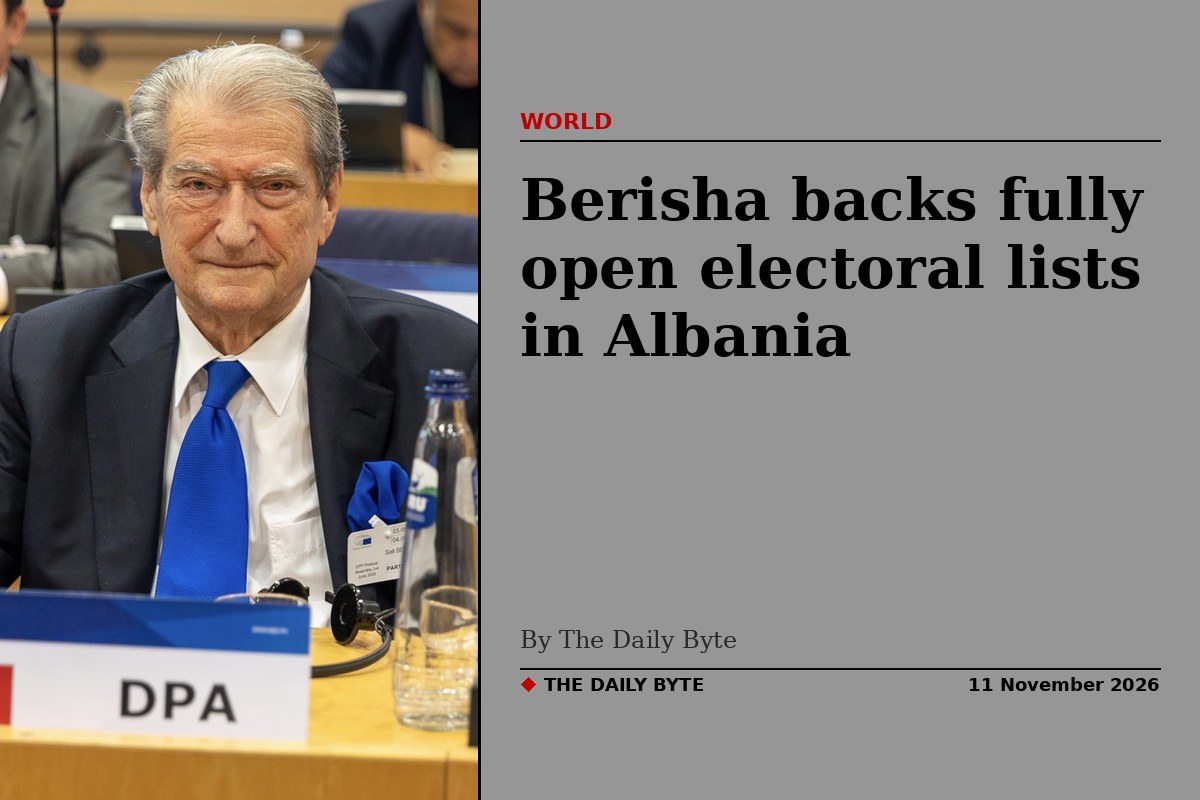
Albania's main opposition Democratic Party (DP) supports fully open electoral lists at the national level, party leader Sali Berisha said on Wednesday, 11 November, as discussions continue on the country's electoral reform.
Berisha said he favoured the Kosovo electoral model, which allows voters greater freedom to express their preferences among candidates, rather than leaving the order of candidates largely in the hands of party leaders.
"I assure every voter in this country, as well as the leaders and members of political parties, that the DP fully supports completely open national lists," Berisha said. "Personally, I favour Kosovo's open-list system, which gives citizens the opportunity to express their preferences."
He said the party's position was firm, adding that it supported fully open national lists with a reasonable electoral threshold of 2% or 3%, depending on the agreement reached.
Why the reform matters for Albania's EU bid
The debate over how Albanians choose their representatives comes as the European Union presses the country's political parties to work together. The European Commission wants Albania's parties to cooperate better and give civil society a say when major reforms are on the table.
Brussels has also made clear that Albania still needs to show progress on election standards, judicial reform, tackling corruption and organised crime, and media freedom. Those issues sit at the heart of the first cluster of Albania's EU accession talks, which covers fundamental rights, democratic institutions and the rule of law.
Albania hopes to close its accession talks by 2027 and join the EU by 2030, a timetable the EU supports. At the same time, EU officials have voiced concern about growing polarisation in Albanian politics and about the parliament's ability to hold genuine debate and scrutinise the government.
Whether the ruling and opposition parties can agree on the rules for the local elections due next May will be an early test of that cooperation.