Bilawal condemns 'political vengeance' against JUI-F
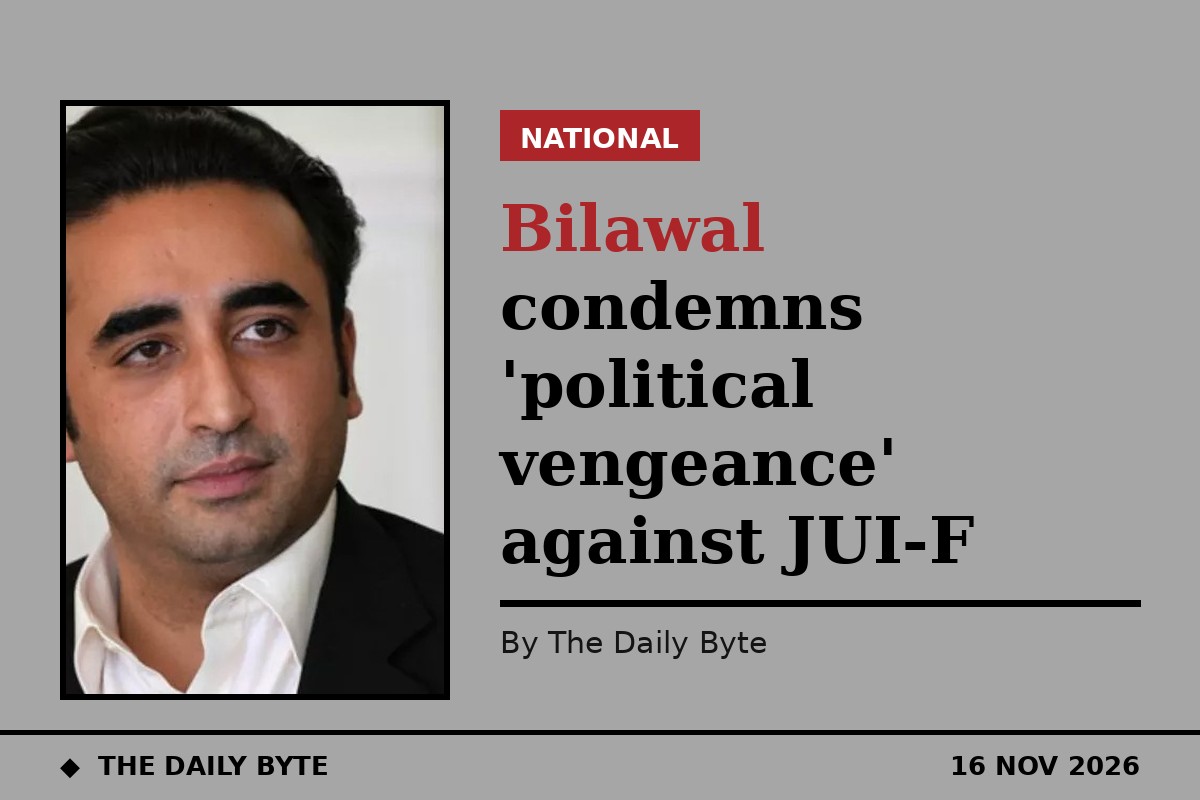
Pakistan Peoples Party (PPP) Chairman Bilawal Bhutto Zardari has condemned what he described as government action against the Jamiat Ulema-e-Islam-Fazl (JUI-F), calling it political victimisation, during a telephone call with the party's chief, Maulana Fazlur Rehman.
The call took place on Sunday, 15 November, and was initiated by Fazlur Rehman, according to reports of the conversation. The two leaders discussed the country's political situation and parliamentary affairs. A statement from the PPP Media Cell, posted on X, said Bilawal condemned the alleged targeting of JUI-F and stressed that political differences should not be turned into acts of revenge.
What Bilawal said
According to the PPP statement, Bilawal told Fazlur Rehman that the government should accept criticism from the opposition with tolerance. He said the role of a responsible opposition was vital to strengthening any democratic and parliamentary system and could not be ignored.
He also said the government should avoid any action that could weaken democracy and Parliament. The statement described the contact as highly significant amid the current political situation, but it did not set out any agreement between the two leaders or any joint plan of action.
The accounts of the call seen by DailyByte did not carry a response from the federal government to Bilawal's remarks.
Why the call matters now
The conversation comes at a tense moment between Fazlur Rehman and the federal government. JUI-F held demonstrations in several cities across Khyber Pakhtunkhwa on Sunday, protesting against what it called propaganda targeting its leadership and the ongoing anti-encroachment campaign.
Bilawal has spent recent weeks urging the government to lower the political temperature. On 10 November he called for a "political reset", urging Prime Minister Shehbaz Sharif to restore the confidence of coalition partners before reaching out to opposition parties. On 6 November he advised the government to engage political, social and provincial stakeholders rather than, in his words, "fighting everyone".
The PPP chairman has also pressed the same point in relation to other opposition parties, including the PTI, and has argued that confrontation is weakening Parliament. His latest intervention puts the PPP, a coalition partner, publicly on the side of an opposition leader who has been in open conflict with the government.
What happens next
Neither side has said whether the call will lead to a meeting or to coordination in Parliament. For now, it stands as a public signal: Bilawal is willing to criticise the government's handling of the opposition, and Fazlur Rehman has a prominent ally making that case for him.
Whether that signal changes anything in practice will depend on what the government does next, and on whether the PPP follows its words with action in Parliament. Source: Pakistan Point