Bitcoin Miners Swap Rigs for AI Data Centres in $28bn Shift
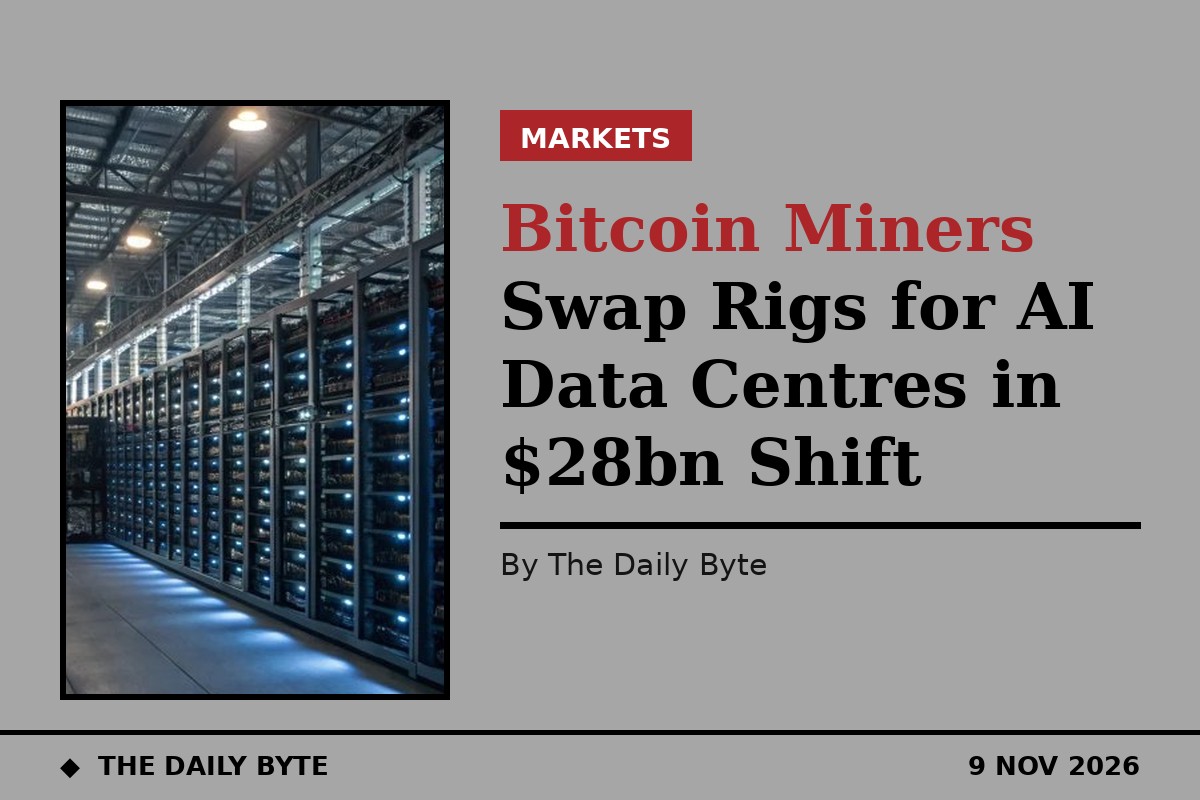
Listed bitcoin miners are accelerating their shift from digging for coins to hosting artificial intelligence, with Riot Platforms signing a 15-year, $28 billion data centre lease and two of the sector's biggest names preparing to stop mining altogether by the end of the year.
Riot said the lease covers 910 megawatts at its Corsicana site in Texas and lifts its total future contracted data centre revenue to roughly $38 billion across three leases signed in 2026. The tenant was identified as Anthropic in Riot's regulatory filing. Riot will supply the land and power infrastructure originally built for bitcoin mining, while the tenant will own and operate the computing equipment and cover operating expenses.
Riot shares jump as Hut 8 falls
Riot shares jumped more than 13% on the Wednesday the deal was announced. Chief executive Jason Les told investors the company is moving from a cash flow base heavily influenced by the bitcoin price to one increasingly tied to long-term leases, saying that once current deals are fully deployed, nearly all of its expected cash flow would come from long-term agreements with players in the artificial intelligence ecosystem.
Riot estimated total capital costs for the project at $5.5 billion, with the first phase due for delivery in September 2027 and rental payments starting within 60 days of delivery. Financing is expected to be primarily debt backed by lease payments, although the company said financing has not yet been secured. Mining at the Corsicana site could begin winding down in summer 2027.
The same day brought a warning from elsewhere in the sector. Shares of Hut 8 fell more than 22% at one point after it reported third-quarter revenue of $71.1 million, down 15% and below analysts' estimates of $75.8 million. Hut 8 said it has secured $7.5 billion in project bonds to finance two major AI data centre developments, but neither project has begun generating lease revenue yet.
Core Scientific and IREN to stop mining
Core Scientific and IREN have gone further, both setting 31 December 2026 as the end of bitcoin mining in earnings materials dated 5 November. Core Scientific chief executive Adam Sullivan told investors the company expects to complete its exit from bitcoin mining by year end, while IREN's quarterly filing expects its transition to be substantially complete by the same date.
The economics explain the rush. CoinShares research shows AI and high-performance computing workloads earn approximately $1.5 million per megawatt per year, against roughly $500,000 for bitcoin mining. IREN became the first major listed miner whose AI cloud revenue overtook its mining revenue in a single quarter, with $70.5 million against $66.7 million in the second quarter of 2026. CoinShares estimates AI and high-performance computing revenue could reach up to 70% of listed miners' total revenue by the end of 2026, up from roughly 30% at the start of the year.
The gap between contracts and cash
Investors are also watching the gap between headline contracts and actual income. More than $100 billion in disclosed AI and high-performance computing contracts have been announced across the public mining sector, against only about $1.1 billion in annualised billing revenue, with roughly 550 megawatts live against more than four gigawatts under contract. VanEck noted that shares of miners that pivoted to AI infrastructure fell an average of 35% in October, arguing the sell-off reflected contagion from GPU rental firms rather than cancelled leases, since no signed leases were cancelled.
Riot's third-quarter results show mining still funds the transition for now. Revenue was $181.4 million, up about 1% year on year, and the company sold 10,599 bitcoin during the quarter to support its data centre expansion. Whether the sector's huge contracted backlog turns into steady lease income on schedule is now the question that will decide the next leg of the trade.