Blue Badge UK: Who Can Get One and How to Apply
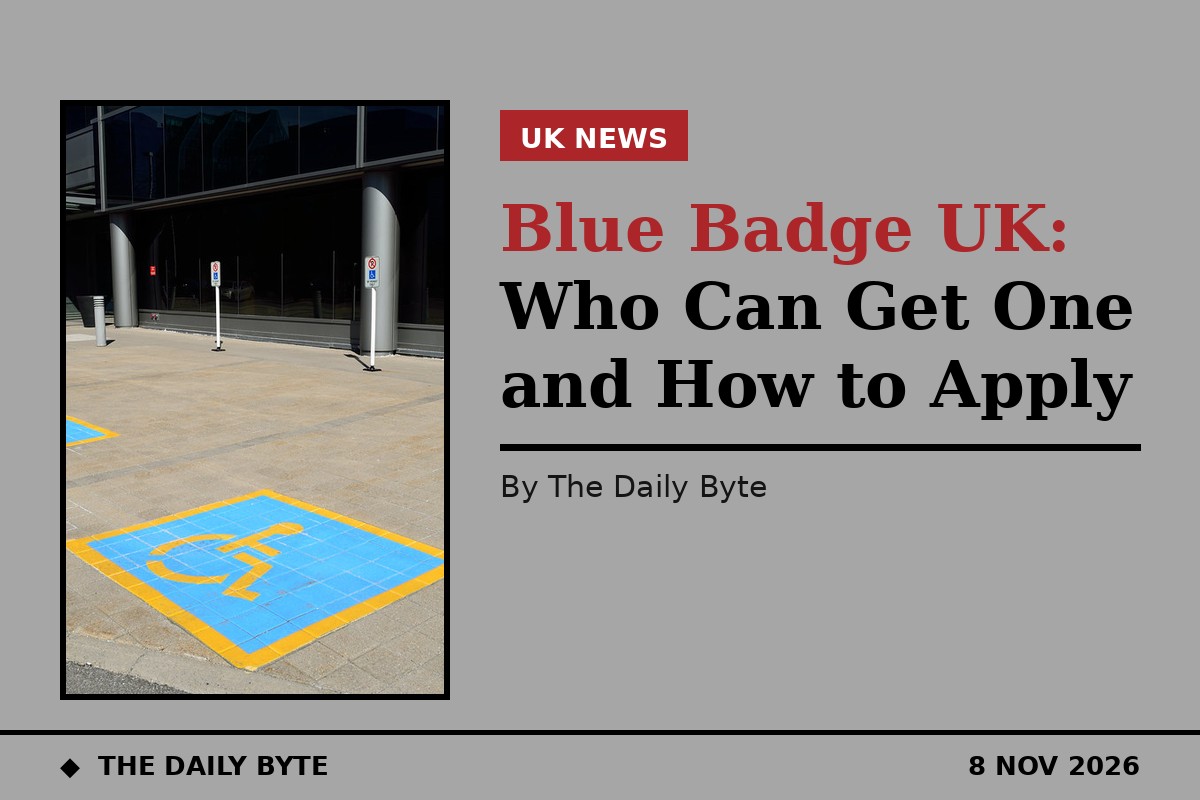
A Blue Badge is a parking permit for people in the United Kingdom whose disability or long-term health condition makes getting around difficult. It allows the holder to park closer to where they need to go, including in disabled bays and, in many places, on yellow lines for a limited time. The badge belongs to the person, not the vehicle, so it can be used in any car they travel in, whether they are driving or travelling as a passenger. The scheme runs across England, Scotland, Wales and Northern Ireland, and it is administered by local councils under nationally set eligibility rules.
The badge does not give its holder the right to park anywhere they like. It gives access to designated disabled parking bays and a set of concessions that vary by council area, such as free parking in some pay-and-display bays and extra time where parking is time-limited. Each council publishes its own local parking rules for badge holders, so it is worth checking the rules for the area you are visiting before you travel. The badge must be displayed clearly on the dashboard, with the photograph and expiry date visible, and it must only be used when the badge holder is travelling in the vehicle.
Some people qualify for a Blue Badge automatically, without any further assessment. In England, this includes people who are registered blind or severely sight impaired, people who receive the higher rate of the mobility component of Disability Living Allowance, people who receive the War Pensioners' Mobility Supplement, and people who received a lump sum payment under the Armed Forces Compensation scheme at tariffs 1 to 8 and have been certified as having a permanent and substantial disability. People who receive Personal Independence Payment also qualify automatically if they scored 8 points or more in the moving around part of their assessment, or 10 points in the planning and following journeys part and were placed in category E, which means a mental health condition stops them leaving the house. If you are unsure which points you scored, the details are in your PIP decision letter.
Automatic eligibility is not the only route. Many people qualify after their council assesses how their condition affects their journeys. This route is open to people with long-term problems walking or getting to places, including problems caused by stress, anxiety or other mental health conditions. Since 2019, people in England with non-visible conditions such as dementia or autism have been able to apply on this basis. A diagnosis on its own is not enough: the council looks at how the condition affects your ability to walk or to undertake a journey safely and reliably, and it will want specific detail about what happens when you try.
Children can also qualify. A child over the age of two can get a badge if they have long-term problems walking or getting to places, and a child under three can qualify if they need to be close to a vehicle because of a health condition, for example because they need bulky medical equipment such as a ventilator, suction machine, feed pump or oxygen, or because they may need to get to hospital or home quickly. Parents applying for a child should list the equipment involved and explain how often it is needed. People with severe problems using both of their arms can also qualify, but this is a harder route: you need to be a driver, explain why you need to drive regularly, and show that you have serious difficulty using parking ticket machines or meters.
Applying is straightforward and starts on GOV.UK, where the official service is called Apply for or renew a Blue Badge. You can apply for yourself, for someone else, or for an organisation. You will be asked for your postcode so the service can direct you to the right local council, and then you will answer questions about your eligibility and your condition. If you are not automatically eligible, the form asks for a fuller description of how your condition affects your walking and your journeys. Citizens Advice suggests describing this in as much detail as you can, including how far you can walk without help or pain, how long it takes, and how walking makes you feel, for example whether it leaves you breathless or in severe pain and needing to sit down and rest.
Before you start, gather the documents you will need. GOV.UK asks for a recent digital photograph showing your head and shoulders, a photo or scan of proof of identity such as a passport, driving licence or birth certificate, proof of address such as a Council Tax bill or a letter from a government department, and proof of benefits if you receive any. You will also need your National Insurance number if you have one, and the details of your current badge if you are reapplying. If you are not automatically eligible, you will need details of your medical condition and the health professionals involved. You can save your application and return to it later if you need to, and some councils also accept paper forms if you cannot apply online.
A Blue Badge costs up to £10 in England and £20 in Scotland, and it is free in Wales. You only pay if your application is approved, and how you pay depends on your local council. A badge usually lasts for up to three years, and you must reapply before your current one expires, because an expired badge cannot be used. Citizens Advice advises asking your council when to send a renewal application, and GOV.UK notes that you can reapply up to 12 weeks before the end date in many areas. If you stop receiving the benefit your badge was linked to, you will need to reapply on another basis.
After you apply, your council will usually make a decision within 12 weeks, although it can take longer if further information or an assessment is needed. Your council may arrange a mobility assessment, in which a health professional looks at your ability to carry out a range of mobility activities and reports back on whether your condition limits your movement enough for you to need a badge. You may also be asked to send extra information or to speak to a member of council staff. If you have not heard anything after 12 weeks, Citizens Advice advises contacting your council to ask about the progress of your application.
If your application is refused, your council should tell you why you are not eligible. You can ask the council to reconsider your case if you do not think all the important information you provided was taken into account, and the decision letter will explain how to ask for a review and what the time limit is. You can also reapply if your mobility problems become more serious. It is worth seeking help before reapplying: Citizens Advice can help you fill in the form, and describing the real impact of your condition in concrete detail, rather than listing a diagnosis alone, gives the council the evidence it needs to decide fairly.
There are a few rules badge holders need to remember. You must give your badge back to your council if you no longer need it, for example if your condition improves, and you could be fined up to £1,000 if you do not. A badge must never be lent to someone else or used when the holder is not in the vehicle, and councils can withdraw a badge that is misused. If you lose your badge, or it is stolen or damaged, there is a separate replacement service on GOV.UK, unless the badge is expiring within three months, in which case you should renew instead. Finally, beware of scams: a genuine Blue Badge can only be obtained from your local council or through GOV.UK, and no other person or website can issue one. If you think you have been targeted by a scam, report it. Rules and fees can change, so always check the official GOV.UK page before you apply.