Bolivia declares emergency as El Nino drought bites
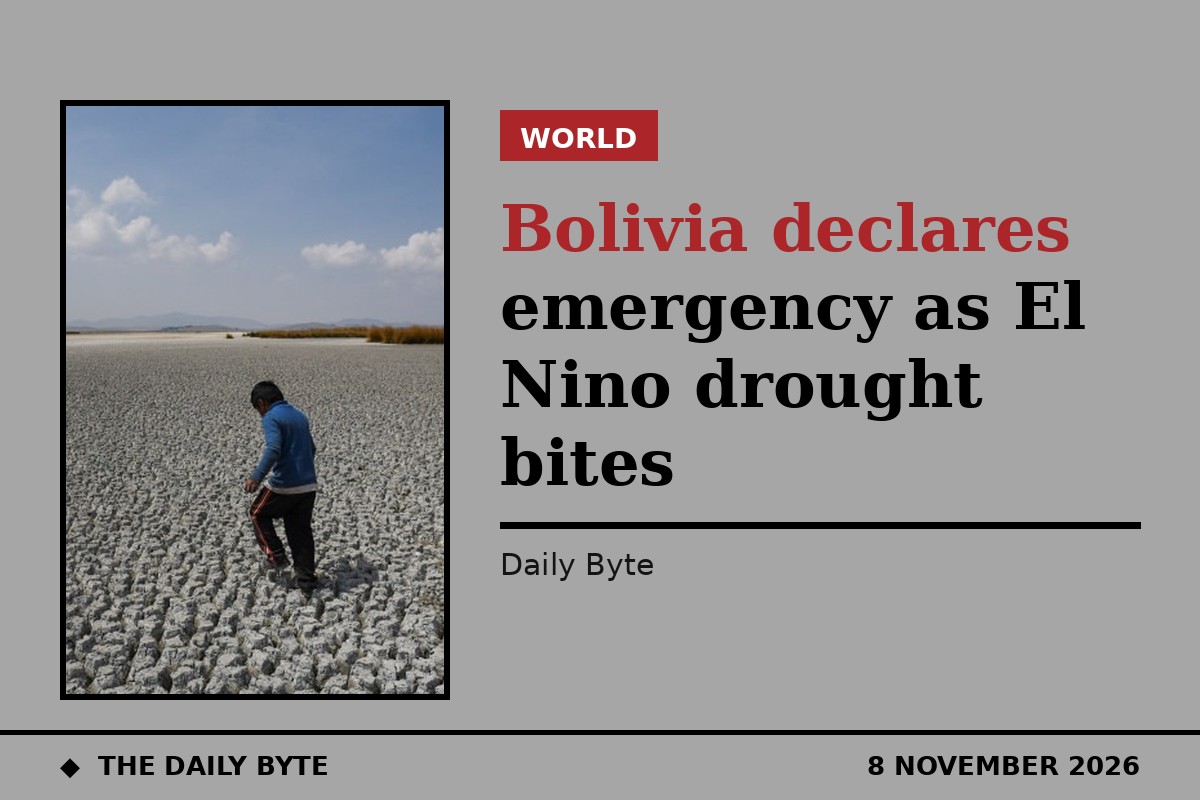
Bolivia has declared a national emergency as drought linked to the El Nino weather pattern spreads across the country, with tens of thousands of families affected and livestock dying in large numbers. President Rodrigo Paz signed the decree on Saturday, 31 October, to free up resources and send rescue teams to worst-hit areas.
The scale of the damage is already large. Between June and late October, drought affected 114,048 families in 63 municipalities across six departments, and more than 35,800 of those families lost their homes or livelihoods, according to the United Nations humanitarian office, OCHA. A civil defence count put families directly affected by drought at more than 78,000, and a government report said the drought had killed more than 75,000 cattle.
Oruro is the hardest-hit department, while La Paz faces the greatest impact from wildfires and Potosi is also contending with snow, hail and strong winds. The decree also covers the imminent risk of frost, hailstorms, forest fires, flooding and overflowing rivers linked to the 2026-2027 El Nino period.
President Paz warned the phenomenon would have very severe impacts in terms of drought and floods, and said Bolivia needed the cooperation of all institutions. The country is caught between two extremes: prolonged dry weather has damaged crops and drained water supplies, while the rainy season, which runs from November to March, could bring sudden flooding to the same regions.
El Nino is a natural warming of the Pacific Ocean that disrupts weather worldwide every two to seven years. The World Meteorological Organization has said there is a nearly 100 percent likelihood that El Nino conditions will continue through February 2027, with the event due to peak late in 2026. Bolivia was among the first countries in the region to declare a national emergency over this cycle.