Bowen: Only 0.2% of Climate Cash Reaches Island States
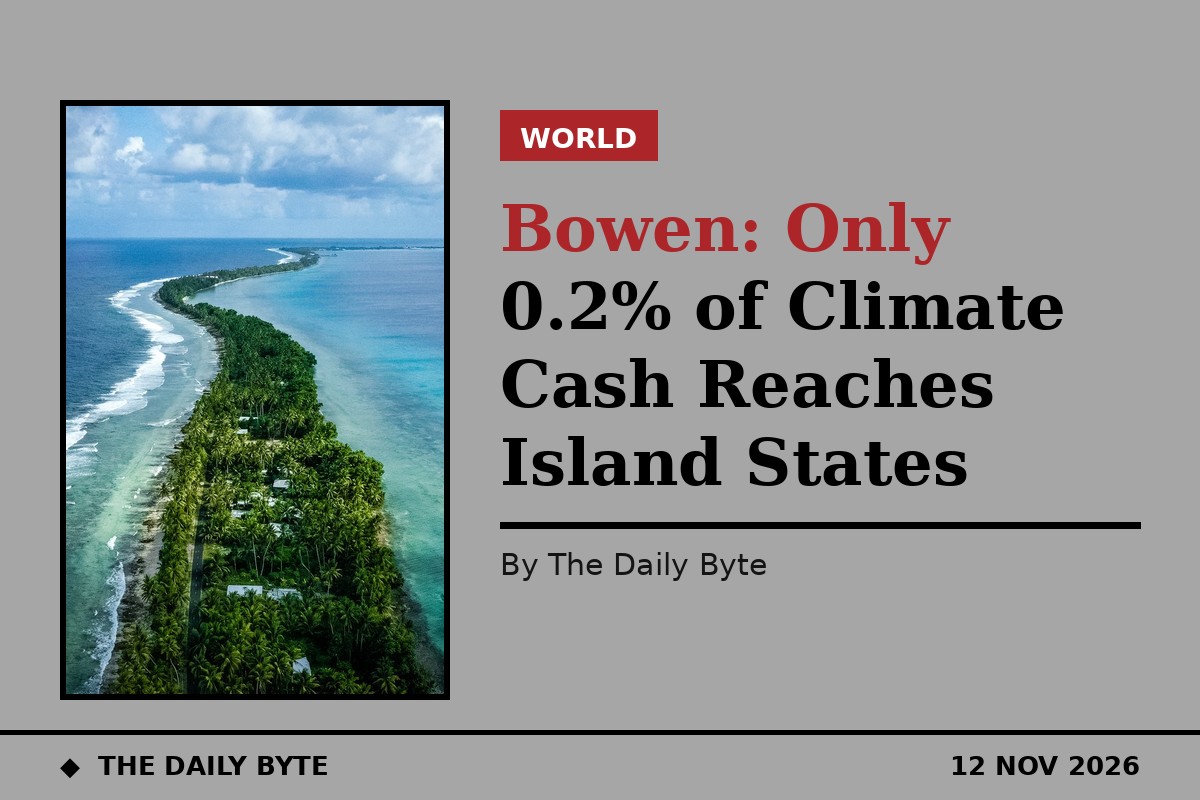
Pacific island countries are receiving just 0.2 per cent of global climate finance for adaptation, a figure the president of negotiations at COP31, Chris Bowen, says must change as he calls for faster and fairer access to funding for the world's most vulnerable nations.
Bowen, Australia's Minister for Climate Change and Energy, was addressing heads of state and government at the high-level segment of the COP31 climate summit in Antalya, Turkiye, on Thursday. He said the Pacific was already experiencing the devastating impacts of climate change, with the future of some island nations threatened by rising sea levels.
Tuvalu and the 1.5-degree line
Bowen highlighted Tuvalu, where he witnessed the impacts of climate change during the pre-COP meeting, saying that keeping global warming within 1.5 degrees Celsius was a matter of survival for Pacific communities. For the people of Tuvalu and other countries on the climate frontline, he said, keeping 1.5 degrees within reach was the difference between continuing to have a home or not.
He said the latest science indicated the world would overshoot the 1.5-degree threshold, but stressed that every fraction of a degree mattered and countries must accelerate action to limit the damage. He pointed to glacial collapse in Nepal, heat-related deaths in Europe and an intensifying super El Nino as evidence that the impacts were already worsening.
Bowen described the climate crisis as unfolding alongside energy insecurity, geopolitical tensions, wars, rising living costs and growing electricity demand driven by artificial intelligence and data centres. He called the combination a global polycrisis and argued that countries needed stronger international cooperation rather than retreating from multilateral action.
The scale of the funding gap
The 0.2 per cent figure is backed by research from the Climate Policy Initiative and the Global Center on Adaptation, which found that the 39 small island developing states received just over 2 billion US dollars a year on average in international public climate finance for adaptation in 2021-2022. The same research estimates those states will collectively need about 12 billion dollars a year in adaptation finance, a six-fold increase, and notes that almost half of the finance they do receive arrives as debt rather than grants.
Bowen said the Pacific was leading with practical solutions, including the proposed Pacific Resilience Facility, a Pacific-led initiative aimed at strengthening community resilience and improving access to funding for climate and disaster preparedness. Pacific climate envoy Ruel Yamuna has said the region is seeking 500 million US dollars for the facility. Bowen urged countries supportive of the Pacific to engage fully with locally driven initiatives of this kind.
Three priorities for COP31
Bowen outlined three priorities emerging from consultations between Australia and Turkiye, the COP31 co-presidencies. The first is accelerating electrification through the 35 by 35 pledge, which aims to increase electricity's share of final energy consumption to one-third by 2035. The second is strengthening adaptation and resilience, particularly as climate impacts become more severe. The third is climate finance, with funding to become faster, simpler and fairer so countries can turn their national climate commitments and adaptation plans into investable projects.
He said an Access to Finance Statement and Action Plan was an important step towards improving funding access, particularly for small island developing states and least developed countries. He also welcomed Turkiye's leadership on the Antalya Ocean Declaration, noting that the ocean absorbs almost 30 per cent of human-generated carbon dioxide and more than 90 per cent of the excess heat caused by global warming.
International cooperation had already helped reduce projected global warming from about four degrees before the Paris Agreement to approximately 2.6 degrees today, Bowen said, adding that clean energy investment reached 2.2 trillion US dollars last year, twice the amount invested in fossil fuels, while clean energy jobs now outnumber fossil fuel jobs globally. A successful outcome in Antalya, he said, must give governments, investors, businesses and communities confidence that the global climate response remained on track.


