Brent Crude Falls Below $92 as Oil Slide Extends
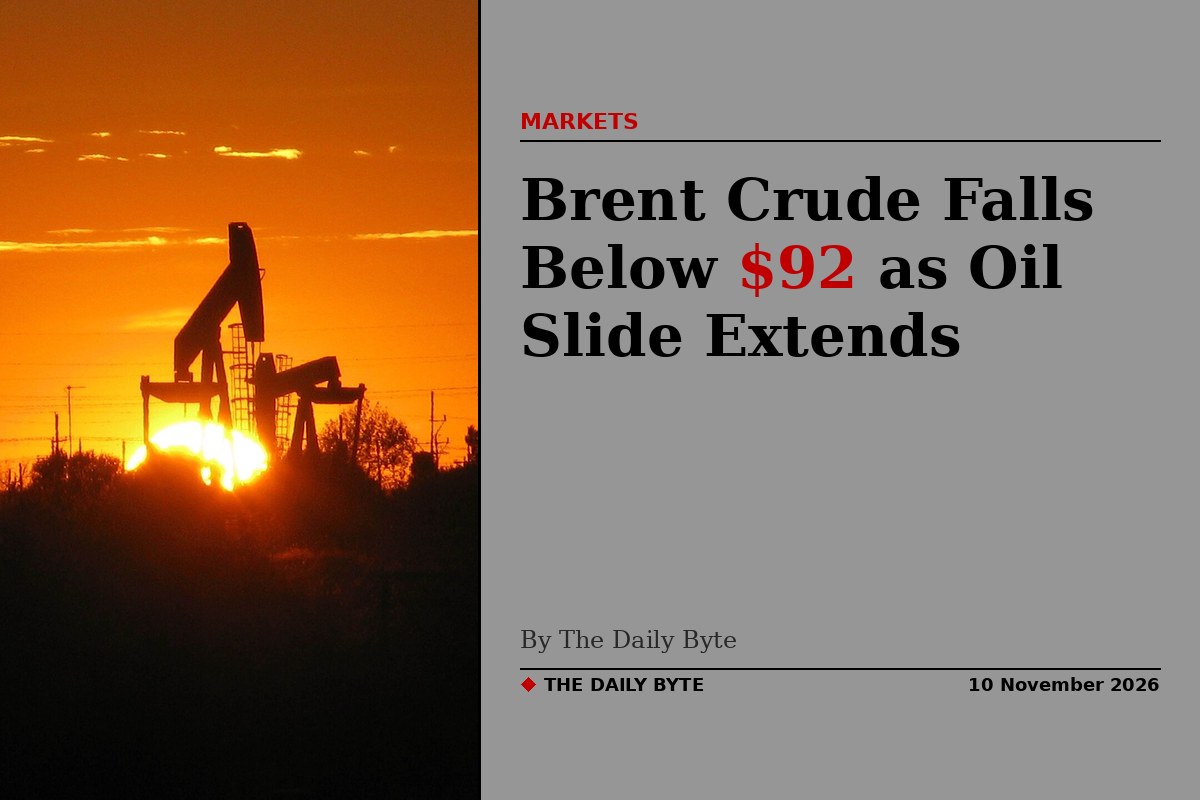
Oil prices fell further on Tuesday, 10 November 2026, taking Brent crude below $92 a barrel as traders bet that the risk of renewed military action against Iran is fading.
Brent crude futures were down 24 cents, or 0.23%, at $92.33 a barrel by 0102 GMT, and later trading took the benchmark below $92. US West Texas Intermediate (WTI) futures fell 35 cents, or 0.40%, to $86.50 a barrel.
The slide extends a dramatic fall on Monday, when Brent settled $5.75 lower, or 5.85%, at $92.57 a barrel, and WTI settled $3.98 lower, or 4.38%, at $86.85. Brent later fell by more than $7 a barrel in post-settlement trade, taking it to its lowest level since late August.
Trump comments calm supply fears
The trigger was US President Donald Trump, who said renewed strikes on Iran were unlikely while talks to end the conflict progress, and told reporters he believes the war in Iran is effectively over. The comments removed much of the war premium that had pushed oil sharply higher in recent months.
Brent had already fallen by about 16% last week, its steepest weekly drop since the start of the Covid-19 pandemic, as hopes of a diplomatic settlement grew. The US-Israeli war with Iran, which erupted at the end of February, had driven energy prices higher and fuelled inflation worries around the world.
Surplus and softer demand weigh on prices
Supply and demand signals are also pointing lower. Morgan Stanley said Dated Brent, the grade used to price physical cargoes, had fallen to a discount against the nearby Brent futures contract, a sign of softer demand and ample supply in the physical market.
JPMorgan estimated the global oil surplus at around 1.4 million barrels per day in October, while a Reuters survey found that OPEC production rose by 1.38 million barrels per day to 22.87 million barrels per day.
Goldman Sachs has recently raised its oil price forecasts, citing rising risks to global supplies, lifting its December Brent forecast to $105 a barrel from $90. That view contrasts with the market's current direction, and traders will watch whether diplomacy or supply risks win out in the coming weeks.
What it means for markets
Lower oil prices have eased inflation concerns and helped lift stock markets. London's FTSE 100 closed 1.02% higher at 10,782.87 on Monday as oil fell, with energy stocks under pressure but miners and airlines among the gainers.
For households and businesses, cheaper crude should eventually feed through to lower fuel costs, although pump prices move more slowly than the oil price itself. Traders now await US inflation data due later on Tuesday, which could shape expectations for the Federal Reserve's next move on interest rates.
Prices quoted are as reported on Tuesday morning, 10 November 2026, and move through the trading day.