Britain and EU drop 'trusted partnership' from summit draft as car talks stall
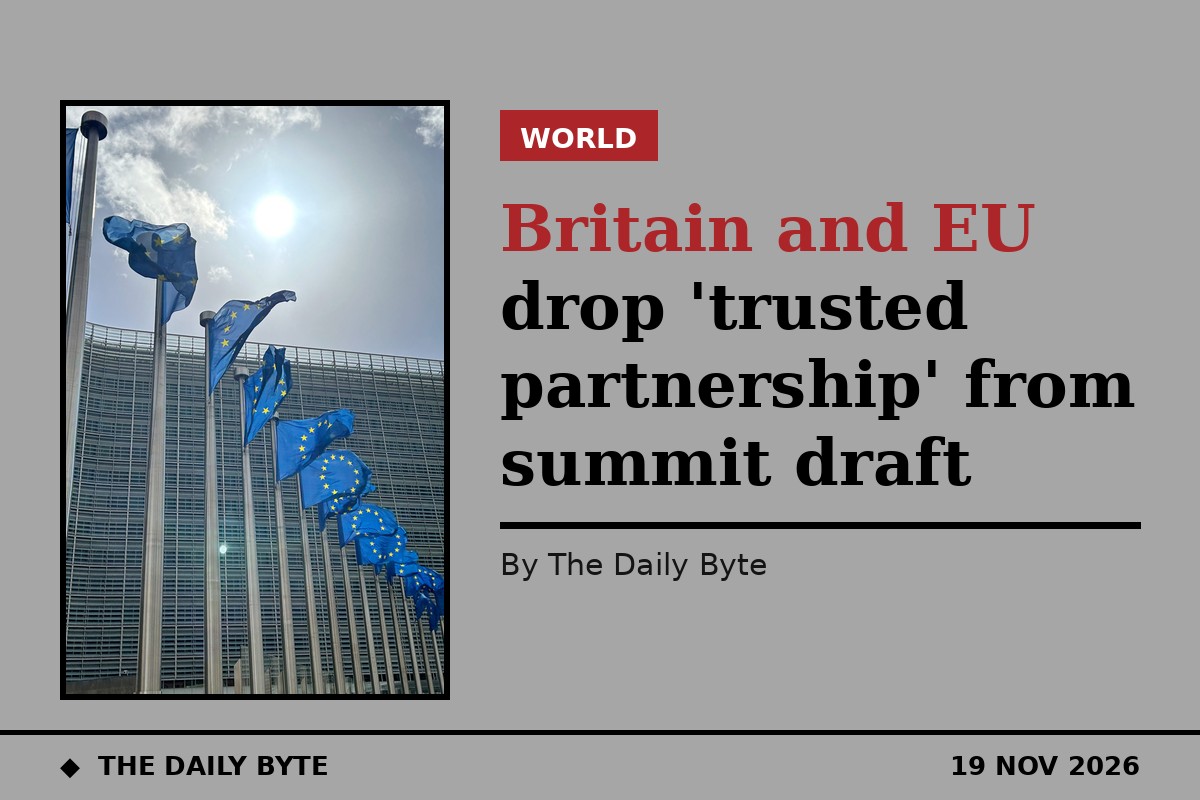
Britain and the European Commission have dropped the phrase "trusted partnership" from the latest draft of their joint summit statement, in a sign that talks over special status for British goods under the European Union's "Made in Europe" rules are proving difficult. Reuters reported on 18 November that it had seen the latest draft conclusions, which no longer carry the term.
Brussels is to host an EU-UK summit on Friday, 20 November, with deals expected on easing agrifood trade, on youth mobility and on linking Britain to the EU's emissions trading system, as part of Britain's proposed reset with the 27-nation bloc. But the removal of the "trusted partnership" language suggests that one of the most sensitive files — the treatment of British-made goods — remains unresolved on the eve of the meeting.
What the summit is expected to deliver
The summit is the centrepiece of the reset in relations the British government has pursued, and both sides have been working towards a package covering trade, energy and the movement of young people. Deals on agrifood trade, which would cut checks on food and farm products crossing the Channel, and on linking Britain to the EU emissions trading system are expected to be announced in Brussels.
A youth mobility agreement is also on the table. Under the scheme being discussed, young people from the EU could live and work, study or volunteer in Britain, and young Britons could do the same in the EU, for up to three years. The draft statement leaves open the numbers that would be covered by the scheme, so the scale of the programme is still to be settled.
Why the car rules are the sticking point
Two issues in particular have proven hard to crack, according to the Reuters report. The EU wants Britain to lower university fees for EU students, while Britain wants the EU to consider British cars as "Made in Europe" — a condition for them to benefit from EU public funding, including through public procurement and subsidy schemes.
An earlier copy of the draft summit conclusions seen by Reuters proposed that Britain and the EU form a "trusted partnership" under which Britain would be bound to align its policies with those of the EU to ensure protection for supply chains. That approach echoes a Franco-German paper from October, which proposed that Britain be granted special status for automobiles, subject to "dynamic alignment with EU conditions for investment from third countries and with EU trade protection measures".
Alignment of that kind could carry real consequences for British trade policy. It could mean Britain having to impose tariffs on Chinese electric vehicles and curbing imports of Chinese hybrid cars, as the EU has done or is planning to do. The latest draft drops the "trusted partnership" term altogether, and Britain has proposed replacing the sentence on alignment with a looser formulation: "we will aim to protect supply chains consistently across our markets and guard against potential risks of circumvention".
Youth mobility and student fees still open
The draft also leaves unresolved the question of what university fees travelling students would pay. It does not clarify whether they would be subject to the same fees as local students or only reduced fees. The EU broadly wants local fees to apply for EU students in Britain, who currently pay international fees that are typically three times higher. The draft statement says the two sides aim to resolve the issue within six months. The Reuters report was carried widely on 18 November.
The final statement agreed in Brussels on Friday will show how much of the gap the two sides were able to close.
What happens next
Leaders will meet in Brussels on Friday, 20 November, when the final joint statement is expected. Any agreement on youth mobility numbers, student fees and the "Made in Europe" question will be measured against the draft language reported this week — and against whether the phrase "trusted partnership", dropped at the last minute, returns in any form.
Frequently asked questions
What was the "trusted partnership"? It was a proposed arrangement in an earlier draft of the EU-UK summit statement under which Britain would align its policies with the EU to protect supply chains, in return for special status for British goods under the bloc's "Made in Europe" rules.
When is the EU-UK summit? The summit takes place in Brussels on Friday, 20 November 2026, with deals expected on agrifood trade, youth mobility and linking Britain to the EU emissions trading system.
What is the youth mobility scheme? It would allow young EU citizens to work, study or volunteer in Britain, and young Britons to do the same in the EU, for up to three years. The numbers covered have not yet been agreed.