Cabinet panel flags slow $22bn Chinese projects
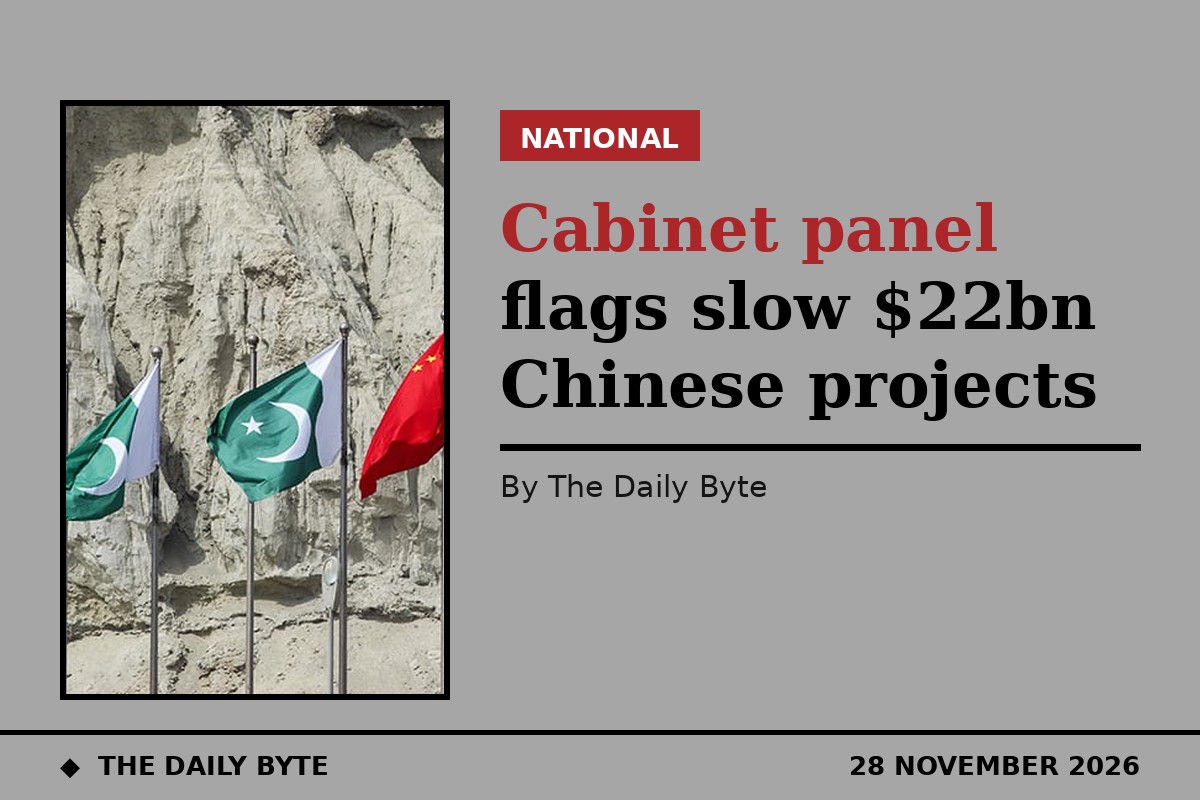
A cabinet committee has raised concern over the slow pace of work on Chinese investment projects in Pakistan worth nearly $22 billion, and has told the Special Investment Facilitation Council (SIFC) to tighten its monitoring and meet more regularly.
The Cabinet Committee on Chinese Investment Projects (CCoCIP) took up the matter at a recent meeting, according to reports published on Saturday. The committee said progress on the projects was behind schedule and asked for a clearer system for tracking how far each project had actually advanced.
The scale of the agreements
The figures discussed at the meeting show the scale of the engagement. Over the past two years, Chinese investors and companies have signed 566 memoranda of understanding and investment agreements worth $21.9 billion. Of these, 424 were investment agreements valued at $19.275 billion, about 88 per cent of the total value. The remaining 142 agreements covered trade and other arrangements.
The committee questioned the way the SIFC describes the status of projects. It said projects were being labelled as being in “execution”, “active” or “in pipeline”, but that these terms did not give a clear picture of where each project stood. Some projects on which no physical work had started on the ground had been placed in the “execution” category, the committee noted.
The SIFC has now been directed to review its classification system in consultation with the relevant ministries and divisions, and to present a revised methodology at the next meeting of the cabinet committee. The committee said accurate classification was needed so that the real status of projects could be established and informed decisions taken on speeding them up.
Meetings and monitoring
The meeting was also told that the SIFC executive committee had not met since August 2025. The committee chairman called for its meetings to be held on a regular basis so that progress could be properly monitored. The chairman said Chinese investment projects, particularly those linked to exports, should be completed on a fast-track basis, adding that timely completion could help reduce Pakistan’s reliance on multilateral financing, including assistance from the International Monetary Fund.
On the engagement front, Pakistan has held five business-to-business investment conferences with China since September 2025, with the SIFC and the Board of Investment providing coordination and secretarial support alongside ministries, provincial governments and sector bodies. The events included multi-sector conferences in Beijing and Hangzhou during the prime minister’s visits, as well as sector-specific sessions in Pakistan covering agriculture, battery energy storage, home appliances, pharmaceuticals, healthcare and biotechnology.
The government now plans to shift future engagements towards substantive investment proposals and joint ventures rather than focusing mainly on signing memoranda of understanding. More time will be given to preparing viable projects, identifying suitable partners and completing negotiations in advance, so that agreements signed in future are more likely to reach implementation.
The committee’s intervention puts the spotlight on delivery rather than announcements. With $21.9 billion of agreements on the table, the question now is whether the revised tracking system and regular SIFC meetings can turn signed deals into projects on the ground.