Canada Budget Omits Foreign Aid First Time in 15 Years
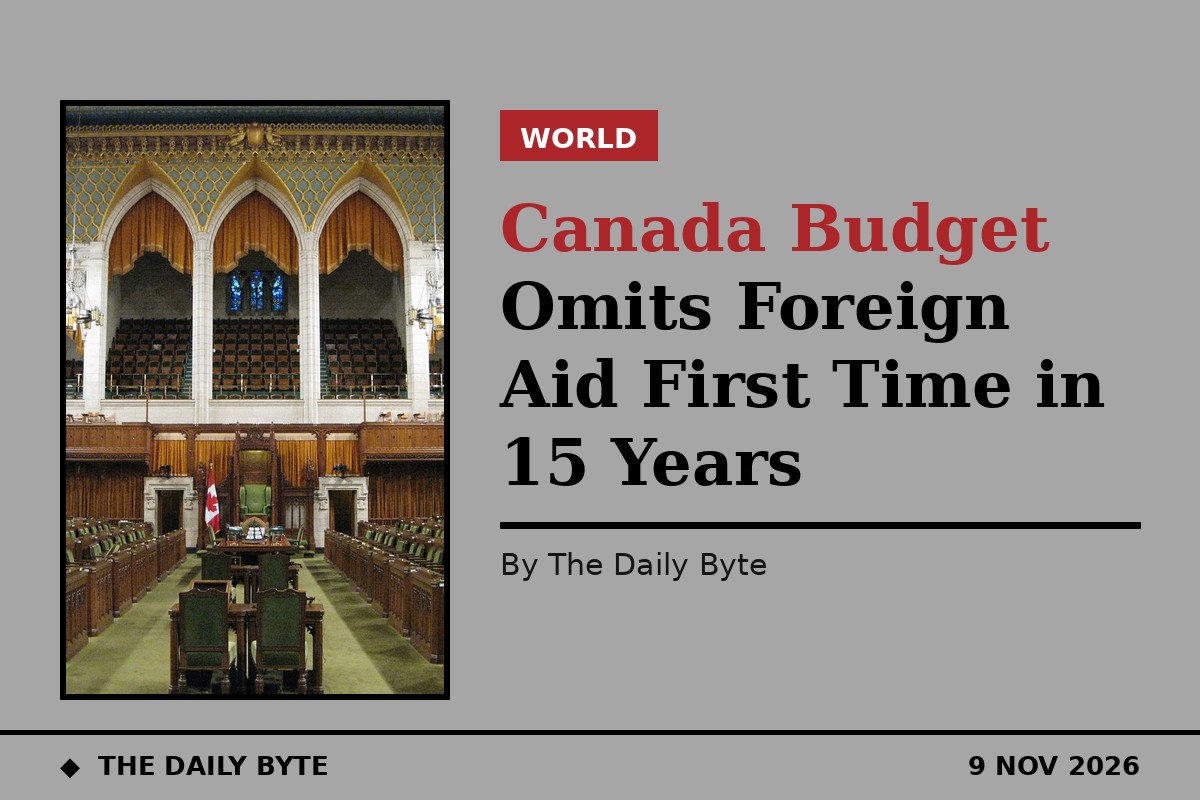
Canada's 2026 federal budget contains no mention of foreign aid, international assistance or international development, the first time in more than 15 years that a Canadian budget has been silent on the subject.
A review by The Canadian Press found that every federal budget since 2010 included at least one reference to international assistance. The budget tabled on 5 November by Prime Minister Mark Carney's government, titled Masters of Our Destiny, breaks that pattern, despite devoting extensive space to economic competitiveness, affordability, national security and government efficiency.
The omission does not mean Canada has stopped providing foreign aid. Federal spending documents still show substantial international assistance. The 2026-27 Main Estimates put Global Affairs Canada's total planned budgetary spending at approximately 7.22 billion Canadian dollars, down from roughly 8.44 billion dollars the previous year, including about 2.2 billion dollars in grants for multilateral development programming. But aid organisations say the budget's silence leaves them without any statement of the government's direction or priorities.
The silence comes against the backdrop of a previously announced 2.7 billion dollar reduction in international assistance over four years, set out in Budget 2025. Co-operation Canada confirmed that Budget 2026 leaves those reductions in place. The latest budget announces no further cuts, but neither does it discuss the ones already planned, leaving advocates unsure how the government intends to maintain effective humanitarian partnerships while spending less.
Kate Higgins, chief executive of Co-operation Canada, described the budget as largely silent on international development co-operation and humanitarian action. She said the sector was relieved that no additional cuts were announced, but still needed a clear articulation of the role development funding plays in addressing crises abroad.
The budget does mention Ukraine, but only in connection with drone production, and refers to humanitarian workers only in passing, in a section about permits for organisations operating in areas controlled by designated terrorist groups. Results Canada, an anti-poverty advocacy group, said its staff searched the budget for terms such as international assistance, vaccines, tuberculosis and famines, and found none of them.
Doctors Without Borders said it was profoundly disappointed that the budget made no mention of international humanitarian assistance or global health, at a time when global funding cuts have already decimated support for people affected by crises. The organisation noted that the omissions came despite recommendations from the House of Commons Standing Committee on Finance, which had called for predictable, flexible and needs-based humanitarian assistance, including for Gaza and the Democratic Republic of Congo.
The medical charity has called on Canada to restore its international humanitarian assistance budget to at least the 1.3 billion dollar level reached in 2022-23. It argues that the latest omissions follow more than 2 billion dollars in aid cuts already announced in last year's budget, and suggest Canada is turning away from its long-standing leadership in responding to international health and humanitarian needs.
Foreign Affairs Minister Anita Anand addressed the criticism at a news conference on 6 November, insisting that development assistance remains a priority for Global Affairs Canada. She pointed to humanitarian support provided during 2026 to Cuba, Lebanon, Gaza and Sudan, and said a foreign-policy update would be released within weeks and would include the government's approach to development.
The government has continued to announce individual aid commitments. In April, Ottawa announced an additional 5.5 million dollars to help vulnerable Cubans and more than 120 million dollars in new humanitarian, development and stabilisation funding for Sudan and neighbouring countries. But advocates say one-off announcements do not establish an overall funding strategy or explain which programmes will retain support as previously announced reductions take effect.
The timing has sharpened the criticism. Just days before the budget, Tom Fletcher, the United Nations' head of humanitarian affairs, praised Canada as a humanitarian superpower for its work with the world's most vulnerable people. UNICEF Canada argued that any discussion of Canada's response to global threats should at least mention international development, and pointed to polling in which 82 per cent of respondents believed Canada should do at least as much as other countries to help children in the world's poorest nations.
Canada's official development assistance represented 0.32 per cent of gross national income in 2025, according to preliminary figures from the Organisation for Economic Co-operation and Development, below the longstanding United Nations benchmark of 0.7 per cent. The ONE Campaign has called on Ottawa to commit to spending 5.5 billion dollars a year on development. All eyes are now on the forthcoming foreign-policy review, which aid groups hope will finally set out Canada's priorities, funding levels and mechanisms for accountability.


