Cape Verde votes as Neves seeks second term
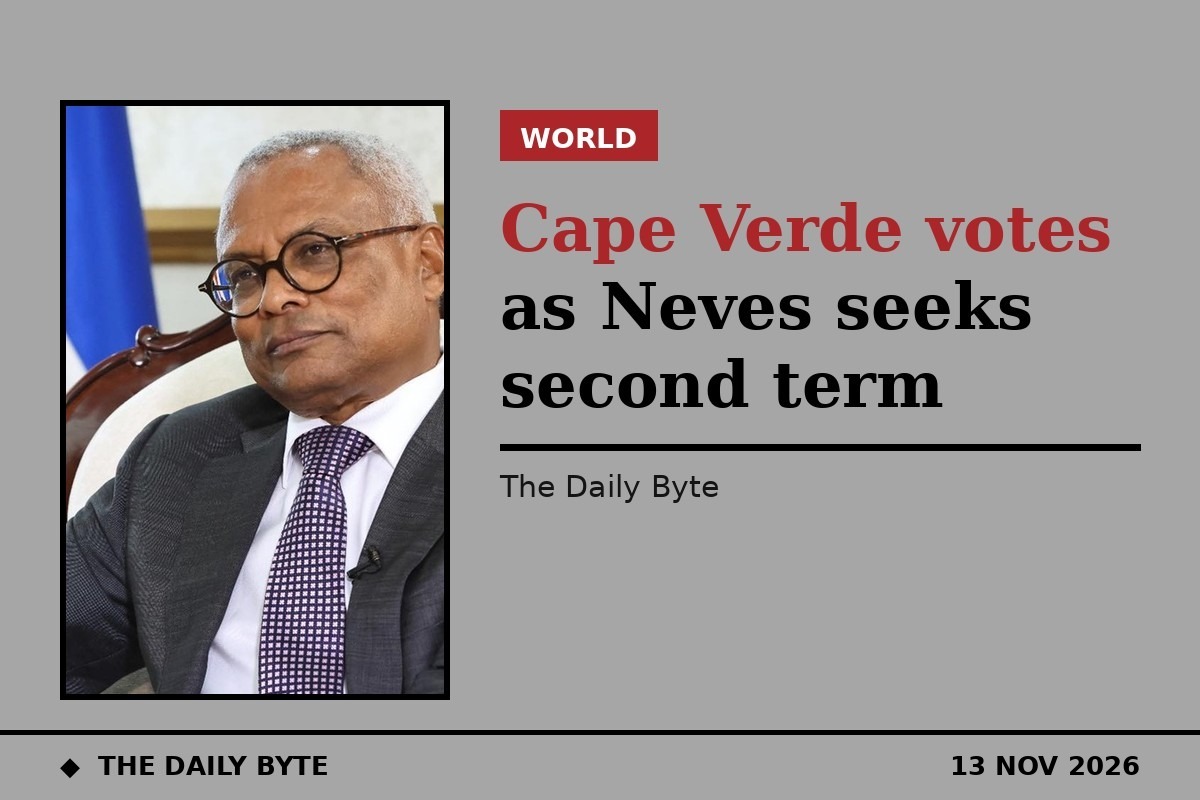
Cape Verde votes on Sunday in a presidential election in which President José Maria Neves is seeking a second five-year term, months after his party took control of parliament in legislative elections earlier this year.
Neves, backed by the African Party for the Independence of Cape Verde (PAICV), is the clear favourite to win another term, according to analysts cited by Reuters. His main challenger is Joana Rosa, a former justice minister backed by the Movement for Democracy (MpD), who is the first woman to run for president in Cape Verde.
Six candidates are contesting the presidency, according to the National Elections Commission. Alongside Neves and Rosa, the field includes Antero Tavares, Casimiro de Pina, Gilson Alves and Loisito Sousa. Official campaigning ends on Friday, 13 November, two days before polling day. If no candidate wins an outright majority, a second round is scheduled for 29 November.
Jobs and migration dominate the campaign
Employment and outward migration have been central issues in the race. Rosa has argued that the country must give young people a reason to stay, telling Reuters: "We must also find ways to ensure that young people can build their futures here at home and prevent the continued exodus of young Cape Verdeans abroad."
She added: "This outflow creates domestic problems and slows down our development process." Rosa has said she is running to "demonstrate women's capabilities", to attract foreign investment and to provide a balance of power in government rather than total control by the PAICV.
Neves has promised to organise a "Youth Convention" focused on employment needs and a forum to identify development priorities up to 2050 if he is re-elected. "I want to inspire Cape Verdeans and mobilise them to accelerate progress towards inclusive economic growth, while implementing the reforms needed to deliver better wages, higher incomes and an improved quality of life," he told Reuters.
A changed political landscape
The election comes after a significant shift in Cape Verdean politics. The PAICV won 37 of the 72 seats in legislative elections in May, ending a decade of government by the MpD and allowing Francisco Carvalho to become prime minister.
Neves, who served as prime minister for 15 years from 2001, said he had spent his first term as president trying to reach as many Cape Verdeans as possible, "taking the presidency to the islands" and to the diaspora in Africa and the United States.
Cape Verde is a semi-presidential republic of around 500,000 people, situated more than 600 kilometres west of mainland Africa. The prime minister heads the government, while the president retains significant powers, including veto authority and a mediating role in the political system.
The result on Sunday will show whether voters want the PAICV to hold both the presidency and the government, or whether they prefer Rosa's argument for a check on the ruling party's power. Either way, the new president will take office in a country where the cost of living, jobs for young people and the pull of emigration remain the defining questions.
Sources: Reuters; The Conversation.