Chashma-5 nuclear plant dome placed in major milestone
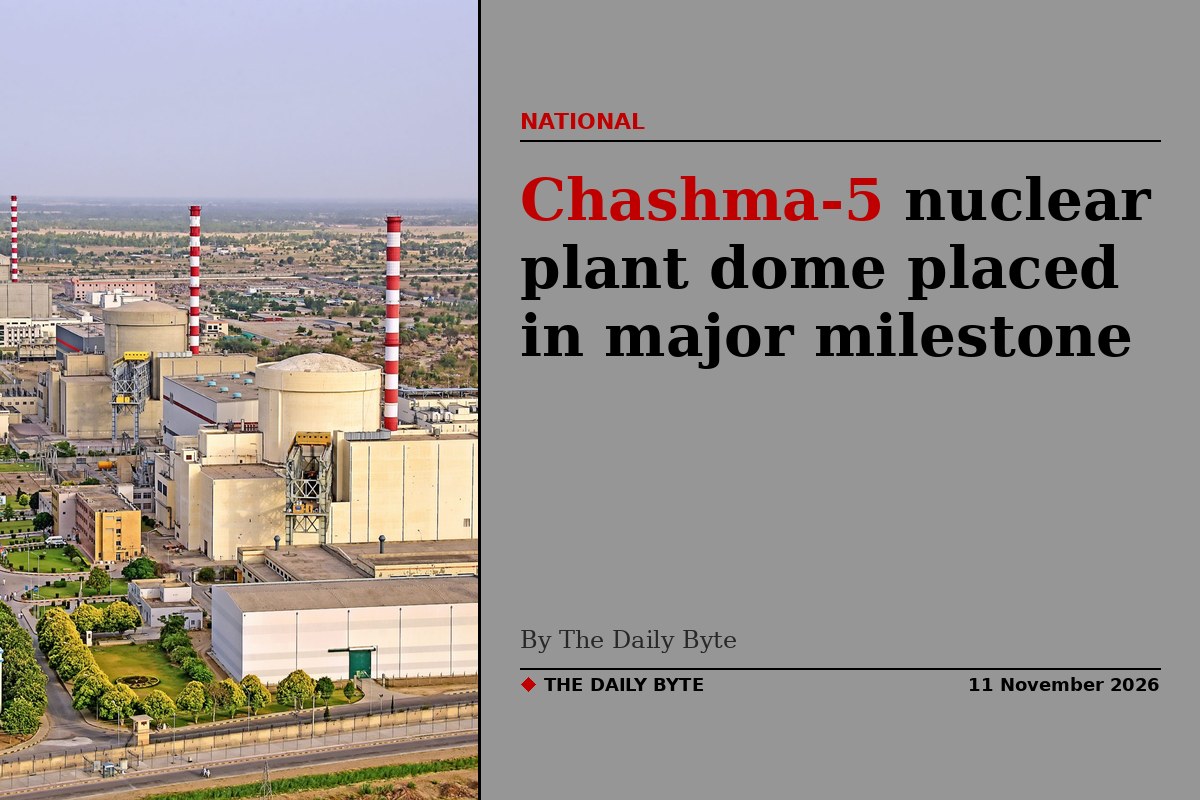
Pakistan has reached a major construction milestone at the Chashma-5 Nuclear Power Plant after the Pakistan Atomic Energy Commission (PAEC) completed the installation of the reactor building's dome. The dome placement ceremony took place on 10 November 2026 at the Chashma Nuclear Power Generating Station in Mianwali, Punjab, with Prime Minister Shehbaz Sharif attending as chief guest alongside Field Marshal Syed Asim Munir, Chinese officials and senior representatives of the organisations involved.
What the dome means
The dome is the large, dome-shaped roof of the reactor building, which houses the nuclear reactor and its associated equipment. Placing it is a key construction step and a sign that the main reactor building has reached an important stage of structural completion. It does not mean the plant is ready to operate: further construction, installation of equipment, testing and regulatory steps are still needed before it can begin commercial electricity generation.
The project in numbers
Chashma-5, also known as C-5, will have a gross electricity generation capacity of 1,200 megawatts and is expected to begin generating electricity in September 2030, according to the Prime Minister's Office. The plant uses China's Hualong One reactor design, also known as HPR1000, and is being built by the PAEC with China National Nuclear Corporation and its subsidiary, China Zhongyuan Engineering Corporation. Work began with a groundbreaking in July 2023, first concrete was poured in December 2024, and the Pakistan Nuclear Regulatory Authority issued the construction licence on 26 December 2024. Pakistan and the International Atomic Energy Agency signed a safeguards agreement for the unit in September 2026.
Why it matters for Pakistan's energy
The project is the fifth unit at the Chashma complex, which already hosts four operating Chinese-supplied reactors. Once running, Chashma-5 will add 1,200 megawatts of base-load electricity to the national grid, which the government presents as part of its clean-energy and energy-security plans. Nuclear power runs day and night regardless of weather, unlike solar and wind, so the government argues it can help steady supply as demand grows. The PAEC completed the dome placement ahead of schedule, less than three and a half years after the groundbreaking.
What still has to happen
With the dome in place, work now moves to the next construction stages, including fitting out the reactor building, installing systems and equipment, and the testing and commissioning programme overseen by the regulator. The September 2030 generation date is the target set out by the Prime Minister's Office, and the project will need to clear each of those stages before it can supply power to the grid.