Chile protests grow over cut sentences for sex offenders
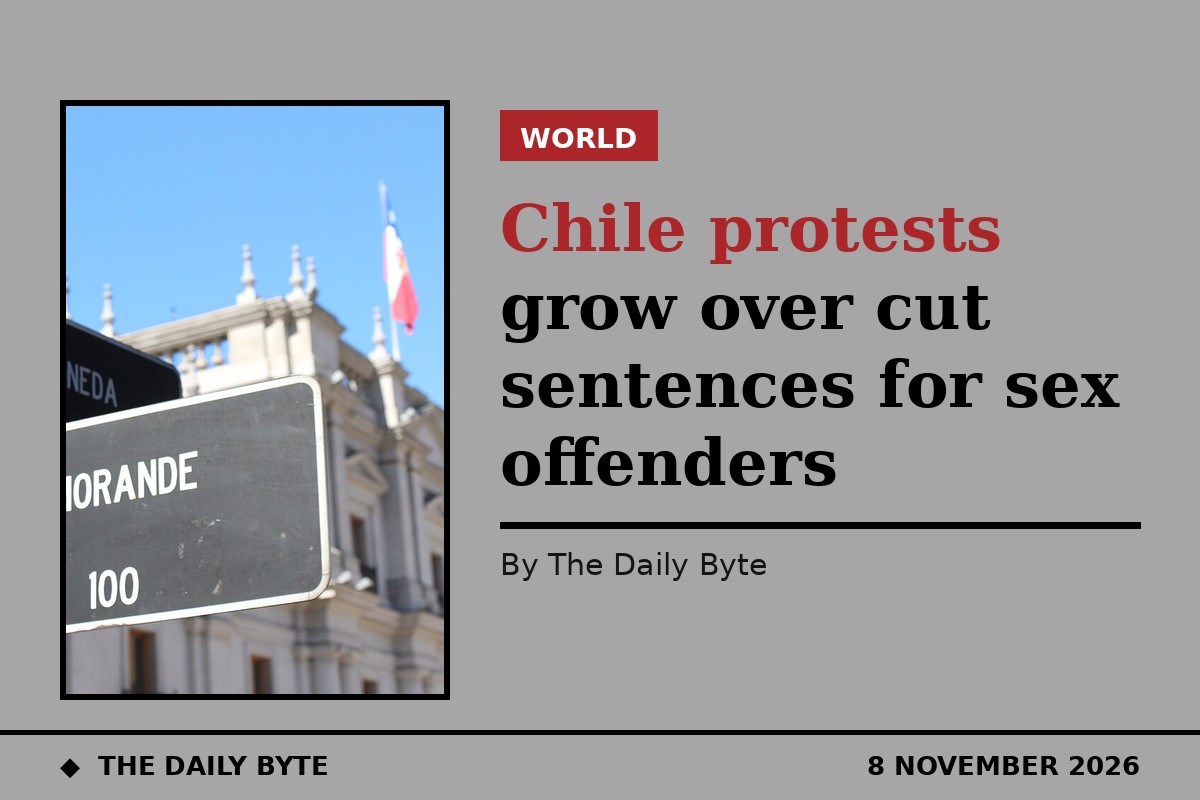
Protests in Chile have grown into a political crisis for President José Antonio Kast’s government after sentence reductions freed 56 people convicted of sexual crimes against minors.
Hundreds of women marched on Tuesday to Plaza de la Constitución, outside the La Moneda presidential palace in Santiago, demanding the resignation of Justice Minister Fernando Rabat. Many wore purple scarves and sang feminist chants in front of the palace, calling on the president and his government to take responsibility for the decisions.
Of the 56 people released, 27 had been convicted of sexual abuse and 29 of rape of minors. The reductions came to light when the local outlet Interferencia revealed that the sentences of a group of convicted rapists and other sexual offenders would be cut. Mr Rabat has said he was following a Supreme Court guideline and could not refuse to apply the reductions.
President Kast has acknowledged that the state failed the victims and described the sentence cuts as a mistake, but he has refused to dismiss Mr Rabat. The row has pushed his approval rating down to 26 percent, a new low for his eight-month-old presidency according to pollster Cadem, while a separate poll cited by CNN Chile found 77 percent disapprove of Mr Rabat’s performance.
The protests have continued into a second week, with students clashing with police in Santiago on November 5 as officers used tear gas and water cannon. Opposition lawmakers are preparing a constitutional accusation against Mr Rabat, the first against a minister appointed by Mr Kast, and prosecutors are examining whether any crime was committed. Anger has also spread to reduced sentences granted to people convicted of crimes against humanity during the dictatorship of Augusto Pinochet.