CJP Afridi Reviews Women Facilitation Centres Plan
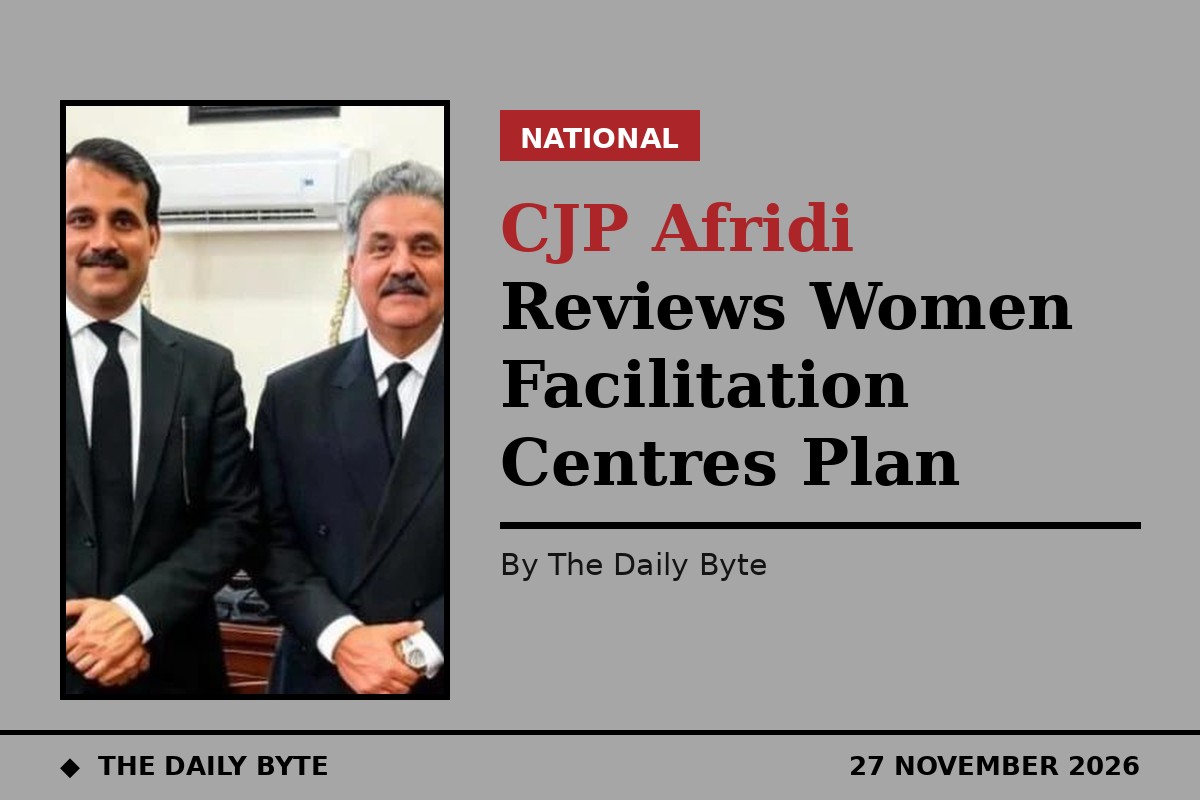
LAHORE: Chief Justice of Pakistan Yahya Afridi met representatives of the Lahore Bar Association and the Lahore High Court Bar Association at the Supreme Court's Lahore Registry on Thursday, stressing that coordination between the bench and the bar is essential to resolving the practical difficulties faced by litigants and lawyers.
The delegation included Lahore High Court Bar Association President Babar Murtaza Khan, Finance Secretary Malik Ali Raza Khokhar and Malik Tanveer, Advocate. The Chief Justice welcomed the assurance of cooperation extended by the bar representatives, and said regular consultations and close coordination between the two sides could further improve the delivery of justice.
Earlier, a meeting chaired by the Chief Justice was held at the Lahore Registry to review the establishment of Women Facilitation Centres in Punjab. The meeting reviewed plans for establishing the centres, along with Family Courts, in Faisalabad and Mianwali.
Women Facilitation Centres in Punjab
The meeting was attended by Lahore High Court Chief Justice Aalia Neelum, the registrars of the Supreme Court and the Lahore High Court, Punjab Secretary of Communications and Works Raja Jahangir Anwar, Chief Architect Ahmad Mudassar and Special Planning Unit General Manager Mazhar Mansoor.
Justice Afridi said establishing Women Facilitation Centres across the country was a key priority of the Law and Justice Commission of Pakistan for 2026-27. The centres would provide women with judicial information, legal guidance and assistance through a one-window system, so women would not need to visit multiple offices to access legal and judicial services.
The proposed centres will have reception areas, guidance desks, dedicated waiting areas, clean washrooms and separate consultation rooms. Special rooms for mediation and daycare facilities for children will also be established. The centres would provide women with access to legal advice, legal assistance, and psychological and social support. They would also facilitate alternative dispute resolution and help women approach the relevant institutions whenever required.
Access and design
The Chief Justice said accessible entrances, ramps and clear directional signs would be provided for women with disabilities. Suitable spaces would also be allocated for child visitation in family cases, wherever necessary.
A nationwide competition for designing Women Facilitation Centres had been organised by the Institute of Architects Pakistan, and the three best designs selected through the competition had already been shared with all high courts. The meeting also discussed adapting the proposed designs for Faisalabad and Mianwali to meet local requirements, with special attention to women's privacy, easy accessibility and the provision of essential facilities.
The participants emphasised the importance of effective coordination among the Lahore High Court, the Law and Justice Commission of Pakistan and the Punjab Communications and Works Department. The establishment of the centres aims to make access to justice easier, safer and more dignified for women.
A Public Facilitation Centre has also been established at the Lahore Registry to provide 35 judicial services under one roof, following the model introduced in Islamabad, with judicial information, guidance on procedures and assistance regarding applications available at a single location.