Chief Medical Officer Warns Rural England Risks "Healthcare Deserts" Under Neighbourhood Plans
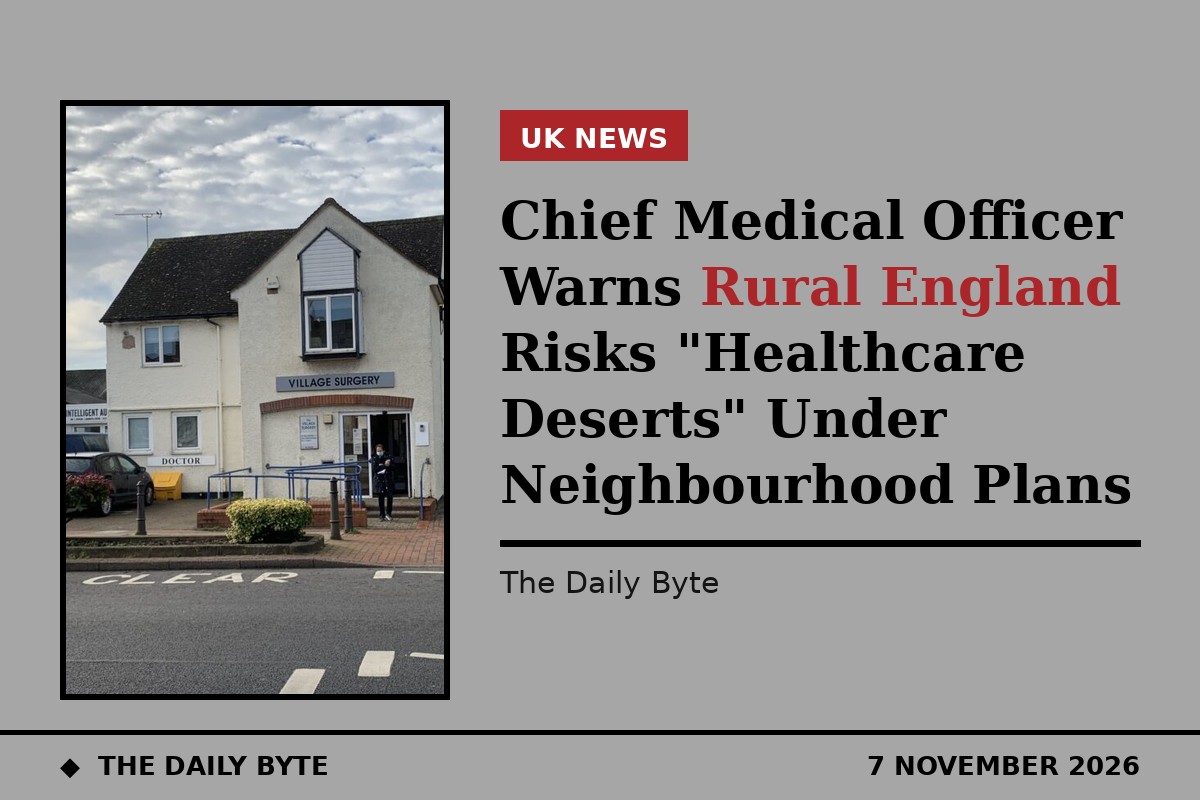
England's chief medical officer has warned that the government's neighbourhood health plans could leave rural communities as "healthcare deserts" if they are designed around city-sized populations.
Professor Sir Chris Whitty's annual report for 2026, published on 4 November, focuses on health in rural areas and small towns. It says rural people are older, ageing faster, and spread across much longer distances, with secondary care often a day's round trip away.
Neighbourhoods sized for cities
The report warns that single neighbourhood providers may support a population of around 50,000, which it says "may fit poorly with geographically dispersed rural communities". A one-size-fits-all approach to defining neighbourhoods, it says, "could lead to further centralisation of services and risk the creation of effective healthcare deserts with worsening service access for these communities".
General practice is described as "even more clearly the bedrock of healthcare provision" in rural areas than in cities. The report notes 61.3 GPs per 100,000 need-adjusted population in small towns and rural areas in 2026, compared with 55.9 in urban areas — but says rural areas account for 59% of hard-to-recruit GP training posts, and recommends more trainees receive rural practice experience.
Farmers face the highest fatal injury rate
Farming communities get a dedicated chapter. Agriculture, forestry and fishing recorded 8.09 fatal workplace injuries per 100,000 workers in 2025/26, the highest rate of any major industry group in Great Britain. The report calls for more flexible NHS appointments, better mental health outreach, and health checks at agricultural events such as livestock markets — citing free checks already offered to farmers at Bakewell market in Derbyshire.
Health minister Dame Diana Johnson said the government was taking action to "close the gap for people in small towns and rural communities".