College Staff to Be Balloted on Strike over Pay
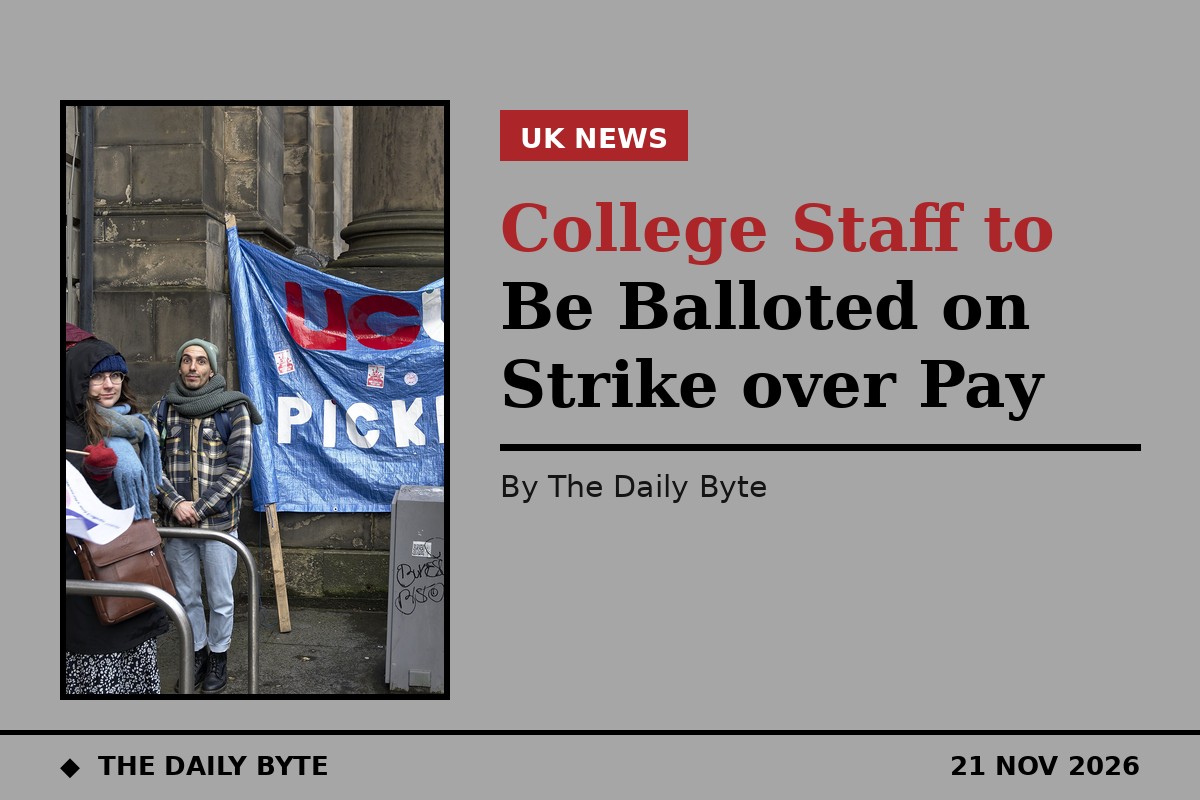
Thousands of college staff across England will be balloted for strike action from December, in one of the biggest disputes in further education in recent years, the University and College Union has announced.
The union, known as UCU, said on 16 November that it had initiated the dispute and written to college leaders setting out its demands, putting them on notice that if they do not respond meaningfully, the next step will be to ballot thousands of members in further education. The ballot is due to open in the second week of December and run until 27 January.
The unions are demanding a pay rise of 10 per cent or £3,000, whichever is greater, to reverse real-terms cuts over the last 15 years, as well as action over workloads, steps towards pay parity with school teachers and a binding national bargaining agreement. The claim follows negotiations with the Association of Colleges, the employers’ body, which resulted in a recommended pay award of 3.5 per cent.
The dispute is being organised differently from previous national disputes in the sector. Branches have been allocated to three ballot pools based on legal advice and the status of any local pay agreement. The first pool covers colleges where no pay agreement has been reached, or where the agreed increase is below the 3.5 per cent recommendation, and will ballot on both pay and terms and conditions. The second pool covers colleges that have settled pay, and will ballot on terms and conditions only. Adult education providers form a third pool, balloted branch by branch on pay alone.
A national ballot for the first time
The first two pools will use aggregate ballots, in which votes across colleges are combined into a single national pool that must pass an overall 50 per cent turnout threshold. UCU says the approach is designed to maximise participation and enable as many branches as possible to be included. Its congress backed the pooling of votes earlier this year to strengthen the union’s collective leverage with employers and ministers.
The union already uses the aggregate method in higher education, but its last two attempts there fell short of the turnout threshold, at 43 per cent in 2023 and 39 per cent in 2025, although the majority of those who voted backed action over pay and job cuts. Last year’s further education ballots were held at branch level: teachers at 32 of 68 colleges passed the 50 per cent turnout threshold and backed strike action, but lecturers at only 17 colleges walked out after several branches settled pay deals above the employers’ recommendation.
David Hughes, chief executive of the Association of Colleges, said he was surprised and disappointed that UCU was still considering aggregated national action. He said the pressure the unions and employers had exerted together this year had led to extra investment from the Department for Education, which colleges would use to try to reach the recommended 3.5 per cent award, a figure he said was in line with school teachers and slightly ahead of school support staff. The Government announced in July that further education would receive an extra £485 million over the next two years to help with college recruitment and retention.
What happens next
A successful ballot would give the union the potential to call coordinated action across all the employers covered, although any strike dates would be decided after the result. Colleges are free to set their own pay rises locally, and several have already settled: Nottingham College agreed a 5 per cent rise in September, West Herts College Group awarded 4 per cent, and Exeter and North Devon Colleges Group agreed 3.5 per cent, backdated to September.
The dispute comes as other parts of the education sector are also in conflict over pay. In sixth form colleges, the National Education Union says 84 per cent of teachers voted for strike action on a 70 per cent turnout, rejecting the Sixth Form Colleges Association’s 2026-27 pay offer of 3.5 per cent.
For students and parents, the immediate effect is limited: no strike dates have been set, and the ballot itself does not close colleges. But if the ballot passes its turnout threshold and members back action, further education colleges across England could face coordinated walkouts early next year, in a sector where staff say pay has fallen behind schools for more than a decade.