Colombia's El Tigre Marks 100 Days in Office
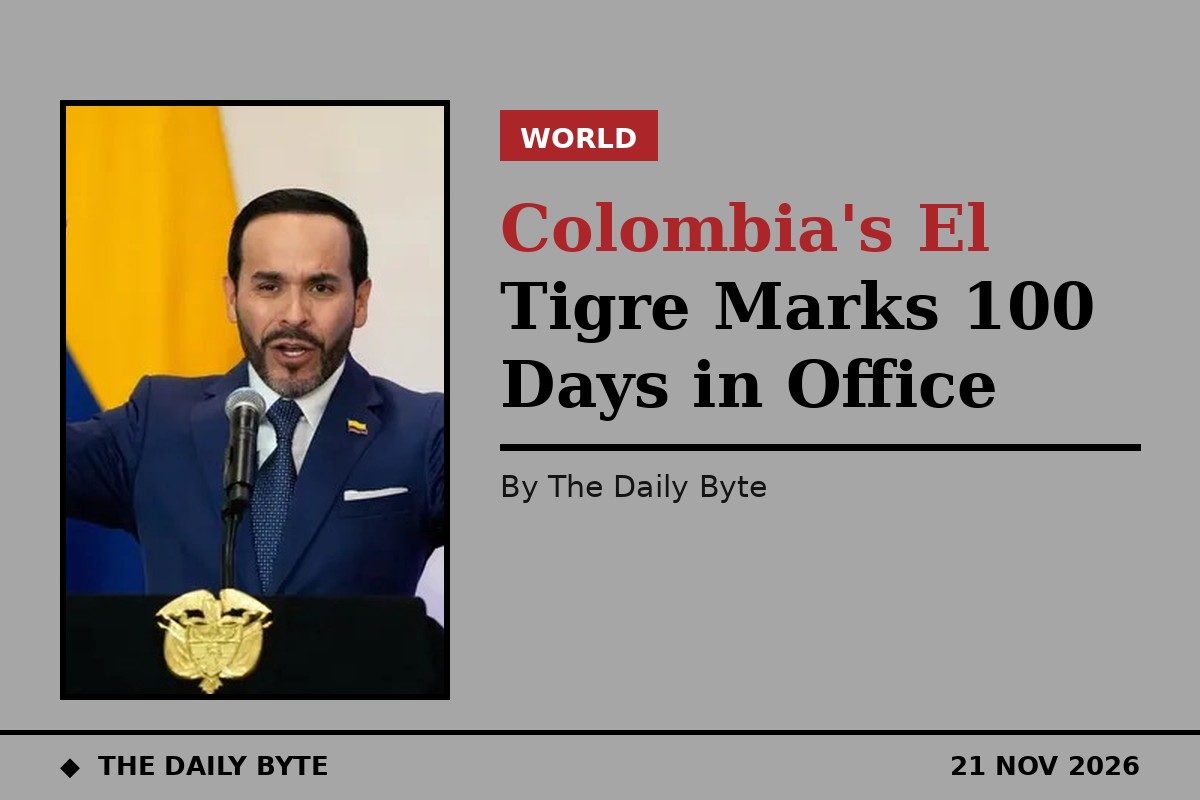
Colombian President Abelardo de la Espriella, nicknamed "El Tigre", has marked his first 100 days in office, celebrating the milestone with a major investment forum in New York, while facing rising violence, a steep fiscal deficit and resistance from Congress and the courts at home.
De la Espriella took office on 7 August after a narrow victory in Colombia's June runoff, promising a sharp break from his left-wing predecessor Gustavo Petro and the building of what he calls "the Miracle Homeland". His first 100 days have been dominated by a hardline security offensive and a drive to attract foreign capital.
A review by Colombian outlet La Silla Vacía found he had kept none of his first-100-days pledges and backed away from several, while Interior Minister Rodrigo Lara, seen as unaligned with his "miracle country" project, has since been removed.
Miracle Week and the investment pitch
The milestone was marked by "Milagro Week", a week of meetings with investors in New York from 16 to 19 November, led by Vice President José Manuel Restrepo The agenda featured 97 projects with potential business opportunities totalling 41.9 billion dollars, and around 300 meetings with more than 500 investors were planned.
In a video message, de la Espriella declared that "Colombia is open for business". On the opening day, Restrepo announced that Avianca planned to invest 3 billion dollars in an expansion programme including 61 new aircraft between 2027 and 2029, and that Grupo Plata would raise its investment in Colombia from 60 million dollars to 400 million dollars.
The government later reported that investment and financing commitments had risen from 4.5 billion dollars to 17.5 billion dollars. The International Finance Corporation offered 10 billion dollars in long-term financing, while CAF, the Development Bank of Latin America and the Caribbean, offered a further 3.5 billion dollars.
Security: the offensive and its costs
On the security front, de la Espriella vowed to crush the country's guerrilla, paramilitary and criminal groups in his first 90 days. Instead, all major indicators of violence have risen. The recruitment of minors fuelling the expansion of armed groups is 131 percent higher than during Petro's first 90 days in office.
Increased air strikes against these groups, seven so far, have killed at least eight minors and are already producing blowback from ELN guerrillas and ACSN paramilitaries. An ELN retaliatory attack on a military base killed one soldier and injured four, while paramilitaries paralysed Santa Marta in September. There have been at least 111 attacks by the ELN and dissident members of the former FARC in three months, and 38 members of the Colombian police and military have been killed and 213 wounded since August.
Reports of extrajudicial killings, including of minors, have emerged, with security forces insisting casualties were armed combatants despite families insisting they were not. De la Espriella has also drawn widespread criticism for holding press conferences amid body bags and appearing armed in military fatigues at crime scenes.
Economy and Washington
On the economic front, de la Espriella had to pass the country's annual budget bill, which increased government spending by 16 percent despite promising significant cuts, by decree after Colombia's divided legislature failed last month to come to an agreement. He is seeking to overcome a steep fiscal deficit inherited from Petro through a 16 billion dollar aid package from the International Monetary Fund and a proposed fiscal reform bill that would slash public spending by decree and cut public salaries, except for the security forces, by 20 percent, which has spurred nationwide protests.
His approval rating stood at 47 percent in early November, compared with 54 percent at the start of his term, according to CB Global Data.
Washington, meanwhile, appears to be offering its full-throated endorsement of his anti-crime strategy. The government marked the milestone by receiving US Defense Secretary Pete Hegseth on Wednesday, the third member of President Donald Trump's cabinet to visit Colombia since August, as the two countries deepen security ties. Last week Washington committed 345 million dollars for a rotary-wing aircraft training centre, and the Trump administration committed 1 billion dollars in counternarcotics and security aid at his inauguration and transferred MQ-9 Reaper drones.
But the Democrats' resounding victory in the US midterms has led his administration to reconsider its ironclad alignment with Trump's MAGA movement. After incoming House Foreign Affairs Committee Chairman Gregory Meeks criticised de la Espriella's endorsement of Representative Maria Elvira Salazar, Colombia's Foreign Minister Omar Bula sent Democratic leadership a letter apologising for disparaging statements he had made against Democrats. Since then, de la Espriella and Meeks appear to have reconciled, sitting down with senior Colombian officials this week for Milagro Week. Whether he can reverse Colombia's fiscal bind and deteriorating security panorama remains an open question, with 44 months of his term to run.