Corruption Risks Found in Ten Government Institutions
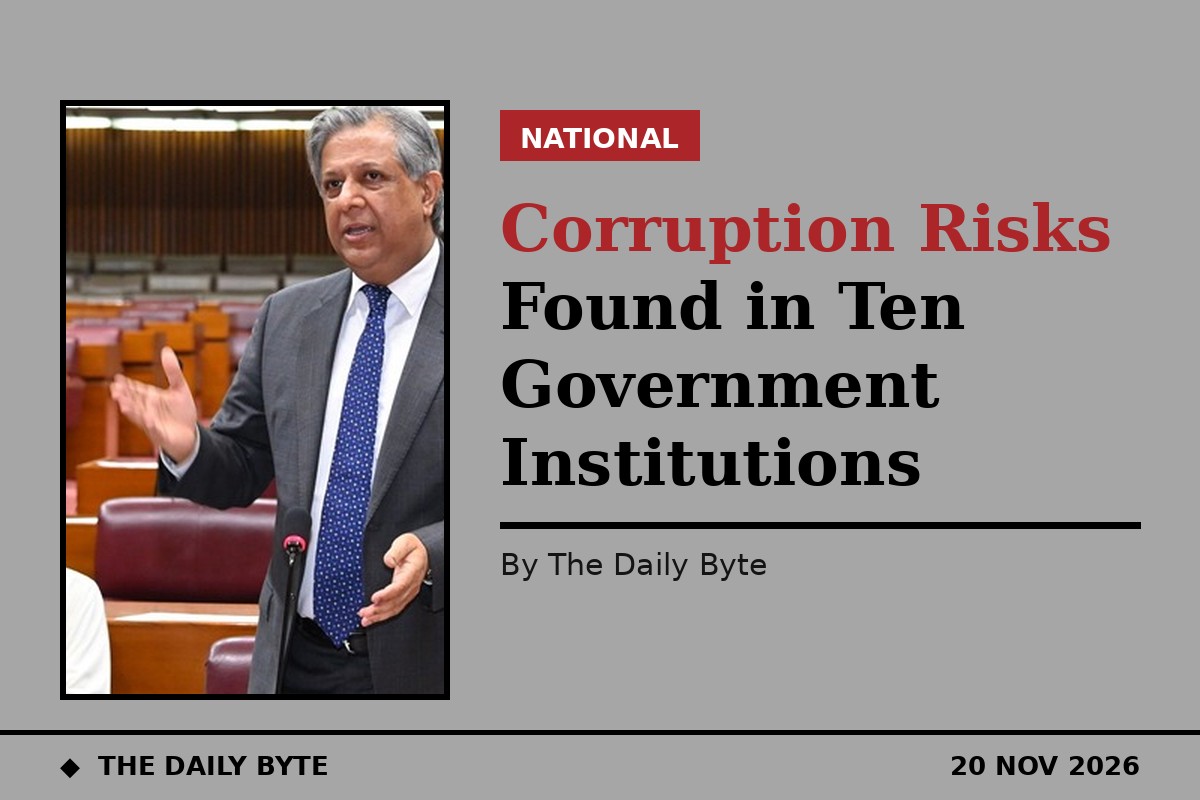
The federal government has identified weaknesses that could create opportunities for corruption in ten institutions, through a comprehensive survey called the National Risk Assessment of Corruption Vulnerabilities.
Law Minister Azam Nazeer Tarar announced the findings on Friday, in a televised video message. He said the exercise was part of a bid to undertake “self-accountability” across government, and stressed that the report was not a “charge sheet” against any institution or individual.
“We have identified weaknesses within the institution to improve them, how corruption can be stopped, and reforms to make merit and transparency possible,” Tarar said.
A diagnostic, not an accusation
The distinction matters. A risk assessment of this kind maps the points in an institution where rules, discretion or weak oversight could allow corrupt practice — it does not by itself find that corruption has taken place, and it names no official as guilty of anything. Tarar’s framing presents the survey as a tool for institutional improvement rather than a list of accusations.
The government has not published the names of the ten institutions covered by the survey, and no details of the individual weaknesses found in each one have been released. What has been announced is the scale of the exercise and the intention behind it: to find the gaps first, and then to fix them.
What happens next
The government plans to implement reforms based on the survey’s findings, with further discussions expected in upcoming cabinet meetings. The stated aim is to strengthen merit and transparency in public institutions, and in turn to improve public service delivery and trust in government.
For citizens, the test of the exercise will be what follows the announcement. A survey that identifies vulnerabilities only matters if the reforms it points to are actually carried out — and the government has tied the next steps to cabinet discussion rather than setting out a timetable or naming the institutions involved.
Assessments of this kind typically examine the points in an institution where officials exercise discretion, handle money or procurement, issue licences or permits, or oversee appointments — the places where weak rules or thin oversight can turn into an opportunity for corrupt practice. The value of the exercise lies in finding those points before they are exploited, rather than investigating wrongdoing after the event.
That is the logic Tarar set out: find the weaknesses, then change the rules, the oversight or the processes around them so that merit and transparency become the default. Whether the survey delivers on that logic will depend on the reforms that follow, and on whether the government publishes the institutions involved and the changes it makes in each one.
Until those details are published, the story is the announcement itself: ten institutions surveyed, weaknesses identified, and a promise of reform framed as self-accountability rather than blame.
Sources
ThePenPK — Govt Identifies Corruption Vulnerabilities in Ten Institutions: Tarar
Perspecta News — Pakistan identifies corruption vulnerabilities in ten government institutions