Czech media funding row reaches European Parliament
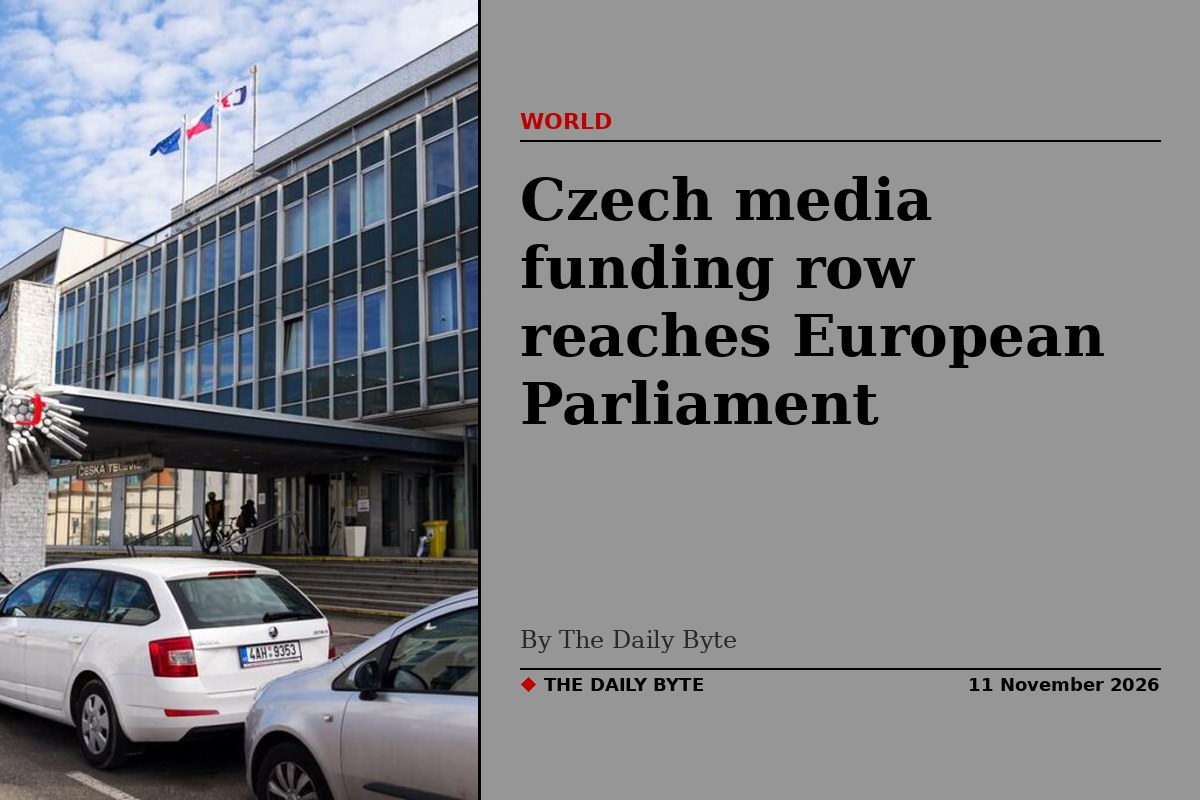
The European Parliament has taken up the future of public broadcasting in Czechia, debating government plans to scrap licence fees and fund Czech Television and Czech Radio directly from the state budget.
Members of the European Parliament discussed media freedom and the rule of law in Czechia on Wednesday evening, 11 November, in a debate with Justice Commissioner Michael McGrath. The session, scheduled for 19:30, put the independence of the country's two public broadcasters at the centre of a wider argument about how public media should be paid for, and who gets to decide.
What the Czech government is proposing
Under the plan put forward by Prime Minister Andrej Babiš's government, the household broadcasting licence fee would be abolished and replaced with contributions from the state budget. The bill passed its first reading in the Chamber of Deputies on 24 October, prompting a one-day strike by staff at Czech Television and Czech Radio on 3 November, and street protests in Prague and other cities.
According to estimates cited by the European Broadcasting Union, the change would cut the broadcasters' combined funding by about 1.4 billion Czech crowns a year, roughly 15 per cent, taking their total to around 7.8 billion crowns. The bill still requires further parliamentary consideration. If MPs approve it, the Senate and the president would then examine it.
Why critics say independence is at stake
Journalists' organisations argue that the issue is not only the size of the cut, but the way the money would be controlled. Renate Schroeder, director of the European Federation of Journalists, said: "Without strong legal safeguards, direct state funding would indeed open the door to political pressure." She warned that annual budget negotiations could push the broadcasters to accommodate political interests in order to protect their funding, and that cuts of this scale could cost jobs and reduce freelance work.
The federation has urged the European Commission to do more than write to Prague. It has asked for clear advice on the safeguards needed to avoid infringement proceedings, alongside transparent action to defend public-media independence. Schroeder also questioned whether the Czech arrangements had been properly consulted on, saying there had not been any serious consultation of national stakeholders in advance.
What the government says
Babiš maintains that abolishing compulsory fees would reduce costs for households and businesses. "Nobody wants to take control of public service media or nationalise them," he said at a press conference earlier in the week. The replacement model remains uncertain: he has also suggested voluntary contributions and financing outside the state budget. According to the Czech News Agency, he expects MPs to discuss the details at the second reading, potentially around 15 January.
Brussels is watching, but has not ruled
The European Commission confirmed on 3 November that it had already sent a letter to the Czech authorities and was assessing their reply. Commission spokesperson Markus Lammert stressed the role of public-service media in keeping citizens informed, but he did not announce any finding that the proposal breached EU law.
The legal benchmark is Article 5 of the European Media Freedom Act, which requires member states to fund public-service media through transparent and objective procedures established in advance, and to guarantee adequate, sustainable and predictable resources. The act's explanatory text favours multi-year funding to reduce political influence through annual negotiations. It does not require member states to retain licence fees, so direct public funding can comply with European standards if the safeguards are right.
If the Commission identifies a breach of EU law, it can pursue an infringement procedure that may ultimately reach the Court of Justice of the European Union. With the Czech funding model still under discussion, lawmakers can address those concerns before the final rules are settled.
What happens next
There will be no vote in the European Parliament this week. Members are preparing a resolution for the next Strasbourg session, giving MEPs time to set out their position before the Czech parliament returns to the bill. The debate took place during a two-day plenary session that also covered supermarket cyberattacks, the return of Ukrainian children taken to Russia, and funding for Europe's response to disasters.
For now, the licence fee remains in place and the bill remains before the Czech parliament. The argument in Brussels is about what happens if it passes: whether state funding can be designed so that Czech Television and Czech Radio keep their editorial independence, or whether the change leaves them dependent on the government of the day.
Sources: EU Perspectives and European Parliament.