D-Wave earnings test as quantum stock swings wildly
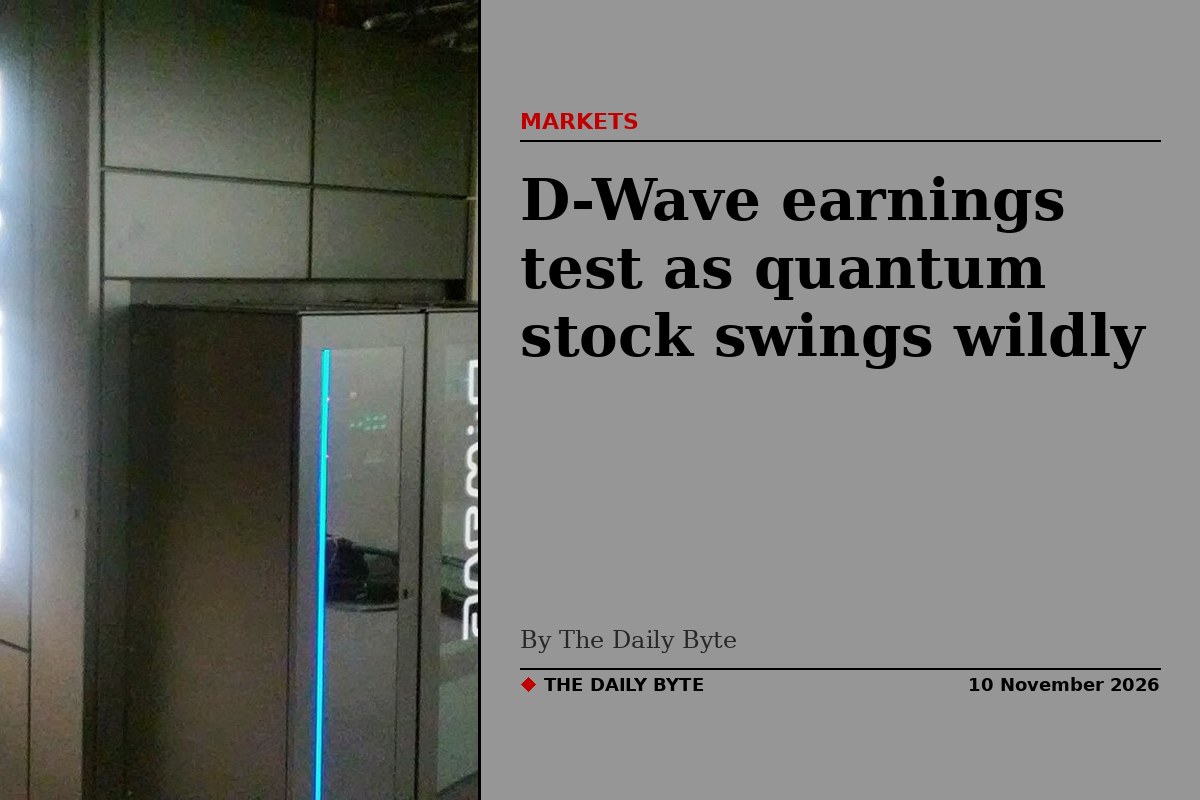
D-Wave Quantum reports its third-quarter 2026 results before the US market opens on Tuesday, 10 November 2026, in a test of whether the quantum computing company can turn a surge in customer bookings into reported revenue.
Wall Street currently expects D-Wave to report third-quarter revenue of roughly $4.3 million, up 16 percent from the year-ago quarter, while earnings are expected to remain negative at about $0.14 per share, according to Barchart. The figures are expectations, not reported results, and the publication itself will settle whether D-Wave clears the bar.
A volatile month for the shares
The report comes after a sharp two-day swing in the shares. D-Wave fell 12.8 percent on 5 November, closing at $9.05, as quantum stocks came under pressure alongside a broader technology sell-off. The selling reversed the next day, when the shares jumped 18 percent to $10.68.
Even after that rebound, the stock remains down 63 percent over the past 52 weeks and 58 percent so far this year, reflecting how cautious investors have become about lofty valuations, cash burn and the pace at which quantum technology can translate into meaningful commercial revenue.
Bookings surge, revenue flat
D-Wave reported its second-quarter 2026 results on 6 August, delivering a mixed quarter in which reported revenue remained essentially flat. For the quarter ended 30 June, revenue was $3.1 million, flat year over year, while bookings rose 59 percent year over year to $2.1 million and the average booking size increased by more than 87 percent.
On a first-half basis, bookings reached $35.5 million, up 1,120 percent year over year, as the company focused on converting its pipeline into revenue. Investors will be watching the third-quarter update for evidence that those bookings are starting to show up in the reported numbers, and for news on customer adoption and the company's growth outlook.
The results will also provide an update following recent commercial and government-related developments, including $100 million of support under the CHIPS and Science Act. D-Wave has also signed a non-binding memorandum of understanding with LG CNS, and says its upgraded Stride hybrid solver reached an average gap of 0.02 percent from the optimal solution on a route-optimisation task, with a runtime of 15 seconds, according to company figures cited by ad hoc news.
Lawsuit hangs over bookings claims
Weighing on the distinction between bookings and revenue is a securities class action that surfaced about three weeks ago. Rosen Law Firm points to allegations of declining bookings and to the composition of bookings described as a record high, which the claim asserts rested substantially on contracts signed earlier. The complaint further alleges possible delays in converting the sales pipeline into system sales and in deliveries, with related revenue potentially not arriving until the fourth quarter of 2026 or 2027.
These are allegations, not court-established facts, and the case has not yet been certified as a class action. Even so, they raise the stakes for Tuesday's report: investors will want to see how much of the bookings pipeline is converting into delivered systems and recognised revenue, and when.
With the shares remaining a highly volatile quantum-computing play, the November 10 report could be a key catalyst as investors weigh near-term financial performance against the longer-term opportunity in quantum computing.